
2026 FIFA World Cup Betting Guide — Odds, Predictions and Analysis
 Available in US
Loading...
48 teams, 104 matches, three host nations — your analytical hub for decimal odds, group predictions and expert betting angles across the entire 2026 FIFA World Cup from a Canadian perspective.

Your 2026 World Cup Betting Dashboard in Five Lines
- 48 teams, 104 matches across 16 stadiums in three countries — the largest World Cup ever runs June 11 to July 19, 2026, and Canada co-hosts with two venues in Toronto and Vancouver.
- Single-game sports betting is federally legal in Canada under Bill C-218, with Ontario operating an open private market and Alberta launching its own regulated market in summer 2026.
- Argentina, France and England sit at the top of outright winner markets in decimal odds, but host-nation history and the expanded format create value deeper in the card.
- Canada opens Group B at BMO Field on June 12 against Bosnia and Herzegovina — the first men's World Cup home match on Canadian soil since 1986.
- Recreational betting winnings in Canada are tax-free, giving Canadian bettors a structural edge over their American neighbours south of the border.
Tournament at a Glance
I have covered every World Cup cycle since 2010, and not one of them prepared me for the sheer scale of what FIFA has built for 2026. Forty-eight teams instead of thirty-two. A hundred and four matches instead of sixty-four. Three host nations spanning four time zones. The betting card for this tournament is not just bigger — it is structurally different from anything the market has priced before, and that structural change is where the edges live.
The 2026 FIFA World Cup runs from June 11 to July 19, stretching across 39 match days and 16 stadiums in the United States, Mexico and Canada. Twelve groups of four replace the old eight-group model, and the knockout round now begins with a Round of 32 rather than a Round of 16. The top two finishers in each group advance automatically, and the eight best third-placed teams join them — meaning 32 of 48 nations survive the group stage. That two-thirds survival rate changes group-stage betting mathematics in ways I will break down shortly.
Format and Key Dates
Mexico and South Africa open proceedings at the Estadio Azteca on June 11. Canada's first match follows the next day — a Friday evening kickoff against Bosnia and Herzegovina at BMO Field in Toronto, timed at 15:00 ET so the entire country can watch during working hours or on an early leave. The United States debut the same day against Paraguay at SoFi Stadium in Los Angeles.
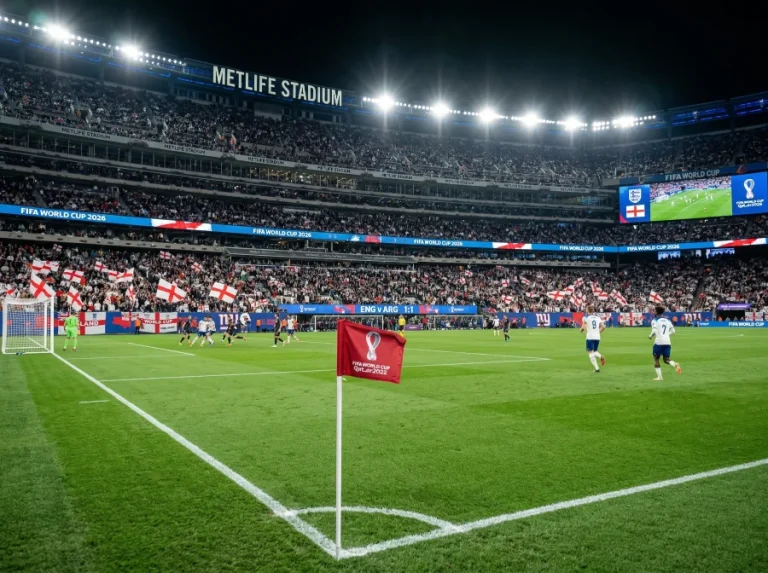
Group-stage play wraps up on June 27, giving bettors sixteen days of simultaneous action across multiple venues. The Round of 32 runs July 1 through 4, the Round of 16 from July 4 to 7, quarter-finals land on July 10 and 11, and the semi-finals on July 14 and 15. The final takes place at MetLife Stadium in East Rutherford, New Jersey on July 19 — a Saturday evening in prime time across North America.
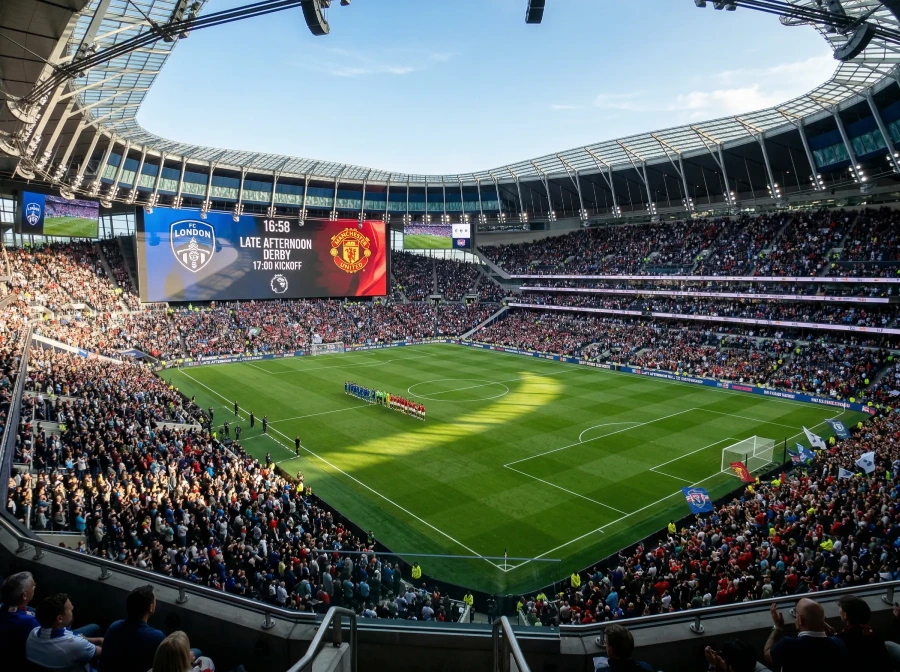
With 32 of 48 teams advancing from the group stage, the probability of any given team reaching the knockout round is roughly 67% — far higher than the 50% baseline under the old 32-team format. That shift compresses group-winner odds and inflates qualification prices, creating a different value map than veteran World Cup bettors are used to.
Host Cities and Stadiums
The United States carries the heaviest load with eleven venues and seventy-eight matches, including every knockout-round game from the quarter-finals onward. AT&T Stadium in Arlington, Texas hosts the most fixtures at nine, while MetLife Stadium gets the marquee assignment — the final. SoFi Stadium in Los Angeles, Hard Rock Stadium in Miami, and NRG Stadium in Houston each anchor their own clusters of group and early knockout games.
Mexico contributes three iconic venues. The Estadio Azteca in Mexico City — the only stadium in the world to host three World Cups — gets the opening ceremony and match. Estadio BBVA in Monterrey and Estadio Akron in Guadalajara round out the Mexican rotation, each hosting four to five group-stage fixtures at altitude.
Canada fields two stadiums that matter enormously for domestic bettors. BMO Field in Toronto is a 30,000-seat venue expanded for the tournament, located in the heart of Canada's largest city and directly accessible by transit. BC Place in Vancouver, a retractable-roof dome on the Pacific coast, gives the tournament a western anchor three time zones behind the East Coast. Between them, Canada hosts thirteen matches — enough to sustain a full month of live World Cup action on home soil for the first time in the country's history.
Sixteen stadiums, three nations, one tournament — but the real story for Canadian bettors starts in Group B.
Canada's Home World Cup
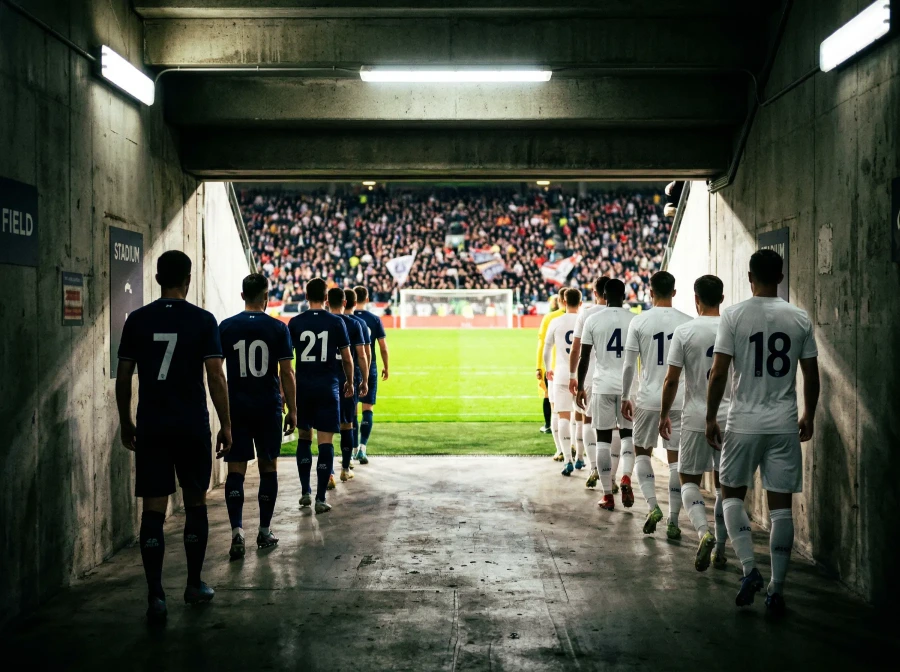
The last time Canada played a men's World Cup match, Brian Mulroney was Prime Minister and Diego Maradona was scoring with his hand in Mexico. That was 1986 — forty years ago. Since then, Canadian soccer has survived on near-misses, MLS expansion and the occasional friendly that drew half a stadium. All of that changes on June 12, 2026, when the national team walks out at BMO Field in Toronto as co-hosts of the biggest sporting event on the planet.
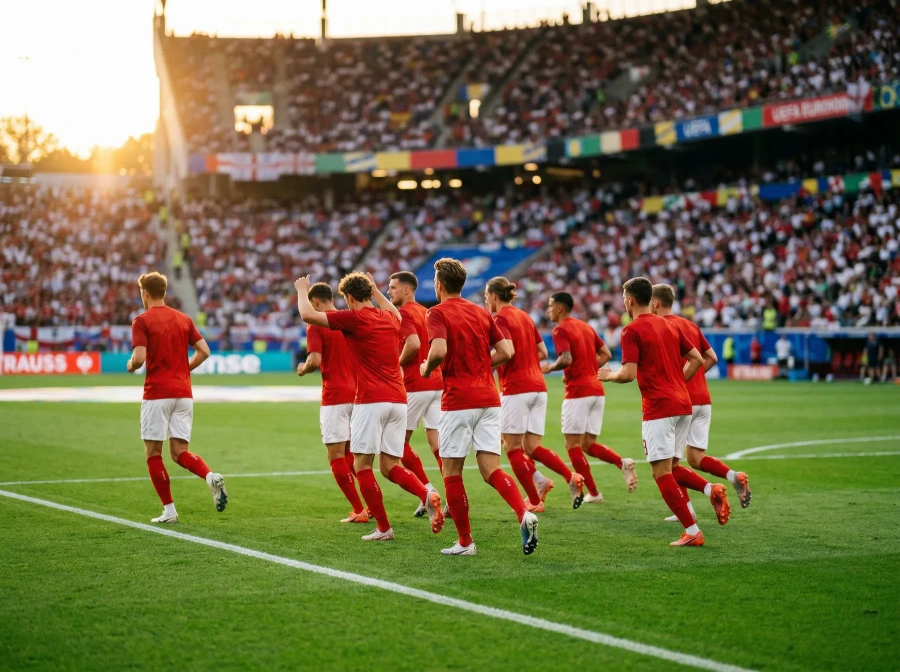
Canada qualified automatically as one of three host nations, bypassing the CONCACAF qualifying cycle entirely. It is a procedural detail with massive betting implications. No qualifying fatigue, no risk of injury in dead-rubber matches against Caribbean minnows, and full control over preparation windows. Jesse Marsch, the American-born coach who took over the programme in 2024, has used that runway to build a squad around Alphonso Davies at Real Madrid, Jonathan David — one of the most prolific strikers in Ligue 1 over the past three seasons — and Cyle Larin, whose aerial presence gives Canada a Plan B that most CONCACAF sides cannot match.
Group B Breakdown
Canada landed in Group B alongside Switzerland, Qatar and Bosnia and Herzegovina. On paper, this is a draw that the host nation should navigate comfortably — but "on paper" is a phrase that has bankrupted more bettors than any bad beat.
Switzerland is the real test. The Swiss reached the quarter-finals at Euro 2024 and have a tournament pedigree that Canada simply does not possess. They defend in compact blocks, transition quickly through midfield and rarely beat themselves. A match against Switzerland will tell us whether this Canadian generation can compete with established European structure or whether the home crowd will need to carry them past the group stage.
Qatar, the 2022 World Cup hosts, failed to win a single match on their own home soil in that tournament — three games, three defeats, one goal scored. Their second-ever World Cup appearance comes with a weaker squad and no crowd advantage. Bosnia and Herzegovina earned their spot the hard way, stunning Italy on penalties in the qualification play-off. That result injected confidence into a team built around Edin Dzeko's experience and a midfield that pressures high and commits numbers forward. Bosnia are dangerous in a one-off match, but their depth across three group games is a question mark.
The schedule favours Canada. Opening at home against Bosnia on a Friday afternoon in Toronto, followed by the Switzerland fixture on June 18 (venue and time to be confirmed), and closing against Qatar on June 24. If Canada take six points from the first two matches — which the market prices as the likely outcome — the Qatar game becomes a dead rubber where Marsch can rotate his squad before the knockout round.
Canada's Odds and Market Value
At the time of writing, Canadian sportsbooks price Canada around 2.10 to win Group B, roughly 1.35 to qualify for the Round of 32, and anywhere between 41.00 and 51.00 to win the tournament outright. The group and qualification prices reflect a strong home favourite — implied probabilities of approximately 48% and 74% respectively. The outright number is where opinion diverges.
I see genuine value in Canada to top Group B, primarily because of the home-field factor that market models tend to underweight. Since 1998, host nations have won their opening match in six of seven World Cups. The crowd at BMO Field will be unlike anything this squad has experienced, and the psychological lift of a dominant opening result cascades through the remaining group fixtures. If you are looking at Canada's full betting preview, the group-winner market is where I would start.
Canada's only previous World Cup appearance in 1986 produced zero goals in three matches. The 2026 squad, by contrast, scored 54 goals in CONCACAF Nations League and friendly fixtures across the 2024-25 cycle — more than any two-year stretch in the programme's history.
Canada's group is one of twelve, and the new format means every pool has its own betting ecosystem. Here is how I see all of them shaking out.
All 12 Groups — Quick-Fire Predictions
Twelve groups. Forty-eight teams. The draw ceremony in Zurich handed us pools that range from stone-cold predictable to genuinely chaotic, and the expanded format — where eight third-placed teams also advance — means that even "weak" groups produce interesting betting angles. I have broken down every group in detail across the full groups pillar page, but here is the rapid-fire version: my predicted top two, the team most likely to spring a surprise, and the one bet I would flag in each pool.
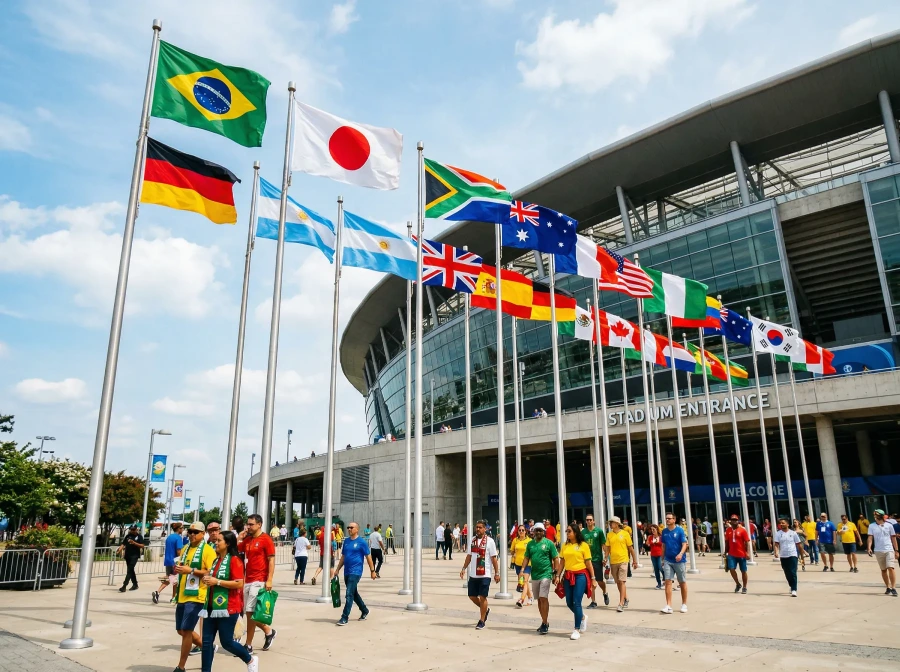
Groups A through D
| Group | Teams | Predicted 1st | Predicted 2nd | Danger Team |
|---|---|---|---|---|
| A | Mexico, South Korea, South Africa, Czechia | Mexico | South Korea | Czechia |
| B | Canada, Switzerland, Qatar, Bosnia and Herzegovina | Canada | Switzerland | Bosnia and Herzegovina |
| C | Brazil, Morocco, Scotland, Haiti | Brazil | Morocco | Scotland |
| D | USA, Paraguay, Australia, Turkey | USA | Turkey | Australia |
Group A opens the entire tournament at the Estadio Azteca, and Mexico will ride the altitude advantage and home crowd to a first-place finish unless South Korea's pressing game catches them cold in the opener. Czechia are a live underdog for a third-place qualification spot but lack the firepower to finish above either seed.
Group C is a rematch of 2022's most exciting storyline. Morocco's semi-final run in Qatar was built on elite defending and set-piece execution, and they draw Brazil in a pool where Scotland provide romantic underdog energy but limited top-level tournament experience. Haiti, making their first World Cup appearance since 1974, are overmatched but will bring passionate support from the diaspora — particularly in Canadian cities with large Haitian-Canadian communities.
Group D gives the United States a favourable draw on home soil. Turkey are the most talented second seed in the group, with a squad that blends Bundesliga and Premier League starters, but their tournament temperament is erratic. Paraguay grind results in CONMEBOL qualifying but lack the individual quality to trouble the hosts, and Australia's golden generation has aged out. I expect the USA to cruise and Turkey to edge through in second.
Groups E through H
| Group | Teams | Predicted 1st | Predicted 2nd | Danger Team |
|---|---|---|---|---|
| E | Germany, Ivory Coast, Ecuador, Curaçao | Germany | Ecuador | Ivory Coast |
| F | Netherlands, Japan, Sweden, Tunisia | Japan | Netherlands | Sweden |
| G | Belgium, Egypt, Iran, New Zealand | Belgium | Egypt | Iran |
| H | Spain, Cape Verde, Saudi Arabia, Uruguay | Spain | Uruguay | Saudi Arabia |
Group E is Germany's redemption audition after consecutive group-stage exits in 2018 and 2022. The draw is kind — Curaçao are debutants, Ecuador are solid but limited, and Ivory Coast's Africa Cup of Nations title in 2024 relied heavily on home advantage. Germany should walk this group, but I have been wrong about Germany before, and so has every sportsbook that priced them as 2018 favourites.
Group F is my favourite pool for betting value. Japan stunned Germany and Spain in 2022 and now field a squad where nearly every starter plays in a top-five European league. The Netherlands have the pedigree, but Japan's pressing intensity and tactical discipline make them a genuine threat to top the group. Sweden and Tunisia will compete for a third-place lifeline, making every match in this pool competitive. If you want a group-winner upset at a decent price, Japan over the Netherlands is the play.
Group G should be comfortable for Belgium despite the generational transition from Hazard and De Bruyne to a younger core. Egypt bring Mohamed Salah, who alone can swing a group match, and Iran's organised defensive structure makes them difficult to beat even if they lack the quality to top the pool. New Zealand are outclassed. Group H pairs Euro 2024 champions Spain with Uruguay — a genuine heavyweight clash that could determine seeding deep into the knockout rounds. Cape Verde are debutants with nothing to lose, and Saudi Arabia bring the memory of beating Argentina in 2022's opening day.
Groups I through L
| Group | Teams | Predicted 1st | Predicted 2nd | Danger Team |
|---|---|---|---|---|
| I | France, Senegal, Norway, Iraq | France | Senegal | Norway |
| J | Argentina, Algeria, Austria, Jordan | Argentina | Austria | Algeria |
| K | Portugal, DR Congo, Uzbekistan, Colombia | Portugal | Colombia | DR Congo |
| L | England, Croatia, Ghana, Panama | England | Croatia | Ghana |
Group I is France's to lose. Kylian Mbappe headlines a squad with generational depth at every position, and while Senegal's AFCON pedigree and Norway's Erling Haaland make this pool interesting on paper, neither side has the collective quality to derail Les Bleus over three matches. Iraq are the group's underdog and will struggle at this level.
Group J belongs to Argentina until proven otherwise. The defending champions and Copa America holders face Algeria — a physical, counter-attacking side that could cause problems in a single match — Austria, who have quietly built a strong squad under Ralf Rangnick, and debutants Jordan. Argentina's tournament DNA is unmatched in modern football, and I would be surprised if they drop more than two points across the group stage.
Group K is trickier than it looks. Portugal are favourites, but Colombia finished their CONMEBOL qualifying campaign with momentum and have the squad depth to challenge for top spot. DR Congo could be the group's chaos agent, while debutants Uzbekistan are likely to finish fourth but will compete hard. Group L, meanwhile, is the tournament's undisputed group of death. England and Croatia have met in the last three major tournaments, Ghana's pace on the counter is a nightmare draw for slow-footed centre-backs, and even Panama — who reached the 2018 World Cup — have the defensive structure to steal a point. The full Group L breakdown deserves its own deep dive, and it gets one elsewhere on this site.
Before you place a single wager on any of these groups, you need to know the rules of the game — and I mean the legal rules, not FIFA's.
World Cup Betting Essentials for Canadians
Five years ago, the only legal way to bet on a World Cup match in Canada was a parlay — a multi-leg wager where you had to correctly pick two or more outcomes to collect. Single-game betting was a criminal offence under the federal Criminal Code. That changed in August 2021, and the shift reshaped the entire Canadian sports betting landscape faster than anyone predicted.
Legal Landscape in 2026
Bill C-218, the Safe and Regulated Sports Betting Act, decriminalised single-event wagering at the federal level and handed regulatory authority to the provinces. The result is a patchwork system where each province sets its own rules, licensing frameworks and market structures.
Ontario is the headline story. The province launched iGaming Ontario in April 2022 as a subsidiary of the Alcohol and Gaming Commission of Ontario, creating Canada's only open market for private operators. By early 2026, forty-eight licensed sportsbooks compete for Ontario bettors — the largest regulated online betting market in the country by a wide margin. Ontario's handle for January 2026 alone reached C$9.52 billion, a figure that reflects both the province's population and the maturity of its competitive market.
Alberta is next. Bill 48 passed the provincial legislature and authorises a regulated open market for private operators, with launch expected in summer 2026 — potentially in time for the knockout rounds of the World Cup. For Alberta bettors, this means access to the same multi-operator competition that has driven odds quality and bonus innovation in Ontario over the past four years.
In provinces outside Ontario (and soon Alberta), sports betting is available exclusively through provincial lottery corporations. British Columbia offers PlayNow, Quebec runs Mise-o-jeu, and Ontario's own Proline+ co-exists alongside private operators. These provincial platforms are fully legal and regulated but typically offer fewer markets and less competitive odds than the private-operator ecosystem.
Advertising restrictions have tightened significantly. The Code for Responsible Gaming Advertising, administered by Ad Standards, took effect in January 2026 and applies across all media formats nationally. The code prohibits public advertising of bonuses or promotional offers — those can only be communicated through direct marketing to verified, consenting players. Ontario goes further by banning active and former athletes from appearing in betting advertisements, a rule in force since February 2024. At the federal level, Bill S-211 (the National Framework on Sports Betting Advertising Act) has passed three readings in the Senate and now sits before the House of Commons. If enacted, it would establish Canada's first federal advertising standards for sports betting.
Odds Formats and Tax-Free Winnings
Canadian sportsbooks default to decimal odds — the format where your total return is simply the stake multiplied by the decimal number. A bet at 3.50 odds returns C$35 on a C$10 stake, including your original wager. American odds (the plus/minus format dominant in the US market) are available as a toggle on most platforms, but decimal is the standard you will encounter on every Canadian-licensed site, and it is the format I use throughout this guide.
A recreational bettor in Ontario who wins C$5,000 on a World Cup parlay keeps the entire amount. The same bettor living in Buffalo, New York — ninety minutes across the border — would owe federal and state income tax on those winnings. Canada does not tax gambling profits for recreational players, and the Canada Revenue Agency has consistently ruled that casual sports betting winnings are not taxable income.
That tax-free status is not a minor detail. Over the course of a 39-day tournament with over a hundred matches on the card, a bettor placing consistent wagers can accumulate meaningful profit without erosion from tax obligations. It is one of the genuine structural advantages of betting from Canada, and it compounds over time — especially if you reinvest winnings into subsequent matches during the tournament. For a deeper look at how Canadian betting rules shape your World Cup strategy, the full guide walks through province-by-province details and bankroll approaches.
Now that the legal groundwork is set, here is what the outright market is telling us about who lifts the trophy on July 19.
Outright Winner Odds — Top 10 Favourites
Every World Cup cycle produces the same pre-tournament consensus: two or three sides at the top of the market, a cluster of contenders in single digits, and then a long tail of hopefuls priced between 21.00 and 501.00. The 2026 edition follows that pattern, but the expanded 48-team field compresses the top end in a way that creates genuine disagreement between sportsbooks — and disagreement is where value hides.











Below is a snapshot of the outright winner market across major Canadian-licensed sportsbooks as of late March 2026. All odds are in decimal format.
| Rank | Team | Decimal Odds | Implied Probability |
|---|---|---|---|
| 1 | Argentina | 5.50 | 18.2% |
| 2 | France | 6.00 | 16.7% |
| 3 | England | 7.50 | 13.3% |
| 4 | Spain | 8.00 | 12.5% |
| 5 | Brazil | 9.00 | 11.1% |
| 6 | Germany | 11.00 | 9.1% |
| 7 | Portugal | 13.00 | 7.7% |
| 8 | Netherlands | 17.00 | 5.9% |
| 9 | USA | 21.00 | 4.8% |
| 10 | Belgium | 23.00 | 4.3% |
Argentina sit at the top as defending champions and Copa America holders, but 5.50 is a price that barely compensates for the reality of a 39-day tournament with an extra knockout round. No team has won three consecutive major tournaments (World Cup plus continental championship) in the modern era, and the Messi question — whether he plays, how much he plays, and what role he fills at 38 — adds uncertainty that the market has not fully discounted.
France at 6.00 reflect the squad depth that Didier Deschamps (or his successor) can deploy. Two World Cup finals in a row, a squad where the second-choice eleven would qualify for most nations' first team, and Mbappe operating in his physical prime at 27. The price is fair but not generous.
The most interesting line in this table is Spain at 8.00. Euro 2024 champions with the youngest core among the top six — Lamine Yamal will be 18, Pedri 23, Gavi 21 — and a tactical identity that has only sharpened under their current setup. If you believe tournament football rewards cohesion over raw talent, Spain's price offers more upside than Argentina or France. The full odds breakdown across all 48 teams maps every market from group winner to top scorer, but the outright table above is your starting compass.
The combined implied probability of the top ten favourites exceeds 100% — that is the bookmaker's margin baked into the prices. The real combined probability of these ten teams winning is closer to 85%, which means roughly 15% of the tournament's value sits outside the top ten. That 15% is where dark-horse bettors should focus.
Five Dark Horses Worth a Closer Look
In nine years of covering tournament betting, I have learned one reliable truth: the World Cup always produces at least one deep run that no pre-tournament odds table predicted. Croatia were 34.00 before reaching the 2018 final. Morocco were 151.00 before their 2022 semi-final. The expanded format makes a dark-horse run more likely in 2026 because the extra knockout round gives surprise teams one more chance to advance before facing the true heavyweights.
Japan entered the 2022 World Cup at odds of approximately 151.00 to win the tournament. They beat both Germany and Spain in the group stage before losing to Croatia on penalties in the Round of 16. Had they converted one penalty, the market would have faced a quarter-finalist priced as a 150-to-1 outsider.

Here are five teams I am watching as potential bracket-busters, each priced outside the top ten in most outright markets.
Japan (approx. 34.00) — The Samurai Blue have graduated from dark horse to genuine contender, and the market has not fully caught up. Their squad features starters at Liverpool, Real Sociedad, Brighton and Freiburg, and their high-press, high-tempo system dismantled Spain and Germany two cycles ago. Group F pairs them with the Netherlands, Sweden and Tunisia — a difficult draw, but Japan's 2022 results proved they thrive against European opposition that underestimates their collective intensity.
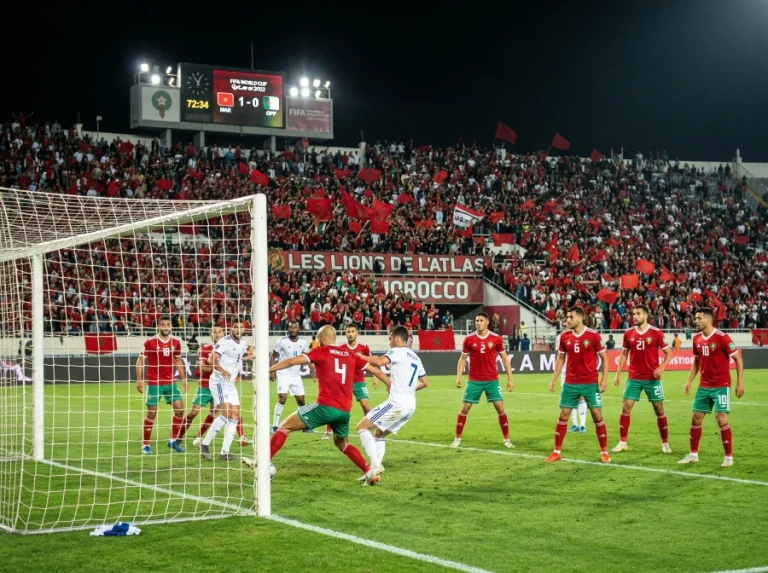
Morocco (approx. 41.00) — The 2022 semi-finalists return with an evolved squad and the confidence of having already beaten Belgium, Spain and Portugal at a World Cup. Group C places them alongside Brazil, Scotland and Haiti. A second-place finish behind Brazil is the likely path, and their defensive structure — conceding just one non-own-goal in five matches at the 2022 tournament — translates across cycles because it is system-driven rather than dependent on a single generation.
Colombia (approx. 51.00) — Drawn into Group K with Portugal, DR Congo and Uzbekistan, Colombia have the squad depth and CONMEBOL qualifying form to reach the knockout round and cause damage once there. Their midfield creativity, anchored by players who have matured in Europe's top leagues, makes them a nightmare matchup in the Round of 32 or Round of 16 against a higher-seeded opponent who expects to control possession.
USA (approx. 21.00) — The co-hosts sit on the border between top-ten favourite and dark horse. The American squad boasts more players at elite European clubs than any previous generation, and the home-field advantage across eleven stadiums is enormous. Their Group D draw is manageable, and the knockout bracket could open favourably depending on results elsewhere. The question is whether tournament experience — or the lack of it at this level — becomes a factor in the semi-final rounds.
Croatia (approx. 41.00) — The 2018 finalists and 2022 semi-finalists are aging, and Luka Modric at 40 is a sentimental pick more than a rational one. But Croatia's tournament DNA is extraordinary — they have reached at least the semi-finals in two of their last three World Cups, and their midfield remains among the most technically accomplished in the competition. Group L with England, Ghana and Panama is brutal, but Croatia have a habit of rising to the occasion when the stakes are highest. For Canadian bettors with Croatian roots — and there are many in the Greater Toronto Area — this is a dual-loyalty play worth tracking.
Dark horses win you paydays, but knowing the markets is what keeps you in the game. Here is how World Cup betting markets actually work.
How to Bet the World Cup — Markets Explained
When Canada's only legal bet was a parlay, the market conversation was simple: pick three or more outcomes, hope they all hit, collect your long-shot payout or — far more often — watch leg two collapse and take the loss. Bill C-218 changed that by opening single-event wagering, and the 2026 World Cup arrives with more betting markets available to Canadian bettors than at any previous tournament. If you are new to the expanded landscape, here is what you are working with.
Moneyline (Match Result) — A straight wager on which team wins the match, or whether it ends in a draw. In World Cup group-stage matches, the draw is a live outcome — roughly 25% of group games at recent World Cups have ended level. The moneyline is the simplest market and the one where sportsbook margins are thinnest, making it the best starting point for new bettors.
Spread (Asian Handicap) — A bet that applies a goal handicap to one team before kickoff. If Canada are -1.5 against Qatar, they need to win by two or more goals for the spread bet to pay. Spreads eliminate the draw as an outcome and create more decisive pricing, which is why experienced bettors often prefer them to the three-way moneyline in lopsided group matches.
Over/Under (Totals) — A wager on the total number of goals scored in a match, typically set at 2.5. The over has hit in roughly 55% of World Cup group matches since 2010, but that percentage drops in the knockout rounds where defensive discipline increases and teams protect leads more aggressively. Totals markets are especially useful when you have an opinion on how a match will play out but not on who will win it.
Parlays (Accumulators) — Multiple selections combined into a single bet where all legs must win for the wager to pay. Canada's historical familiarity with parlays — they were the only legal format for decades — means they remain popular, but the mathematical reality is harsh: a three-leg parlay at even odds has a 12.5% hit rate, and the bookmaker's margin compounds across each additional leg. Parlays are entertainment products, not long-term profit strategies, and flat single bets outperform them over a 104-match tournament.
Props (Specials) — Wagers on specific events within a match or tournament: first goalscorer, number of corners, cards shown, player to score anytime, team to score first. Prop markets at a World Cup are vast — a single match can generate fifty or more prop lines — and they tend to carry wider margins than core markets. The edge in props comes from specialist knowledge: if you know a team's set-piece routines or a striker's penalty record, you may spot mispricing that the core moneyline never offers.
The World Cup also features futures markets — outright winner, group winners, top scorer, best young player — and live in-play betting on every televised match. Futures prices shift throughout the tournament as results filter through, and the most profitable window for futures betting is often after the first round of group matches, when the market overreacts to early results. A favourite who draws their opener will see their outright price lengthen, and that drift often overshoots the actual change in their probability of winning the tournament.
Markets, odds, legal framework — the toolkit is ready. Time for the questions everyone asks first.
Quick Answers
Is sports betting legal in Canada for the 2026 World Cup?
Yes. Single-event sports betting has been legal across Canada since August 2021 under Bill C-218, the Safe and Regulated Sports Betting Act. Each province regulates its own market. Ontario operates an open market with 48 licensed private sportsbooks through iGaming Ontario. Alberta is launching its own regulated private market under Bill 48 in summer 2026. All other provinces offer betting through their respective provincial lottery corporations, such as PlayNow in British Columbia and Mise-o-jeu in Quebec.
What odds format do Canadian sportsbooks use?
Decimal odds are the default on every Canadian-licensed sportsbook. In decimal format, your total return is the stake multiplied by the odds — a C$10 bet at 3.50 returns C$35 (C$25 profit plus the original C$10 stake). American odds (plus/minus format) are available as a toggle on most platforms, but decimal is the industry standard in Canada and the format used throughout this guide.
Do I pay tax on World Cup betting winnings in Canada?
No. The Canada Revenue Agency does not classify recreational gambling winnings as taxable income. If you bet casually on the 2026 World Cup and win, you keep the full amount. This applies regardless of the size of the payout. The only exception is professional gamblers whose primary source of income comes from wagering — a category that applies to a tiny fraction of bettors. For the vast majority of Canadians placing World Cup bets, winnings are entirely tax-free.
How many matches are at the 2026 World Cup?
The 2026 FIFA World Cup features 104 matches played over 39 days, from June 11 to July 19. The group stage accounts for 72 matches across 12 groups of four teams. The knockout round comprises 32 matches: 16 in the Round of 32, 8 in the Round of 16, 4 quarter-finals, 2 semi-finals, a third-place play-off and the final. That is 40 more matches than the 2022 World Cup in Qatar, giving bettors a significantly larger card to work with.
Where are Canada's home matches being played?
Canada hosts matches at two venues: BMO Field in Toronto and BC Place in Vancouver. BMO Field, located on the waterfront in Toronto's Exhibition Place district, is the home of Toronto FC in MLS and has been expanded for the World Cup. BC Place is a retractable-roof dome in downtown Vancouver, home to the Vancouver Whitecaps. Between them, these two stadiums host 13 of the tournament's 104 matches, including all of Canada's group-stage games.
When does the 2026 World Cup start and end?
The opening match is on June 11, 2026 — Mexico versus South Africa at the Estadio Azteca in Mexico City. Canada's tournament begins the following day, June 12, with a Group B match against Bosnia and Herzegovina at BMO Field in Toronto (15:00 ET). The final takes place on July 19, 2026 at MetLife Stadium in East Rutherford, New Jersey. For a complete day-by-day fixture list in Eastern Time, the full schedule page covers all 104 matches with time-zone conversions across Canada.
104 Matches, One Dashboard — Your World Cup Starts Here
The 2026 FIFA World Cup betting landscape is the deepest I have seen in nearly a decade of covering tournament wagering. Forty-eight teams across twelve groups, a knockout bracket that begins with a Round of 32, three host nations spanning four time zones, and a Canadian market that has evolved from parlay-only to a fully regulated, multi-operator ecosystem in just five years. The sheer volume of matches — 104 across 39 days — means there is a betting angle available every single day of the tournament, often with multiple matches running simultaneously.
This hub is your starting point. From here, the full team profiles cover all 48 nations with squad analysis, odds and betting angles. The group pages break down every pool with match-by-match predictions and decimal odds. The betting guide walks through strategy, bankroll management and the legal framework province by province. And the odds page tracks outright, group and player markets as they shift between now and kickoff.
I will be updating this dashboard throughout the tournament — odds will move, squads will be confirmed, and the pre-tournament value I have flagged above will either sharpen or evaporate as June approaches. Bookmark this page, check back regularly, and use it as the central navigation point for everything you need to bet the 2026 World Cup from Canada.
Canada plays at home on June 12. The country has waited forty years for this moment. The betting market has never been more accessible for Canadian bettors, the tax-free advantage is real, and the expanded format creates structural value that did not exist at any previous World Cup. Whether you are backing the Maple Leaf in Group B or hunting outright value at 41.00 and above, the card is set — and the edges are there for anyone willing to study it.
