
 Available in US
Loading...
Portugal at the 2026 World Cup — Ronaldo’s Last Dance, Group K and Odds
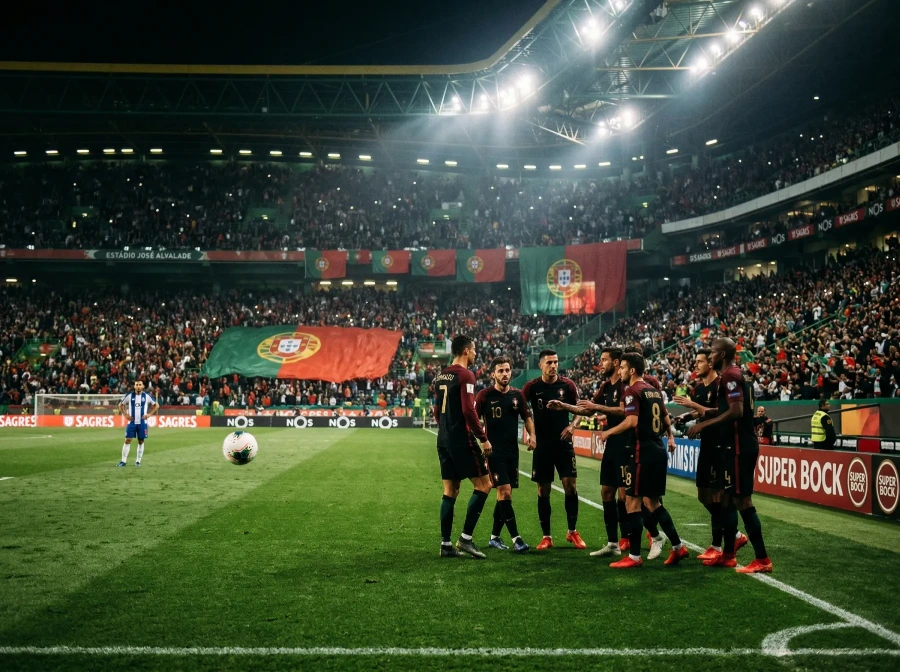
Every major tournament eventually produces a narrative that transcends the competition itself. At the 2026 World Cup, that narrative belongs to Cristiano Ronaldo. At 41, the most prolific goalscorer in men’s international football history will almost certainly make his final World Cup appearance — and whether he starts, comes off the bench, or watches from the stands in a captain’s armband, his presence will define Portugal’s tournament in a way that no tactical analysis can fully capture. Behind the Ronaldo storyline, though, sits a squad that is genuinely good enough to contend. Portugal’s depth of talent is extraordinary, the coaching setup has matured, and Group K presents a path that should lead comfortably to the knockout rounds.
Portugal’s Qualifying Campaign
Portuguese qualifying campaigns have a pattern: start with expected dominance, encounter one or two difficult results that generate panic in Lisbon, and then close out qualification with the kind of professional efficiency that reminds everyone why this squad is among Europe’s best. The 2026 cycle followed that script closely. Portugal secured their place with matches to spare, rotated their squad to manage workloads, and used the campaign to further embed the tactical principles that the coaching staff has developed over the past two years.
The qualifying record showed attacking firepower — Portugal scored freely, particularly at home where the front line operated with a fluency that suggests genuine chemistry rather than individual brilliance stitched together. Away performances were more pragmatic, with Portugal happy to control the tempo, defend their penalty area, and strike on the counter through the pace of their wide attackers. That dual personality — dominant at home, efficient away — is precisely the profile you want entering a neutral-venue tournament where adaptability matters more than a single tactical identity.
The one concern from qualifying was the occasional defensive lapse — goals conceded from transitions that a more disciplined backline would prevent, and set-piece vulnerabilities that persist despite coaching attention. These are correctable issues, but correction requires the kind of concentrated training time that international football rarely provides. Whether the pre-tournament camp addresses these weaknesses will influence Portugal’s defensive markets at the World Cup.
Key Players — The Ronaldo Question and Beyond
Ronaldo at 41 in a World Cup squad is unprecedented in the modern era. The Saudi Pro League has kept him scoring — his goal record there is staggering — but the gap between domestic Saudi football and World Cup knockout intensity is vast. His movement in the box remains intelligent, his heading ability is still elite, and his penalty-taking record is as reliable as any in the tournament. What has diminished is the pace, the ability to press from the front, and the defensive contribution that modern coaching demands from a centre-forward. The question is not whether Ronaldo can still score at a World Cup — he almost certainly can. The question is whether accommodating him in the starting lineup limits Portugal’s tactical options in a way that ultimately hurts the team more than his goals help.
Beyond Ronaldo, the squad is genuinely elite. Rafael Leão provides the explosive pace and dribbling ability that stretches defences and creates one-on-one situations that few left-sided attackers in the world can replicate. Bruno Fernandes operates as the creative hub — his passing range, his set-piece delivery, and his ability to arrive late in the box for goals make him one of the most productive attacking midfielders in European football. Bernardo Silva adds technical brilliance and tactical intelligence from a variety of positions, capable of playing on either wing, as a number ten, or even in central midfield. The attacking depth is absurd — Portugal can field two or three genuinely world-class front lines depending on the system, and the rotation options mean fresh legs are always available.
In midfield, Vitinha has emerged as the controlling presence that Portugal’s system requires — a metronomic passer who keeps the team ticking and resists the temptation to force the spectacular when the simple option is available. Joao Neves represents the next generation, already operating at an elite level and providing the energy and pressing intensity that the midfield needs alongside the more creative players. Defensively, Ruben Dias anchors the centre-back position with the composure and leadership that Premier League football at the highest level provides, and the fullback positions feature attacking options capable of providing width and crossing quality. Diogo Costa in goal has proven himself in Champions League competition and brings the shot-stopping and distribution that the system requires.
The Canadian connection deserves mention: Portugal boasts one of the largest diasporas in Canada, concentrated heavily in Toronto and the Greater Toronto Area. Portuguese-Canadian supporters will pack viewing venues across the country for every Portugal match, and if Portugal play any fixtures at North American venues accessible from Toronto, the atmosphere will resemble a home game. That emotional investment from the diaspora community adds a dimension to Portugal’s World Cup experience that few other European nations can claim on this continent.
Group K — DR Congo, Uzbekistan, Colombia
Group K contains one genuinely dangerous opponent, one competitive mid-tier side, and a debutant. Portugal should navigate it without serious alarm, but Colombia’s presence prevents any complacency — the South Americans have the quality to take points off anyone in the tournament on their day.
Colombia are the fixture that determines the group’s outcome. Los Cafeteros qualified through CONMEBOL — a path that hardens squads and produces players accustomed to high-pressure, physical matches. Colombia’s squad features players from top European leagues, and the collective experience of South American qualifying means they will not be intimidated by Portugal’s star power. The match will likely be tight, tactical, and decided by a single moment of quality or an individual error. Portugal vs Colombia is a genuine 50-50 encounter in my model, and the betting market’s slight lean toward Portugal reflects name value more than any decisive quality advantage.
DR Congo bring the physical intensity and raw athleticism of Central African football. Their squad includes players from European leagues — primarily France and Belgium — and the defensive structure has improved significantly. DR Congo will compete hard in every match and are capable of producing an upset if the opponent underestimates them. Against Portugal, the odds will be heavily stacked against them, but the match-level markets — total goals, both-teams-to-score, and first goalscorer — offer more interesting angles than the moneyline.
Uzbekistan are making their World Cup debut and will treat every match as a historic occasion. The Central Asian side qualified through a competitive AFC pathway and bring a squad that plays with tactical discipline and collective effort. The quality gap against Portugal is substantial, but Uzbekistan have shown in Asian competition that they can defend in numbers and create counter-attacking opportunities when opponents push forward. Portugal should win comfortably, but the margin of victory will depend on how seriously the coaching staff approaches the fixture relative to the more important matches against Colombia and DR Congo.
Portugal’s Odds and Market Position
Portugal are priced at approximately 12.00-16.00 in the outright market — similar to Germany, positioned as a second-tier contender with the talent for a deep run but questions about whether the pieces fit together optimally. The implied probability of 6-8% is reasonable for a team that has reached at least the quarter-finals at most recent major tournaments.
| Market | Decimal Odds | Implied Probability |
|---|---|---|
| Win Group K | 1.60 | 62.5% |
| Reach quarter-finals | 2.50 | 40.0% |
| Outright winner | 14.00 | 7.1% |
The group winner price at 1.60 reflects Colombia’s competitive threat — this group is not a walkover, and Portugal could finish second if Colombia produce a strong performance in the head-to-head. The quarter-final market at 2.50 is my preferred entry point for anyone bullish on this squad. Portugal’s probable knockout path from Group K is manageable through the first two rounds, and the talent is sufficient to reach the last eight regardless of group position.
Value Bets on Portugal
Ronaldo to score at any point in the tournament is priced attractively in the “anytime scorer” market — his penalty duties alone make him likely to convert at least one goal across three or more matches. The price rarely exceeds 1.50, which makes it useful as a parlay leg rather than a standalone bet, but the near-certainty of at least one Ronaldo goal is as close to a lock as individual markets offer.
Bruno Fernandes for tournament assists is the player market I find most compelling. His set-piece delivery, his through-ball accuracy, and his role as the primary creative force mean he will generate assists at a rate that few other midfielders in the tournament can match. If Portugal go deep, Fernandes could finish in the top three for assists, and the odds in that market have not fully absorbed his recent creative output at club level.
For match-level selections, Portugal vs Colombia under 2.5 goals is my primary bet. Both teams will respect the opponent’s quality, both have the defensive personnel to limit clear chances, and the match dynamic — two sides who cannot afford to lose — will produce caution rather than open, attacking football. The under at 1.85-1.95 captures that tactical reality.
Portugal’s Realistic Ceiling
The semi-finals are within reach. Portugal have the squad depth, the tactical flexibility, and the individual talent to beat any team in a single match — the Euro 2016 victory proved that a Portuguese side can win a major tournament through resilience and collective effort rather than sustained brilliance. The 2026 squad is more talented than the 2016 vintage, and the coaching has improved significantly.
The constraint is the Ronaldo factor. If the coaching staff manages his involvement wisely — starting him in favourable matchups, using him as a substitute impact option in tighter games, and ensuring the system does not compromise its pressing structure to accommodate a 41-year-old striker — Portugal can go deep. If the emotional weight of Ronaldo’s farewell overrides tactical logic, the team’s ceiling drops. My projection: quarter-finals as the most probable exit point, semi-finals as the upside, and a group-stage exit as extremely unlikely. For Canadian-Portuguese supporters across the country, this World Cup is the last chapter of a story that has defined a generation of football, and the complete team-by-team breakdown places Portugal among the dozen most likely sides to reach the final weekend.
