
 Available in US
Loading...
Japan at the 2026 World Cup — Group F Dark Horse and Betting Odds
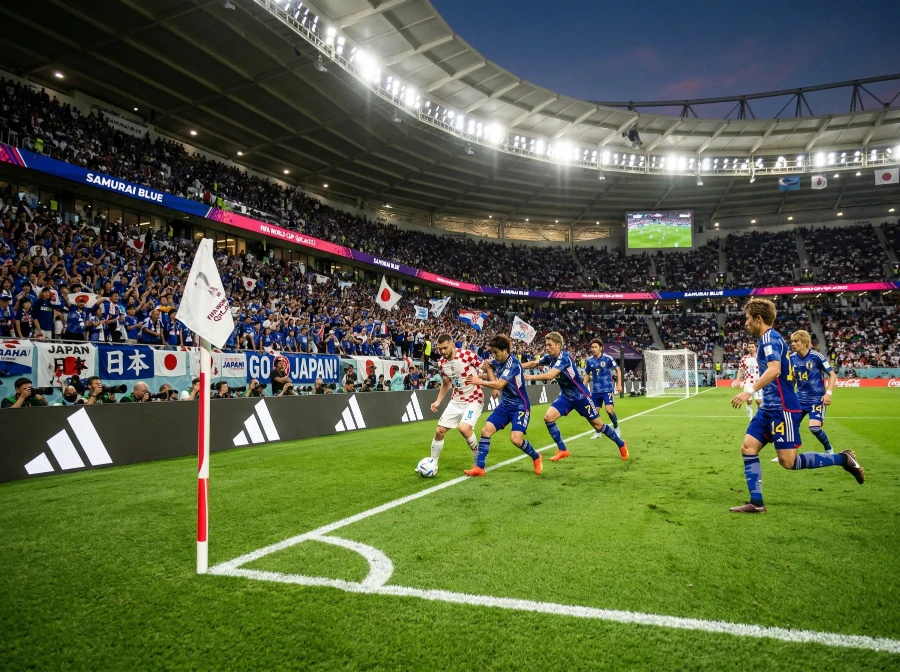
Germany and Spain — both beaten in the same group stage. That is not a fever dream or a hypothetical. That is what Japan did at the 2022 World Cup, producing the most stunning group-stage campaign by an Asian nation in tournament history. The Samurai Blue took the football world’s assumptions about the ceiling of Asian football, set them on fire, and walked away without looking back. Now they arrive at the 2026 World Cup with a squad that is deeper, more experienced at top European clubs, and placed in a Group F alongside the Netherlands, Sweden, and Tunisia that is tailor-made for another upset run.
Japan’s Asian Qualifying Dominance
Asian qualifying is a marathon — a multi-round process that stretches across years and requires consistency against a wide range of opponents from Central Asia to Southeast Asia to the Middle East. Japan dominated the cycle with the kind of ruthless efficiency that reflected their status as the continent’s strongest football nation. Topping the final round of qualifying with a record that included comfortable home wins and professional away results in difficult environments — Jeddah, Tehran, Sydney — Japan demonstrated that the 2022 World Cup was not a fluke but the beginning of a genuine competitive era for a program that had long been considered just below the top tier.
The qualifying campaign also served as a development platform. The coaching staff rotated aggressively across windows, giving competitive minutes to younger players who were breaking through at European clubs while maintaining results that never left qualification in doubt. By the final qualifying matchday, the coaching staff had used over 35 different players in competitive fixtures — a depth of testing that few other nations attempted. The depth revealed during qualifying — Japan could field two or three genuinely competitive starting lineups — was the most encouraging signal for bettors looking ahead to the World Cup, where fatigue management and squad rotation are decisive factors across a condensed 39-day schedule.
European-Based Stars and Rising Talent
The transformation of Japanese football over the past decade is best illustrated by one statistic: the number of Japanese players competing in Europe’s top five leagues has more than doubled since the 2018 World Cup. This is not a coincidence — it is the result of a deliberate development strategy that prioritizes exporting talent to competitive environments. The 2026 squad features players from the Bundesliga, Premier League, La Liga, Ligue 1, and Serie A in numbers that rival traditional European football nations.
Takefusa Kubo operates as the creative fulcrum — his close control, his dribbling in tight spaces, and his ability to produce decisive moments in the final third make him the most dangerous Japanese attacking player since Shinji Kagawa’s peak. The midfield options include players who thrive in high-pressing systems at European clubs — pressing, recovering, transitioning, and delivering quality in the final third at a tempo that few Asian nations can match. The defensive core combines Japanese tactical discipline with the physical demands of European football, producing centre-backs and fullbacks who are comfortable defending against pace, power, and technical quality in equal measure.
The goalkeeping situation is settled with a number one who has developed into one of Asia’s best through consistent European club football. The squad depth across all positions is the most impressive in Japan’s World Cup history — the coaching staff can rotate five or six players between matches without a noticeable drop in quality, a luxury that smaller nations rarely enjoy.
Group F — Netherlands, Sweden, Tunisia
Group F is a genuine four-way contest. The Netherlands are favourites, but Japan’s 2022 exploits — beating Germany and Spain in the same group — make the Samurai Blue a credible threat for top spot. Sweden’s organization and set-piece danger add another layer of complexity, and Tunisia’s defensive resilience means that points will be hard-earned for everyone.
The Netherlands are the headline opponent, and the match carries echoes of the 2022 Round of 16 where the Dutch eliminated Japan 3-1 with a pragmatic performance that exploited Japan’s high defensive line through long diagonal balls and direct running. The rematch offers Japan an opportunity for revenge and a chance to demonstrate that the 2022 group stage was not an anomaly but the new baseline. Japan’s pressing game — coordinated, relentless, and designed to force turnovers in dangerous areas — is exactly the kind of approach that disrupts Dutch build-up play, which relies on patience and progressive passing from the back through Frenkie de Jong and the centre-backs. If Japan can replicate the pressing intensity that dismantled Germany and Spain in 2022, and if they adjust the high line that the Netherlands exposed in the knockout round, the Group F match becomes a genuine 50-50 contest. The both-teams-to-score market in this fixture is my primary selection — both sides will create clear chances, and neither possesses the defensive profile to shut the other out completely.
Sweden present a more physical challenge. The Scandinavian style — direct, aerial, and built around set-piece delivery — tests Japan’s defensive discipline in ways that the technical European sides do not. Japan’s centre-backs will need to win aerial duels and defend the penalty area with the kind of physicality that does not come naturally to a squad built primarily for ground-based football. Tunisia complete the group as a tactically disciplined side that will make every match uncomfortable. Japan vs Tunisia is the fixture most likely to produce a tight, low-scoring match where a single set piece or counter-attack decides the outcome.
Japan’s Odds for 2026
The market prices Japan at approximately 40.00-60.00 in the outright — a dark horse price that reflects the 2022 evidence without fully committing to the idea that Japan can sustain their level across a seven-match tournament. The implied probability of 1.5-2.5% understates Japan’s actual chances in my model, which places them closer to 4-5% based on squad quality and tactical cohesion.
| Market | Decimal Odds | Implied Probability |
|---|---|---|
| Win Group F | 3.50 | 28.6% |
| Qualify from group | 1.80 | 55.6% |
| Outright winner | 50.00 | 2.0% |
The group winner price at 3.50 is where the value sits. Japan finishing above the Netherlands sounds improbable until you remember they finished above Germany and Spain in 2022. The 2026 squad is deeper and more experienced at club level than the 2022 version, and the pressing system that produced those upsets has been refined rather than abandoned. Qualification at 1.80 is the more conservative play — Japan advancing from Group F is more likely than not, and the price offers a reasonable return for a proposition I consider favourable.
Giant Killers Again?
Japan’s ceiling at this World Cup is higher than most pundits acknowledge. The quarter-finals are realistically achievable — top the group or finish as a strong second, beat a beatable opponent in the Round of 32, and then face whatever the bracket produces in the Round of 16. If the draws align, a quarter-final appearance is within reach, and Japan’s ability to produce peak performances in individual matches means even a semi-final cannot be entirely dismissed.
The floor is a group-stage exit — Group F is competitive enough that three defeats are possible if the pressing fails and the European opponents exploit Japan’s defensive vulnerabilities against physical, aerial play. But the most likely outcome sits between these extremes: qualification from the group, a competitive knockout match, and an exit somewhere between the Round of 32 and the Round of 16. For bettors, Japan represent the best dark-horse value in the tournament — the group winner at 3.50 and qualification at 1.80 both offer edges that the market has not fully priced in based on the broader competitive landscape.
