
 Available in US
Loading...
Spain at the 2026 World Cup — Group H, Young Stars and Betting Odds
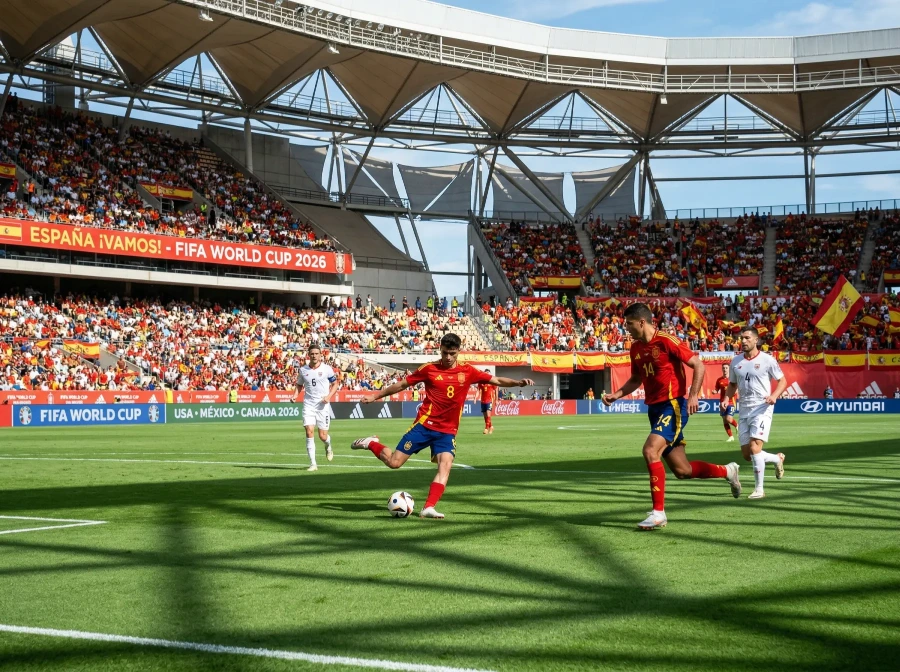
The youngest squad to win a European Championship in 2024 is now two years older, two years more experienced, and arriving at the World Cup with the kind of quiet confidence that separates pretenders from contenders. Spain’s Euro 2024 triumph was not a fluke — it was the announcement of a generational overhaul that has produced a team capable of dominating possession, pressing with ferocity, and finishing with the ruthlessness that previous Spanish sides sometimes lacked. I think Spain are the most underpriced team in the outright market heading into 2026, and this preview explains why.
Spain’s Euro Glory and Road to 2026
Euro 2024 was supposed to be a transition tournament for Spain. Instead, it became a coronation. La Roja swept through Germany beating Croatia, Italy, hosts Germany in the quarter-finals, France in the semi-finals, and England in the final — a gauntlet that included four of the last five World Cup champions. The manner of the victories was as impressive as the results: Spain controlled matches through possession but also showed a direct, vertical attacking style that previous iterations of the tiki-taka era could not match. The pressing was relentless, the transitions were rapid, and the clinical finishing put to rest the criticism that Spain could dominate without converting.
The road through European qualifying for the 2026 World Cup was uneventful in the best sense — Spain topped their group without serious alarm, using the fixtures to further integrate the Euro 2024 core and test new options in wider positions. The qualifying campaign confirmed what the Euros had suggested: this squad’s floor is extremely high. Even in matches where Spain did not play at their peak, the tactical structure and individual quality ensured comfortable results. The defensive record was exemplary — Spain conceded fewer than a goal per match across the entire qualifying cycle — and the attacking output, while not always spectacular, consistently created enough chances to win. De la Fuente used the window wisely, giving minutes to emerging players without sacrificing competitive intensity, and the result is a squad that arrives at the World Cup match-fit, tactically cohesive, and battle-hardened by two years of uninterrupted success.
For bettors, that consistency is the most valuable quality a tournament team can possess — it means fewer bad days, fewer upsets, and a smoother path through the group stage and into the knockout rounds. Spain have not lost a competitive match in over 18 months, and their xG differential in qualifying was the highest among European qualifiers. Those are not numbers that suggest a team coasting on reputation — they point to genuine systemic superiority.
The coaching continuity has been essential. Luis de la Fuente took a squad that many wrote off after the 2022 World Cup disappointment — a penalty shootout loss to Morocco in the Round of 16 — and rebuilt the attacking identity in under two years. His willingness to trust young players in high-pressure matches, his tactical flexibility within a clear stylistic framework, and his management of egos within a squad full of stars from rival clubs have earned him credibility that will be tested on the World Cup stage.
La Roja’s Young Core — Yamal, Pedri and Beyond
Lamine Yamal turned 17 during Euro 2024 and scored one of the goals of the tournament against France in the semi-final. He will be 19 at the 2026 World Cup, and the thought of what two more years of development at Barcelona will have done to his game is genuinely exciting. Yamal plays with the fearlessness of youth and the technical foundation of a generational talent — his dribbling, his vision, his ability to beat defenders on either side, and his composure in front of goal are all operating at a level that most players never reach. If he stays healthy, Yamal could be the defining player of this tournament. His odds in various individual markets underestimate the possibility that he produces a breakout World Cup at a level that transcends his already extraordinary achievements.
Pedri is the engine. The Barcelona midfielder controls games with a composure that belies his age — he receives the ball under pressure, turns, and plays forward with a speed of thought that creates advantages before opponents can react. His partnership with Gavi in central midfield gives Spain a double pivot of creativity and industry that few nations can match. Pedri’s passing accuracy in the final third, combined with his ability to drift into dangerous positions between the lines, makes him a quiet threat for assists and occasional goals. In a tournament where possession and control are currency, Pedri is Spain’s central banker.
Nico Williams provides the width and directness that balances Spain’s possession game. The Athletic Bilbao winger — or wherever he is playing by the time the tournament starts — offers pace, one-on-one ability, and a willingness to run at defenders that stretches play horizontally and creates space for Pedri and Yamal to operate centrally. His output at Euro 2024 — a goal in the final, constant threat down the left, and defensive work rate that exceeded expectations — demonstrated that he is not merely a luxury option but a functional necessity in Spain’s system. Dani Olmo adds a versatile attacking option capable of playing across the front line or as an advanced midfielder, his technical quality and eye for goal making him the ideal super-sub or rotation starter across a compressed schedule. Alvaro Morata’s experience and movement in the box give Spain a focal point that the younger players can play around — his ability to create space for runners through intelligent positioning is often more valuable than his goal tally suggests.
Defensively, the backline is anchored by experience at the highest club level. Rodri — the Ballon d’Or winner in 2024 — operates as the deepest midfielder, providing the defensive screen and distribution that the entire system depends on. If Rodri is fully fit, Spain’s defensive structure is among the strongest in the tournament; if he is unavailable, the tactical adjustment required is significant enough to move their odds. The centre-back pairing combines pace with positional intelligence — essential against the quick transitions that modern World Cup opponents increasingly rely upon. The fullbacks are athletic, technically comfortable, and tactically disciplined, capable of inverting into midfield in possession and recovering to defend the wide areas in transition. The goalkeeping position features a reliable option who commands the area and distributes effectively, supporting Spain’s build-from-the-back philosophy without introducing unnecessary risk. The collective defensive unit conceded the fewest goals at Euro 2024 and maintained that standard through qualifying — a record that bettors should weigh heavily when assessing group-stage clean sheet markets.
Group H — Cape Verde, Saudi Arabia, Uruguay
Three matches, three very different opponents, and one fixture that elevates Group H from manageable to genuinely intriguing. Cape Verde and Saudi Arabia pose limited threats to a squad of Spain’s quality, but Uruguay — a two-time World Cup champion with a proud tournament tradition — transforms this group into something more complex than the seedings suggest.
Cape Verde are making their World Cup debut, and the occasion alone will be monumental for the island nation. Their squad draws primarily from the Portuguese league system, with a handful of players in stronger European leagues. Cape Verde qualified through a remarkable African campaign that demonstrated defensive resilience and the ability to grind out results in hostile environments. Against Spain, the gap in quality will be stark — but Cape Verde’s willingness to defend deep, stay compact, and hit on the counter means Spain will need patience and variety in their attacking approach. The moneyline offers no value, but the total goals market and the time of first goal could provide interesting angles if Cape Verde’s defensive shape holds longer than expected.
Saudi Arabia return to the World Cup stage having produced one of the greatest upsets in tournament history — the 2-1 victory over Argentina in the 2022 group stage. That result proved Saudi Arabia can compete at the highest level for 90 minutes when the tactical setup and the emotional intensity align perfectly. The squad has maintained competitiveness in Asian competition, and the investment in domestic football infrastructure — including Vision 2030’s heavy funding of the Saudi Pro League — means the player pool is deeper than in previous cycles, even if the overall quality still trails European and South American standards. Against Spain, Saudi Arabia will likely replicate the high-line pressing approach that worked against Argentina — pushing up aggressively, compressing the pitch, and betting on intensity over sustained quality. The danger for Spain is that this approach can work for 30 to 45 minutes, and if Saudi Arabia score early, the match dynamic shifts entirely. Whether that gamble works depends on how quickly Spain adjust and exploit the space behind the press — and given Spain’s proficiency in quick passing combinations through tight spaces, I expect them to find solutions within the first half.
Uruguay are the match that matters. La Celeste carry a tournament pedigree that exceeds their FIFA ranking — two World Cup titles, a Copa America record that demands respect, and a squad that combines South American grit with European tactical education. The current generation features talented attackers from top European leagues, a midfield engine that competes physically and technically, and a defensive tradition built on discipline and aggression. Spain vs Uruguay in the group stage will be a tactical chess match between two sides who understand tournament football deeply. The betting market will price Spain as favourites, but the draw is a live outcome — possibly the likeliest in the group after a Spain victory. Uruguay know how to play for draws when they need them, and this fixture could produce a cautious, controlled match where both sides protect their position before the decisive third group game.
Tactical Identity — Still the Tiki-Taka Heirs
The tiki-taka label that defined Spain’s 2008-2012 golden era is outdated but not entirely wrong. Spain still prioritize possession — they averaged over 60% in competitive matches across the last two years — but the current version is faster, more direct, and more willing to take risks in the final third than the Xavi-Iniesta teams ever were. The evolution is most visible in the wide areas, where Yamal and Williams provide a verticality that the classic tiki-taka system lacked. Instead of cycling possession patiently until a gap appears, Spain now combine short passing sequences with sudden acceleration through the channels, catching opponents in transition before they can reorganize.
Rodri’s role at the base of the midfield is the structural key. His ability to receive the ball under pressure, resist the press, and distribute accurately over short and long distances gives Spain a release valve that prevents opponents from suffocating the build-up. When Rodri is on the pitch, Spain’s passing network flows through him — approximately 40% of attacking sequences originate from his position, and his ability to switch play quickly from one flank to the other stretches defences horizontally. For bettors, the implication is that Spain’s attacking output correlates heavily with Rodri’s fitness and form — any news about his availability should move your assessment of Spain’s odds significantly.
Spain’s Decimal Odds Across Markets
The outright market has Spain priced at approximately 8.00-10.00 in decimal odds — fourth or fifth in most bookmaker rankings behind Argentina, France, and England. That implies a 10-12.5% probability, which I believe significantly undervalues a team that won the last major tournament they entered and possesses the youngest, most improving squad among the top contenders.
| Market | Decimal Odds | Implied Probability |
|---|---|---|
| Win Group H | 1.55 | 64.5% |
| Reach semi-finals | 3.50 | 28.6% |
| Outright winner | 9.00 | 11.1% |
The group winner price at 1.55 accounts for Uruguay’s presence, which is fair — Uruguay are good enough to take points off Spain in a single match, though not to outscore them across three fixtures. The semi-final market at 3.50 is where I see the strongest value. Spain’s knockout path from Group H projects to be manageable through the quarter-finals, and their Euro 2024 run — which included victories over Germany, France, and England in consecutive knockout matches — demonstrates that they can beat anyone at this level. The semi-final is Spain’s floor if they play to their capability, and the price does not fully reflect that.
Betting Angles — Is Spain Underpriced?
I opened this preview by calling Spain the most underpriced team in the outright market, and I stand by that assessment. The case rests on three pillars: first, they won Euro 2024 convincingly against elite opposition, demonstrating that the squad can perform under tournament pressure. Second, the core players are entering their prime years — Yamal at 19, Pedri at 23, Williams at 24 — meaning the team is improving, not declining. Third, the coaching stability and tactical clarity give Spain a structural advantage over rivals dealing with managerial transitions or identity crises.
The outright at 9.00 is my primary selection for the tournament. I rarely recommend outright bets — the variance is too high and the market is usually efficient — but Spain’s price represents a genuine mispricing in my model. The market is anchored to Spain’s 2022 World Cup disappointment (the Morocco loss) and has not fully adjusted for the Euro 2024 evidence. If Spain reach the semi-finals — which I consider more likely than not — the outright price will shorten dramatically, meaning the current odds offer the best entry point available.
In the player markets, Lamine Yamal for young player of the tournament is the standout bet. He won the equivalent award at Euro 2024 and will be the focal point of Spain’s attack in every match. The competition for the award includes talented young players from other nations, but Yamal’s role, his ability to produce highlights, and Spain’s expected deep run give him more opportunities than most rivals. Pedri for tournament assists is another angle worth exploring — his passing output in the final third generates chances at a rate that supports a top-three finish in the assists rankings.
Spain’s Path to a Deep Run
Spain will win Group H. Uruguay may take a point off them, but the overall quality gap across three matches favours La Roja comfortably. The Round of 32 opponent should be a third-place qualifier from a weaker group — a match Spain will be expected to dominate and should win without significant stress. The Round of 16 presents the first genuine test, likely against a second-place finisher from a strong group, and from there the bracket opens into quarter-finals and semi-finals where Spain would face the tournament’s other heavyweights.
The beauty of Spain’s position is that they do not fear anyone. Euro 2024 proved that — they beat the hosts, the World Cup runners-up, and the European Championship favourites in three consecutive knockout matches without ever looking like the inferior side. That confidence carries into 2026, and combined with a squad that is still improving, it makes Spain my pick for the best risk-reward proposition in the full tournament field. The trophy is not guaranteed — no team’s is — but the path, the talent, and the price align in a way that I have not seen for any other contender.
