
 Available in US
Loading...
Brazil at the 2026 World Cup — Group C, Squad and Betting Odds
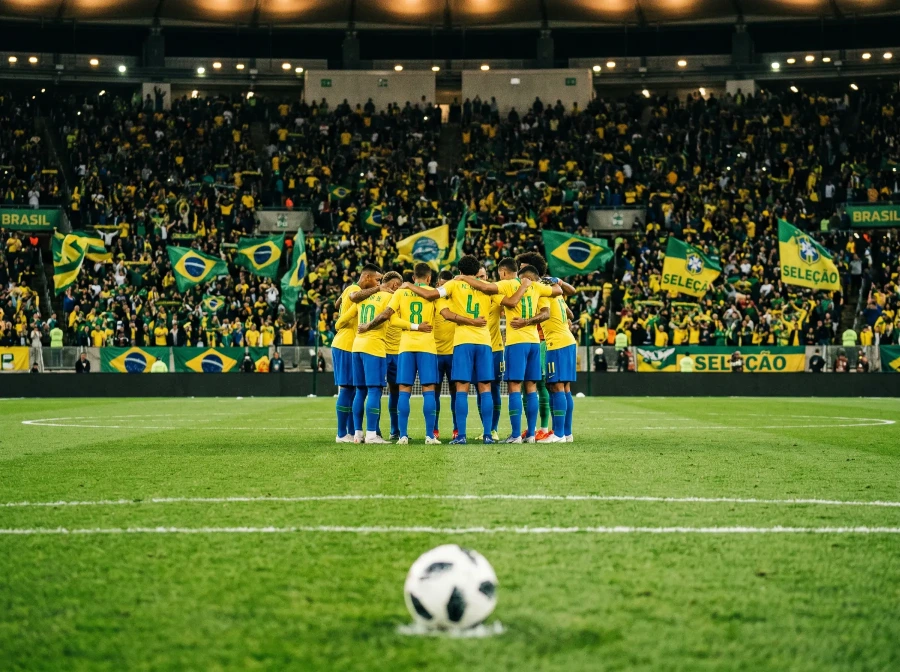
Five World Cup titles. Twenty-four years without one. That gap between Brazil’s historical dominance and their recent tournament record is the central tension in every Seleção preview, and the 2026 edition arrives with more uncertainty than any Brazilian World Cup campaign in memory. The squad is in transition, the coaching situation has been turbulent, and the CONMEBOL qualifying cycle produced results that ranged from dominant to deeply concerning. And yet — Brazil remain Brazil. The yellow shirt carries a weight that statistics cannot capture, and the individual talent in this squad could ignite at any moment. As a betting analyst, I find Brazil to be the most difficult team in the tournament to price accurately.
CONMEBOL Qualifying — A Bumpy Ride
South American qualifying treated Brazil with a roughness that would have been unthinkable a decade ago. The campaign included home defeats that stunned Brazilian supporters — losses in São Paulo and Rio de Janeiro that exposed defensive fragility and a lack of cohesion in the midfield. Away performances lacked the cutting edge expected of a team with this talent pool, and stretches where the Seleção looked organizationally adrift became recurring themes: players unsure of their roles, defensive transitions sluggish, and the creative spark in the final third flickering rather than burning. The qualifying table told a story of inconsistency — wins against Bolivia and Venezuela mixed with dropped points against direct rivals that no previous Brazilian generation would have accepted.
The coaching carousel did not help. Brazil cycled through different approaches during the qualifying period, each change bringing a new tactical philosophy and a different set of preferred personnel. What works at club level — where a coach has daily training sessions to implement ideas — translates poorly to the international calendar, where squads meet for a handful of days every few months. That instability shows up in the data: Brazil’s defensive record across qualifying was worse than at any point since the early 2000s, the goals-per-match average fluctuated wildly between windows, and the team’s pressing statistics — a proxy for tactical organization and collective effort — were inconsistent enough to make any bettor pause before backing them at short prices. For the markets, the qualifying campaign sends a mixed signal: Brazil qualified because their individual quality is undeniable, but the collective performance raised questions that the tournament itself will need to answer.
The positive spin is that qualifying struggle can be galvanizing. Argentina went through a painful qualifying cycle before the 2022 World Cup and used the adversity to build the resilience that carried them to the title. Brazil’s recent difficulties could have a similar effect — the players know they have underperformed, the public expectation is enormous, and the motivation to prove doubters wrong at a World Cup is a powerful driver. Whether that narrative plays out depends on whether the tactical issues have been resolved or merely papered over by talent.
The Seleção’s Squad and Key Figures
I have a rule when assessing international squads: ignore the names on the back of the shirt and focus on what each player brings to the collective system. With Brazil, that rule is almost impossible to follow because the names are too loud. The attacking options read like an all-star roster — forwards from the Premier League, La Liga, Ligue 1, and the Saudi Pro League who carry goal-scoring records that would anchor any other nation’s tournament hopes. Vinícius Júnior at Real Madrid has developed into one of the most devastating wingers in world football, capable of beating any defender one-on-one and producing decisive moments in the biggest matches. His pace, his directness, and his willingness to take responsibility in pressure situations make him Brazil’s most important attacker and a top-ten player in the tournament.
Rodrygo offers a different dimension — more technical, more versatile, capable of playing across the front line and drifting into midfield pockets where his passing ability creates angles that more direct players cannot find. The two Real Madrid forwards give Brazil a left-right attacking axis that combines speed with intelligence, and any defence that focuses on neutralizing one will leave space for the other. Behind them, Raphinha provides an experienced third option capable of stepping in without a noticeable drop in quality.
The midfield question is more complex and, frankly, more concerning. Brazil have historically depended on a creative number ten to orchestrate attacks — Zico, Rivaldo, Kaká, Neymar each carried that burden in their respective eras. The current squad lacks a natural successor to the playmaker lineage, and the void is tactically significant. The midfield options are athletic and combative but lean more toward the functional than the artistic. Casemiro — if included at his age — provides experience and defensive steel that few alternatives can replicate, but his legs are not what they were during his peak years at Real Madrid. Younger midfielders from European clubs offer energy and pressing intensity without bringing the passing range or vision that unlocks packed defences. Bruno Guimarães represents the closest thing to a complete midfielder in the pool — he can defend, he can progress the ball, and he can pick the decisive pass — but even he operates more as a controller than a creator. The risk is that Brazil’s midfield becomes a transition zone rather than a creative hub, reducing the team to a direct, counter-attacking style that wastes the technical gifts of the forward line and makes them predictable against organized opposition.
Defensively, Marquinhos remains the anchor — one of the most experienced centre-backs in world football with over a decade at the top level and captaincy experience at both club and international level. His leadership will be crucial in high-pressure moments where organization matters more than individual talent. The fullback positions have been a revolving door, with multiple options competing for starting roles without any one player establishing clear dominance. In goal, Alisson provides the world-class last line that every contender needs — his shot-stopping, distribution, and command of the area are elite by any measure.
The depth beyond the first eleven is significant but uneven. Brazil can rotate their attack without losing quality. The midfield options are less interchangeable, and the defensive depth includes players who are still developing at club level and may not be ready for the intensity of a World Cup knockout match. Overall, the squad has the highest individual ceiling in the tournament — on their best day, Brazil’s starting eleven can beat anyone. The question is how often “their best day” appears across seven matches in 39 days.
Group C — Morocco, Scotland, Haiti
Morocco in Group C is the draw that makes this group genuinely interesting. The Atlas Lions reached the semi-finals in 2022, knocking out Spain and Portugal along the way, and their defensive organization under Walid Regragui transformed them from a solid African qualifier into a team capable of shutting down European football’s technical elite. Morocco vs Brazil is a marquee group-stage fixture — two contrasting styles, both with something to prove, in a match that will shape the group’s narrative from the first whistle.
Morocco’s defensive discipline will test Brazil’s ability to create chances against organized opposition, which was precisely the weakness exposed during CONMEBOL qualifying. If Morocco replicate the low-block, counter-attacking approach that worked against Spain in 2022, Brazil will need creativity and patience that their recent performances have not consistently demonstrated. The betting market will price Brazil as favourites, but the Morocco moneyline at 4.50 or higher represents a live upset possibility that I would not dismiss lightly.
Scotland are making a World Cup return that the Tartan Army has awaited with characteristic passionate impatience. The Scottish squad features Premier League regulars and a midfield that can compete physically with anyone in the tournament. John McGinn’s energy, Scott McTominay’s goal threat from midfield, and the overall combativeness of the team make them a challenging opponent regardless of the quality gap on paper. Scotland will not be overawed — they demonstrated at Euro 2024 that they can match top sides for intensity and effort even if the technical gap occasionally shows in the final third. Against Brazil, Scotland will defend deep and attack through set pieces and quick transitions, a strategy that is uncomfortable for technically superior sides who prefer to play on the front foot. In the betting market, Scotland to score against Brazil is priced attractively — they create enough chances from set pieces and counter-attacks to breach even well-organized defences.
Haiti are the group’s debutants in all but name — their World Cup history consists of a single appearance in 1974, and the current squad represents a significant step forward for Caribbean football. The talent pool draws from the Haitian diaspora in North America and Europe, giving the squad a blend of different football cultures that makes them more competitive than their FIFA ranking suggests. Several players ply their trade in MLS and the lower divisions of European leagues, providing a level of professional experience that previous Haitian squads lacked. Haiti will compete with heart and energy but lack the depth and experience to trouble Brazil over 90 minutes. The physical demands of three matches in nine days against opposition of this calibre will test their roster depth severely. This is the fixture where Brazil should generate the goals and clean sheet that boost confidence and settle nerves after what will likely be a tense opener against Morocco or Scotland. The Asian handicap at -2.5 or -3.0 offers the most efficient way to back a dominant Brazil performance in this match.
Brazil’s Tactical Direction Under the New Regime
The tactical situation is the wildcard in Brazil’s campaign. After the qualifying turbulence, the coaching setup heading into 2026 faces the challenge of imposing a clear identity on a squad that has played under multiple systems in the space of two years. The ideal is a balance between the traditional Brazilian attacking flair and the defensive organization that modern tournament football demands — press high when winning the ball is possible, transition quickly when it is recovered, and create numerical advantages in wide areas where Vinícius and Rodrygo can isolate defenders.
What I expect to see is a 4-2-3-1 or 4-3-3 that prioritizes getting the ball to the front three as quickly as possible while maintaining a double pivot that protects the centre-backs. The fullbacks will be key — Brazil’s best attacks historically flow through wide areas, and the ability of the fullbacks to overlap and provide crossing angles will determine how many clear chances the forwards receive. Defensively, the pressing intensity will need to improve from qualifying levels, because Morocco and Scotland will punish a disorganized press with direct, quick attacking play.
For bettors, the tactical uncertainty is the main risk factor. A settled, confident Brazil — the version that wins friendlies 4-0 and plays with the swagger that the shirt demands — is a genuine title contender. A disjointed, tactically confused Brazil — the version that appeared in several qualifying windows — is a quarter-final exit waiting to happen. The market’s outright price tries to split the difference, but the variance is enormous, and that variance creates both opportunity and danger.
Brazil’s Odds — From Outright to Group Stage
The bookmakers have Brazil priced at approximately 9.00-12.00 in the outright market — longer than Argentina, France, and England, but shorter than most European contenders. That implies an 8-11% probability, which places Brazil as a legitimate but not leading contender. The price reflects both the undeniable talent and the organizational questions — a fair assessment, in my view, and one that makes Brazil poor value in the outright but potentially interesting in progression markets where you are backing talent to overcome tactical deficiency in individual matches.
| Market | Decimal Odds | Implied Probability |
|---|---|---|
| Win Group C | 1.55 | 64.5% |
| Reach quarter-finals | 2.50 | 40.0% |
| Outright winner | 10.00 | 10.0% |
The group winner price at 1.55 acknowledges Morocco’s threat — this is not a free group, and Brazil’s qualifying form does not guarantee dominance. I find value in the “to qualify” market at 1.15-1.20, which is extremely short but reflects the near-certainty that Brazil’s talent carries them through regardless of tactical issues. The quarter-final market at 2.50 is more nuanced — it requires Brazil to win the group or finish as a strong second, and then beat a beatable Round of 32 opponent before facing a tougher Round of 16 draw. I would lean toward the over on Brazil’s group position rather than the outright, as the group stage is where Brazil’s talent-over-tactics approach works best.
Value Angles on Brazil
A Brazilian friend of mine in Toronto once described supporting the Seleção at a World Cup as “expecting a symphony and getting free jazz.” That analogy captures the betting challenge perfectly. Brazil’s unpredictability makes them poor value in the outright market but fascinating in match-level markets where the variance works in your favour.
Vinícius Júnior in the top scorer market at 15.00-20.00 is my preferred player bet. He has the talent, the minutes, and the penalty-box presence to score in every round, and if Brazil reach the semi-finals, he will have had enough matches to accumulate the five or six goals that typically win the golden boot. The risk is that Brazil exit early, cutting his opportunities short — but at the price, the reward justifies it.
In the group stage, I am targeting Brazil vs Morocco as the match with the most betting value. The total goals market should sit at 2.0-2.5, and I lean toward the under — Morocco’s defensive structure is built to suppress creative opposition, and Brazil’s struggle to break down organized defences in qualifying suggests this could be a cagey, tactical affair. Under 2.5 goals at 1.90 or better is my line.
For Canadian bettors, Brazil’s appeal extends beyond the pitch. Toronto and Vancouver both have significant Brazilian communities, and World Cup matches featuring Brazil will draw enthusiastic viewing parties that create their own energy. That cultural connection, combined with the attractive odds on various Brazil markets, makes the Seleção a natural part of any Canadian bettor’s World Cup portfolio.
Renewal or Regression — Brazil’s 2026 Story
The 2026 World Cup will answer a question that has haunted Brazilian football since 2002: are the Seleção still capable of winning a seventh star, or has the game evolved past the point where Brazilian flair alone can overcome organized opposition? The squad has the individual talent to reach the final — Vinícius Júnior, Rodrygo, and Raphinha form an attack that can tear apart any defence on their day. The collective organization to sustain a seven-match winning run is less certain, and the gap between Brazil’s ceiling and floor is wider than for any other serious contender. My projection places Brazil in the quarter-finals as the most likely exit point — talented enough to dominate the group stage and early knockout rounds, but vulnerable against the elite European sides that combine tactical discipline with their own star power.
The optimistic scenario is a run to the semi-finals fuelled by Vinícius Júnior hitting peak form at the right moment. The pessimistic scenario is a group-stage scare followed by a Round of 16 exit against a well-organized opponent who exploits the defensive vulnerabilities that qualifying exposed. The middle ground — and the most probable outcome — is a quarter-final that Brazil lose heroically, playing beautiful football that falls just short against a side with better structural integrity. For bettors, that means comparing Brazil’s value against the wider field and concentrating on match-level markets where the chaos works in your favour rather than the outright where the price already accounts for the uncertainty.
