
 Available in US
Loading...
BC Place — Vancouver’s World Cup 2026 Stadium
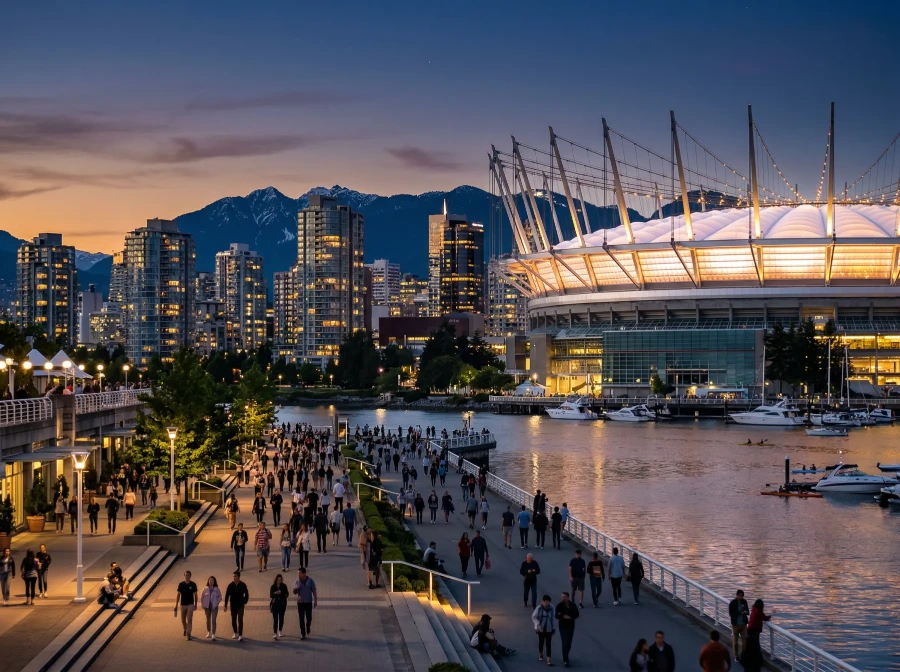
Vancouver does things differently. While Toronto’s BMO Field offers the intimacy of a compact soccer ground, BC Place delivers scale — a 54,500-seat retractable-roof stadium that transforms downtown Vancouver’s skyline into a World Cup backdrop. The venue sits in the False Creek neighbourhood, surrounded by water, mountains and some of the most photogenic urban scenery in North America. For the 2026 World Cup, BC Place provides Canada’s western anchor, hosting group-stage matches that bring the tournament to the Pacific time zone and to a city whose relationship with soccer runs deeper than casual fans realize.
About BC Place
BC Place opened in 1983 as a multi-purpose stadium and has served as the home of the Vancouver Whitecaps since their MLS debut in 2011. The retractable roof — installed during a major renovation completed in 2011 — is a critical feature for World Cup scheduling. June weather in Vancouver averages 19 degrees Celsius with occasional rain, and the roof’s flexibility allows FIFA to guarantee dry playing conditions regardless of Pacific Northwest weather patterns. That roof also traps crowd noise, creating an acoustic intensity that open-air stadiums cannot replicate.
The pitch surface was converted from artificial turf to natural grass specifically for the 2026 World Cup — a significant investment that addresses FIFA’s insistence on grass for all tournament fixtures. The temporary grass installation requires careful management between matches, as the enclosed environment with limited natural airflow can stress turf health across a multi-week tournament. Previous temporary grass installations at indoor or retractable-roof venues have occasionally produced surfaces that cut up in the second half, a factor that bettors should monitor through match-week pitch reports.
Capacity sits at approximately 54,500 for the World Cup configuration, making BC Place the larger of Canada’s two venues. The seating bowl is steep and close to the pitch, producing sightlines that rival purpose-built soccer stadiums despite BC Place’s multi-sport origins. The lower bowl’s proximity to the touchline — combined with the roof’s noise-trapping effect — creates an atmosphere that visiting teams consistently describe as hostile when the home crowd is engaged.
2026 World Cup Fixtures at BC Place
BC Place is confirmed for group-stage matches, though specific fixture assignments beyond potential Canadian involvement remain subject to FIFA’s final scheduling. The venue is expected to host matches from multiple groups across the first two weeks of the tournament, with the total allocation approximately matching BMO Field’s fixture count. If Canada play one of their group matches in Vancouver — a likely scenario for either the Switzerland or Qatar fixture — BC Place will produce a sold-out, predominantly Canadian crowd at a venue where the Whitecaps’ supporter culture has built a foundation of passionate soccer fandom.
The Pacific Time Zone scheduling creates a unique dynamic for Canadian bettors. A 4:00 PM PT kickoff translates to 7:00 PM ET — primetime for Ontario’s betting market, which accounts for the largest share of Canada’s wagering handle. That means BC Place fixtures benefit from maximum national betting attention, with Ontario-based bettors placing wagers during peak evening hours while Vancouver fans watch in late afternoon sunshine. The timing alignment maximizes liquidity across Canadian sportsbooks, producing tighter spreads and more competitive odds than venues in less convenient time zones.
One scheduling consideration for bettors: the retractable roof creates controlled conditions that remove weather as a variable. While outdoor venues in Texas or Florida may see heat-related performance drops in afternoon fixtures, BC Place’s climate-controlled environment ensures consistent playing conditions across all matches. That consistency favours technical teams and removes one source of unpredictability from the betting equation — a minor but measurable edge when pricing match totals and possession-based outcomes.
Vancouver — Canada’s West Coast Host
Vancouver’s multicultural demographics mirror Toronto’s in diversity if not in scale. The Chinese-Canadian community is the largest in the country, the South Asian presence in suburban Surrey and Delta is substantial, and significant Japanese, Korean, Filipino and Iranian diasporas add layers of passionate support for visiting nations. A Group G match featuring Iran at BC Place, for example, would attract enormous interest from Vancouver’s Iranian-Canadian community — one of the largest outside of Los Angeles. The Korean-Canadian community in Metro Vancouver similarly ensures that any South Korean group-stage fixture at BC Place will sell out rapidly and produce a fan atmosphere split between passionate visiting support and Canadian neutrals.
The city’s infrastructure handles major events efficiently. The SkyTrain rapid transit system connects the airport, downtown hotels and BC Place’s Stadium-Chinatown station in a seamless loop. The Canada Line from YVR to downtown takes 25 minutes, and the walk from Stadium-Chinatown station to BC Place’s gates is under five minutes. For bettors travelling to matches, Vancouver offers a compact urban core where most hotels, restaurants and entertainment are within walking distance of the venue — a logistical advantage over sprawling American host cities where highway commutes dominate. The Seawall — a 28-kilometre waterfront path circling False Creek and Stanley Park — provides a pre-match walk that doubles as the best free sightseeing in any World Cup host city.
Vancouver’s food scene deserves mention for travelling fans: the city’s Asian cuisine is among the best in North America, the craft brewery culture rivals Portland’s, and the waterfront dining along False Creek provides pre-match and post-match options that other host cities cannot match. The Granville Island public market — a 15-minute walk from BC Place — is a matchday gathering point where fans from multiple nations mix before heading to the stadium.
Getting to BC Place and Local Tips
SkyTrain to Stadium-Chinatown station is the definitive matchday transport recommendation. The station platform sits directly adjacent to BC Place, eliminating the long walks from transit stops that plague some North American venues. On match days, TransLink runs extended SkyTrain service with increased frequency on the Expo and Canada lines to handle post-match crowds. The Compass Card — Vancouver’s reloadable transit pass — works on all SkyTrain, bus and SeaBus services, and a day pass covers unlimited travel for under C$12, making it the most economical matchday transport option by a wide margin.
For those driving, parking in downtown Vancouver on event days is expensive and limited. The best strategy is park-and-ride from suburban SkyTrain stations — particularly along the Canada Line at Bridgeport or Marine Drive, where parking is free and the train journey to BC Place takes under 15 minutes. Ride-share services operate freely in Vancouver, but post-match surge pricing and road closures around BC Place make SkyTrain the more reliable and affordable option. Fans staying in Whistler, the Fraser Valley or other suburban areas should budget extra time for the drive to a park-and-ride station, particularly on weekday match afternoons when Highway 1 congestion peaks.
Mobile betting inside BC Place works seamlessly. The venue’s 5G infrastructure supports real-time live wagering through all Ontario and BC-licensed platforms. For bettors attending matches in person, the ability to assess warm-up intensity, late team-sheet changes and pre-match atmosphere before placing final positions is a tangible advantage over remote bettors working from odds boards alone.
The Pacific Time Zone Wildcard
BC Place matches kick off three hours behind Eastern Time. That gap creates a specific betting dynamic: by the time Vancouver fixtures begin, earlier-kickoff results from US and Mexican venues are already in, providing updated context that shifts group-stage probabilities in real time. A team needing a specific result in a BC Place match may enter the fixture knowing exactly what is required — a scenario that fundamentally changes tactical approaches and, consequently, betting lines. Savvy bettors who track earlier results and their implications for later fixtures gain an informational edge that the pre-match odds board does not reflect. The full Canada World Cup preview covers how time zone dynamics across the country affect viewing and wagering patterns for the national team’s campaign.
