
 Available in US
Loading...
Group F — Netherlands, Japan, Sweden and Tunisia
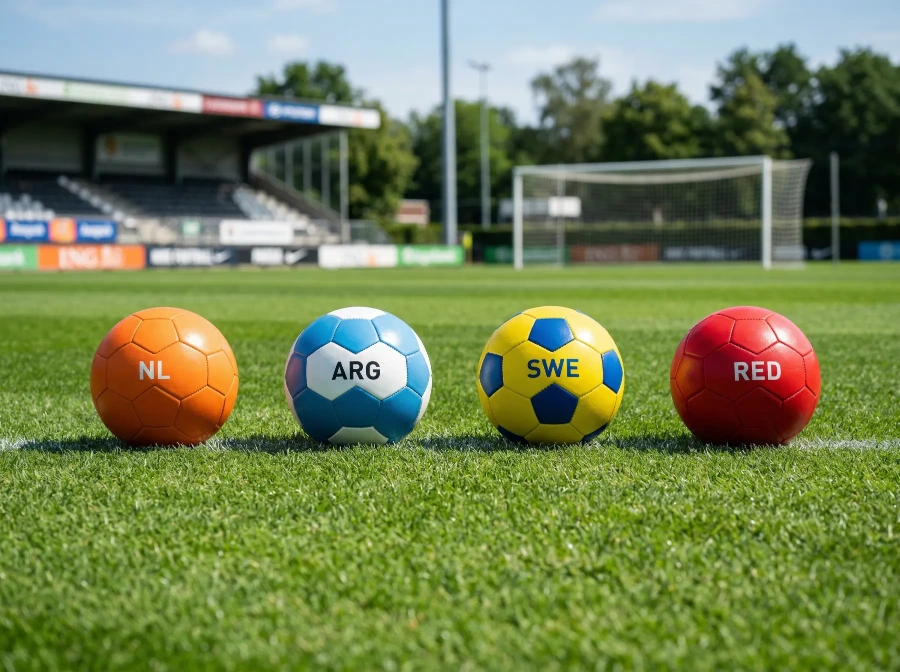
No easy games. That phrase gets thrown around carelessly at World Cups, but Group F earns it. Four competitive nations, all with legitimate knockout-round ambitions, and no obvious weak link to donate free points. The Netherlands carry the pedigree and squad depth to top the group, but Japan — fresh from embarrassing Germany and Spain in 2022 — have proven they can beat anyone on their day. Sweden return to the World Cup stage with a new generation, and Tunisia bring North African resilience honed through brutal CAF qualifying. This is the group where upsets are not surprises but structural possibilities baked into every fixture.
Netherlands — Oranje’s Quality Should Tell
Since finishing third at the 2014 World Cup, the Netherlands have been on a roller coaster — missing two tournaments entirely before returning with quarter-final appearances at both Euro 2024 and the 2022 World Cup. That inconsistency at the macro level masks a squad that, on paper, is among the ten best in the world. Virgil van Dijk’s defensive presence, a midfield stacked with technically gifted players from the Eredivisie and top European leagues, and a forward line capable of scoring in multiple ways give the Oranje genuine tools for tournament success.
The Dutch tactical identity has evolved away from pure total football into a more pragmatic, results-oriented system. Recent management has prioritised defensive solidity without abandoning the possession-based principles that define Dutch football. That balance is exactly what you need to win a group — control matches against weaker opponents, defend deep when the game demands it, and trust individual quality to produce moments of brilliance in tight situations. The wing-play tradition remains central to the Oranje’s attacking approach, and their full-backs push high enough to create overloads that Sweden and Tunisia will struggle to contain.
One factor Canadian bettors should note: the Netherlands have a significant diaspora connection to Curaçao, who appear in Group E. Dutch-Caribbean football culture means that many Canadian fans with Antillean heritage will follow both groups closely. That crossover interest could influence betting volumes on Netherlands matches, particularly in Ontario’s regulated market where player demographics shape handle distribution.
Decimal odds on the Netherlands to win Group F sit around 2.00, implying a 50% probability. That is slightly low in my assessment — I would price the Oranje closer to 55%, given their squad advantage over every other team in the pool. Japan are the danger, but the Netherlands’ defensive structure under the current setup is far better equipped to handle Japan’s counter-pressing than Germany’s was in 2022. The to-qualify price at 1.25 is sharp but defensible. The Oranje failing to advance from this group would require losses in two of three matches, and the squad depth makes that scenario unlikely against this calibre of opponent.
Japan — Giant Killers With Substance Behind the Headlines
Beating Germany and Spain in the same group stage was supposed to be a fairy tale. Japan’s 2022 World Cup campaign read like fiction — two monumental upsets separated by a loss to Costa Rica that nearly derailed everything — but the underlying data told a more convincing story. Japan’s expected goals in those matches showed a team creating genuine chances through a structured pressing system, not just riding luck. The Samurai Blue earned their results, and the squad has only improved since.
The current generation of Japanese players is the most European-league-embedded in the nation’s history. Over a dozen squad regulars play in the Bundesliga, Premier League, Serie A and La Liga — a breadth of top-level experience that previous Japanese World Cup squads could not match. The attacking options are particularly deep, with pacey wide players who thrive in transition and a midfield capable of sustaining high-intensity pressing for full 90-minute stretches. Defensively, Japan’s compactness and discipline are elite by any standard.
In Group F, Japan’s biggest challenge is consistency. They have proven they can beat top teams in one-off matches, but sustaining that level across three group games — where the pressure shifts from underdog to expected competitor — is different. The Netherlands will respect Japan in a way that Germany did not, which removes the element of surprise that fuelled the 2022 heroics. To-qualify odds on Japan around 1.70 imply roughly 59%. I think that is accurate. Japan are strong favourites for second place and have an outside shot at first, making 1.70 a fair line rather than a value one.
The match market is where Japan offer the sharpest angle. Japan to beat Sweden on the opening matchday should be priced as a slight favourite, and the Asian handicap line could provide value if bookmakers underestimate the Samurai Blue’s ability to control proceedings against a European mid-tier side. Japan versus Netherlands is the fixture bettors should watch most closely — the draw price in that match, likely around 3.40, represents genuine value given both teams’ motivation to avoid a loss. Japan’s over 1.5 team goals against Tunisia also deserves attention — the Samurai Blue’s pressing intensity tends to overwhelm North African defences that sit deep, as their 2022 second-half performances against Germany and Spain demonstrated with devastating clarity.
Sweden — Rebuilding After a Missed Generation
Sweden missed Euro 2024 and the 2022 World Cup. For a nation that reached the quarter-finals in 2018, that is a sharp decline — and one driven largely by the retirement of the Zlatan Ibrahimovic generation without a ready-made replacement wave. The current squad is younger, less experienced at major tournaments and reliant on Bundesliga and Allsvenskan-based players who have yet to prove themselves against the world’s best.
That said, Swedish football has a way of producing teams greater than the sum of their parts. The tactical system emphasises defensive structure, physical commitment and set-piece proficiency — assets that travel well to tournament football, where fine margins decide matches. Sweden’s qualifying campaign showed a team capable of grinding results through organisation rather than inspiration, and in a group where they are the third or fourth seed by most rankings, grinding results may be the ceiling.
Decimal odds on Sweden to qualify sit around 3.50, implying roughly 29%. I lean slightly below that — perhaps 25% — because the Japan and Netherlands matchups present problems that Sweden’s current squad is ill-equipped to solve. The value on Sweden, if it exists, sits in the match result against Tunisia, where two similarly ranked sides with comparable tactical profiles could produce a draw that both teams would accept. Sweden’s individual match lines against Japan and the Netherlands should be approached with caution — the talent gap is real and consistent enough to make moneyline bets on Sweden in those fixtures a poor risk-reward proposition.
Tunisia — North African Grit in a Tough Pool
Tunisia have qualified for six World Cups and have a single knockout-round appearance to show for it — the Round of 16 in 1978 under a format that no longer exists. Their record at recent tournaments is characterised by competitive group-stage performances that fall just short: a draw with Denmark and a victory over France in 2022 were not enough to advance. The current squad maintains that profile — defensively disciplined, technically capable in midfield and pragmatic in their approach to matches against higher-ranked opposition.
In Group F, Tunisia face the toughest draw of their six World Cup campaigns. The Netherlands and Japan are both clearly superior, and Sweden — while beatable — present the kind of physically demanding European challenge that has historically troubled North African sides. Tunisia’s best strategy involves targeting four points from the Sweden and Japan matches while limiting damage against the Netherlands. That path requires winning at least one of their two competitive fixtures and drawing the other — achievable but requiring a level of attacking output that Tunisia’s recent tournament record suggests they may not possess.
To-qualify odds around 5.00 for Tunisia correctly reflect a probability near 20%. I see no reason to argue the market is wrong. Tunisia will compete in every match — they always do — but competing and qualifying are different things, and this group’s depth makes the gap between those two outcomes particularly wide. Their most realistic positive result is a draw against Sweden, priced around 3.20, which offers a modest return on a genuinely plausible outcome. Beyond that, Tunisia’s contribution to your betting portfolio is as a reference point for total goals markets — their matches tend to be tight, low-scoring and structured, making the under line consistently attractive.
Group F Schedule
| Date | Match | Venue | Time (ET) |
|---|---|---|---|
| June 14 | Netherlands vs Sweden | TBC | TBC |
| June 14 | Japan vs Tunisia | TBC | TBC |
| June 20 | Netherlands vs Japan | TBC | TBC |
| June 20 | Sweden vs Tunisia | TBC | TBC |
| June 26 | Netherlands vs Tunisia | TBC | TBC |
| June 26 | Japan vs Sweden | TBC | TBC |
The Matchday 2 double-header is the group’s turning point. Netherlands versus Japan on June 20 decides the race for first place, while Sweden versus Tunisia is effectively an elimination match for both sides. By the final matchday, the group’s structure should be clear — but given the competitive depth of this pool, do not be surprised if all four teams still have mathematical chances heading into the last round of fixtures.
Group F Odds and Who Advances
| Team | Win Group | To Qualify |
|---|---|---|
| Netherlands | 2.00 | 1.25 |
| Japan | 3.20 | 1.70 |
| Sweden | 6.00 | 3.50 |
| Tunisia | 8.00 | 5.00 |
Netherlands first with seven points, Japan second with six, Sweden third with two, Tunisia fourth with one. The margin between first and second is thin — a draw in the head-to-head would leave goal difference as the tiebreaker, and Japan’s likely high-scoring opener against Tunisia could give them an edge there. My top value pick: the draw in Netherlands versus Japan at around 3.40. Both sides will play cautiously in a fixture with significant knockout-round seeding implications, and a point suits each team’s qualification math. The complete group-by-group analysis highlights Group F as one of the tournament’s most evenly matched pools, and the betting markets reflect that balance with tighter odds spreads than most other groups.
