
 Available in US
Loading...
2026 World Cup Groups — Draw, Predictions and Betting Odds
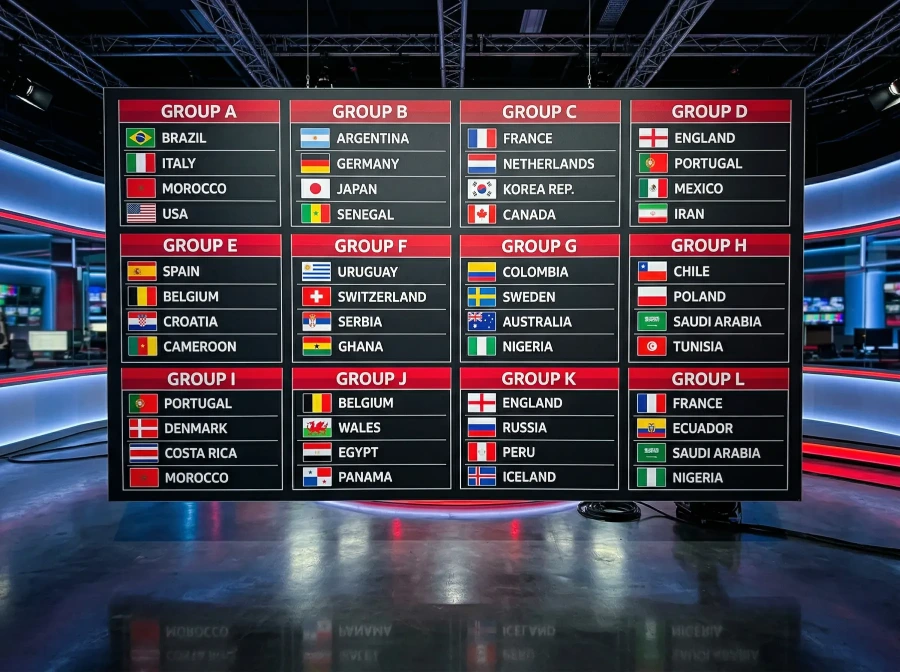
Twelve groups. Forty-eight teams. Three host nations. The draw for the 2026 FIFA World Cup delivered exactly the kind of asymmetry that bettors live for — some groups so lopsided they border on ceremonial, others so tightly packed that a single red card in the wrong match could flip the entire qualification picture. For the first time, the expanded format means 32 of 48 teams advance past the group stage, which reshapes every calculation about who gets through and who goes home.
I sat through the draw ceremony with a spreadsheet open and odds feeds running on a second screen. By the time the final ball dropped into Group L, the market had already moved — England’s group qualification odds shortened, Colombia’s lengthened, and the “group of death” debate was in full swing before the broadcast cut to commercial. What follows is my group-by-group breakdown: the dynamics that will shape each pool, the teams that are overpriced and underpriced, and the specific markets where I see value heading into June. For the full tournament overview and betting essentials, the 2026 World Cup betting hub ties everything together.
All odds in decimal format. All times referenced in Eastern Time unless otherwise noted.
New Format — How 12 Groups of Four Work
The last time FIFA changed the World Cup format was 1998, when the field expanded from 24 to 32 teams and introduced the current eight-group structure. That system lasted seven tournaments. The 2026 edition breaks it entirely.
Here is how the math works. Twelve groups of four teams each play a standard round-robin — three matches per team, three points for a win, one for a draw. The top two from each group (24 teams) advance automatically to the Round of 32. Then comes the wrinkle: the eight best third-placed teams also qualify. That means 32 of 48 teams — two-thirds of the entire field — reach the knockout rounds.
The third-place qualification rule fundamentally changes group-stage betting strategy. In the old 32-team format, finishing third meant elimination. Teams in must-win situations on matchday three played with urgency, and the permutations were straightforward — win or go home. Under the new system, a team that finishes third with four points (one win, one draw, one loss) has a realistic chance of advancing. That safety net makes dead-rubber matches rarer and group-stage upsets less consequential for the losing team’s tournament life.
For bettors, the key implication is this: the “to qualify from group” market is softer than it looks. Third-placed teams in competitive groups — where the point totals are compressed — have better advancement odds than the market typically prices. A team finishing third in a tight Group L (England, Croatia, Ghana, Panama) with four points may rank higher than a third-placed team in a weaker group with three points. The tiebreaker criteria — goal difference, then goals scored, then head-to-head — matter more than ever, and the totals market on individual matches feeds directly into those tiebreakers.
The knockout bracket after the group stage follows a predetermined pathway. Group winners face third-placed qualifiers in the Round of 32, while group runners-up face runners-up from other groups. The bracket seeding means that winning your group does not just earn easier Round of 32 opponents — it sets up a potentially smoother path through the entire knockout stage. That distinction matters for outright and “to reach the quarter-finals” market pricing.
Group A — Mexico, South Korea, South Africa, Czechia
The opening match of the 2026 World Cup falls here: Mexico versus South Africa at the Estadio Azteca on June 11. Mexico carry the host advantage and the emotional weight of kicking off the entire tournament in a stadium that has seen Maradona’s Hand of God and Pele’s coronation.
South Korea bring Son Heung-min, tournament pedigree (semi-finalists in 2002), and the Asian qualifying consistency that has made them a fixture at World Cups for nine consecutive editions. South Africa return to the World Cup for the first time since hosting in 2010, carried by an improved generation of players competing in European leagues. Czechia — using their updated national name — bring tactical discipline and a Euros culture that translates well to group-stage football.
The group winner market should favour Mexico heavily given the home advantage, but the fight for second is genuinely open. South Korea’s experience and quality give them the edge over South Africa and Czechia, though Czechia’s defensive structure could produce the kind of low-scoring draws that complicate group standings. My predicted order: Mexico first, South Korea second, Czechia third, South Africa fourth.
Group B — Canada, Switzerland, Qatar, Bosnia and Herzegovina
This is the group every Canadian bettor will follow most closely, and it is the one where I expect the most lopsided betting volume on domestic sportsbooks. Canada’s opening match — June 12, BMO Field, Toronto, 3:00 PM ET against Bosnia and Herzegovina — will be the most-bet single match in Canadian sports betting history. The combination of home World Cup, national pride, and a legal market barely five years old creates a demand surge that will test every operator’s liquidity.
Canada are clear favourites to win the group. Jesse Marsch’s squad features Alphonso Davies, Jonathan David, and Cyle Larin — three attackers capable of punishing any defence in this pool. The home advantage at BMO Field and BC Place is a genuine factor, not marketing spin. Switzerland are the credible challenger: quarter-finalists at Euro 2024, tactically organized under Murat Yakin, and carrying the kind of experience that makes them difficult to beat in group-stage football. The Canada-Switzerland match on June 18 is likely the group decider.
Qatar arrive as the defending host nation from 2022 — a tournament where they became the first host to lose all three group matches. Their squad lacks depth outside Asia, and the travel to North America removes the geographical advantage that was supposed to be their edge in Qatar. Bosnia and Herzegovina, meanwhile, ride the momentum of a stunning playoff victory over Italy — a penalty shootout win in Sarajevo that ranks among the greatest results in Bosnian football history. That kind of emotional peak is hard to sustain across three group matches, but it makes them dangerous opponents in the opener.
The detailed Group B breakdown covers the match-by-match odds in full. My predicted order: Canada first, Switzerland second, Bosnia third, Qatar fourth. The value play is the Canada-Switzerland match result — if the market overweights Canada’s home advantage and underprices the Swiss defensive solidity, the draw could land at attractive odds.
Group C — Brazil, Morocco, Scotland, Haiti
Group C is a collision between the tournament’s past and future. Brazil bring five World Cup titles and a squad in transition. Morocco bring the freshest World Cup pedigree in the pool — semi-finalists just four years ago. Scotland arrive at their first World Cup since 1998, riding the Tartan Army’s emotional wave. Haiti make only their second World Cup appearance after a 52-year absence.
Brazil should top the group on talent alone, but “should” has been a dangerous word for the Selecao at recent World Cups. Morocco are the live second-place contender, and the Brazil-Morocco match is the one the neutrals will circle. Scotland have the quality to beat Haiti and compete with Morocco for the second automatic spot, but they could also finish fourth if tournament nerves take hold in a squad with limited World Cup experience. Haiti’s ceiling is a single point from a draw — which would be a historic achievement in itself.
Predicted order: Brazil first, Morocco second, Scotland third, Haiti fourth. The market may overprice Scotland’s chances of qualifying — their squad is strong by Scottish standards but lacks the defensive resilience to contain both Brazil and Morocco across three matches.
Group D — USA, Paraguay, Australia, Turkey
The United States host 78 of 104 matches at this tournament, and Group D is where they begin the campaign. The USMNT are expected to top the group, but the composition behind them is trickier than it appears.
Turkey’s revival under a new generation of players — many based at top European clubs — makes them the most dangerous second seed. Their defensive organization and set-piece quality can trouble the Americans, and a strong result in the opener would shift the entire group dynamic. Australia, the Socceroos, bring tournament experience (round of 16 in 2022) and a physical style that suits the North American summer conditions. Paraguay round out the pool as the weakest South American qualifier — but CONMEBOL teams rarely roll over in group-stage football.
Predicted order: USA first, Turkey second, Australia third, Paraguay fourth. The “USA to win Group D” market is priced short enough that the value may actually sit on Turkey’s qualification odds.
Group E — Germany, Ivory Coast, Ecuador, Curaçao
Germany drew one of the tournament’s friendlier groups, which is exactly what they needed after two consecutive group-stage exits. Ivory Coast, the reigning Africa Cup of Nations champions, provide genuine quality — their squad blends European-based talent like Franck Kessie and Simon Adingra with domestic stars who thrive in high-intensity tournament football. Ecuador bring CONMEBOL grit, a squad that has qualified for three of the last four World Cups, and the kind of altitude-forged fitness that translates to sustained pressing in the North American summer heat. Curaçao are the smallest nation in the tournament — a Caribbean island of fewer than 150,000 people — and the group’s clear underdog.
This is a two-horse race for the top spot between Germany and Ivory Coast, with Ecuador capable of spoiling either team’s plans on a given day. Germany’s young core of Florian Wirtz and Jamal Musiala gives them a creative edge that Ivory Coast’s midfield may struggle to contain, but Ivory Coast’s physical intensity and transition speed could catch Germany on the counter — the same weakness that cost Die Mannschaft against Japan in 2022. Ecuador are the pivot: if they take points from Ivory Coast, Germany cruise through; if they upset Germany instead, the group blows wide open. Curaçao will compete for respectability rather than results, but the totals market on their matches deserves attention — opponents may underestimate their defensive discipline.
Predicted order: Germany first, Ivory Coast second, Ecuador third, Curaçao fourth.
Group F — Netherlands, Japan, Sweden, Tunisia
Four genuinely competitive teams in one pool — this is one of two groups I would label “group of life-or-death” where every match matters and the margin between first and fourth could be a single goal. Netherlands have the deepest squad and are the nominal favourites, but Japan’s 2022 heroics against Germany and Spain proved they can beat anyone in a one-off group match.
Sweden’s return to the World Cup after missing 2022 adds a physical, organized European presence that complicates the qualification picture. Tunisia are the most underrated African team in the tournament — solid defensively, experienced in World Cup settings, and capable of stealing points from any team in this group. The third-place safety net matters enormously here, because finishing third with four points in Group F may be enough to advance.
Predicted order: Netherlands first, Japan second, Sweden third, Tunisia fourth — but I would not be surprised by any arrangement of the top three. The Japan “to qualify” market is where I see the best value in this group.
Group G — Belgium, Egypt, Iran, New Zealand
Belgium’s golden generation gets one more shot — and the draw was kind. Egypt bring Mohamed Salah, the most individually talented player in the group, and a tactical setup that can frustrate possession-dominant teams. Iran are experienced World Cup competitors with a defensive pragmatism that makes them difficult to beat — they held England to a competitive first half in 2022 before the gap in depth took over. New Zealand are the clear fourth seed, qualified through the Oceania pathway that places them a tier below the other three squads in raw squad quality.
Kevin De Bruyne’s fitness is the variable that swings this entire group. A healthy De Bruyne puts Belgium in the bracket’s top half with a strong seed; an injured or managed De Bruyne opens the door for Egypt to challenge for first. Egypt’s AFCON record and Salah’s ability to produce individual moments of brilliance make them a genuine threat on any given matchday. Iran’s role is spoiler — they will not win the group but could take points from Belgium or Egypt in a low-tempo, tactically constrained match where their defensive block frustrates more talented opponents into mistakes.
New Zealand’s presence creates a “free three points” dynamic for the top three seeds, which means the Belgium-Egypt and Belgium-Iran matches effectively determine the final standings. If Belgium drop points in either fixture, the group qualification picture shifts dramatically. The Egypt “to qualify” market is the angle I am watching — their price should be shorter given Salah’s ability to single-handedly decide tight matches.
Predicted order: Belgium first, Egypt second, Iran third, New Zealand fourth.
Group H — Spain, Cape Verde, Saudi Arabia, Uruguay
The most unbalanced group in the draw — but not because it is weak. Spain and Uruguay in the same pool is the kind of pairing that would headline a quarter-final at most tournaments. Cape Verde, debuting at the World Cup, and Saudi Arabia, fresh off their 2022 upset of Argentina, fill out a group that is brutal at the top and intriguing at the bottom.
Spain are heavy favourites to finish first, and their squad depth means they can rotate without a meaningful drop in quality. Uruguay are the clear second favourite, with Federico Valverde, Darwin Núñez, and a defensive structure that has tormented South American opponents throughout qualifying. The Spain-Uruguay match is the group’s marquee fixture and one of the most anticipated matches of the entire group stage.
Predicted order: Spain first, Uruguay second, Saudi Arabia third, Cape Verde fourth. The value play is Uruguay’s group qualification odds — they should be a near-certainty to advance, and any price above 1.30 is worth a look.
Group I — France, Senegal, Norway, Iraq
France versus Erling Haaland is the matchup that sells this group. Norway qualified for their first World Cup since 1998, and the presence of the world’s most prolific club striker gives them a puncher’s chance against anyone. Senegal provide AFCON quality, the physical intensity that made them round of 16 finishers in 2022, and a squad depth that has improved since Aliou Cissé’s tenure stabilized the programme. Iraq, qualifying through Asia’s expanded pathway, face a steep climb but carry passionate support — Iraqi diaspora communities across North America will ensure they are not playing in empty stadiums.
France should cruise through as group winners, but Senegal and Norway will battle intensely for the second automatic spot. Norway’s reliance on Haaland is both a strength and a vulnerability — if he is marked out of a match, the team lacks the creative depth to unlock organized defences. Martin Ødegaard’s playmaking is essential to getting Haaland into scoring positions, and the Ødegaard-Haaland connection is the tactical axis that determines Norway’s ceiling. Senegal’s squad balance is superior, with Ismaila Sarr’s pace on the wing, Kalidou Koulibaly’s defensive authority, and a midfield that can control tempo against European opposition.
The Senegal-Norway match is the group’s deciding fixture. Whichever team wins that head-to-head has the inside track to second place, assuming both beat Iraq. The third-place route is live for the loser — four points from beating Iraq and losing narrowly to France could be enough to qualify as one of the eight best third-placed teams.
Predicted order: France first, Senegal second, Norway third, Iraq fourth.
Group J — Argentina, Algeria, Austria, Jordan
The defending champions drew one of the most comfortable groups in the tournament. Argentina’s path to the knockout rounds should be straightforward barring a catastrophic collapse — a scenario that becomes less likely with each passing year under Lionel Scaloni’s disciplined tactical approach. Algeria, backed by a passionate fanbase that will travel in force (especially from Montreal’s North African diaspora), have the quality to challenge for second. Riyad Mahrez may be past his peak, but the supporting cast — Ismael Bennacer, Amine Gouiri — gives Algeria midfield quality that can compete in any group-stage match.
Austria’s European qualifying form was solid, and their pressing style under Ralf Rangnick can disrupt superior opponents. The press that dismantled Turkey at Euro 2024 is the same tactical framework that could give Argentina uncomfortable moments in the first half before the gap in individual talent takes over. Jordan, the debutants, reached the 2024 Asian Cup final and bring a confidence that belies their world ranking — their defensive discipline and set-piece quality earned them results against Saudi Arabia and South Korea in that tournament run.
The group winner market here is one of the shortest in the tournament — Argentina’s odds to finish first are likely below 1.40, which leaves almost no value. The play is on the other end: Jordan’s third-place odds and the “both teams to score” market in the Argentina-Algeria match, where Algeria’s attacking intent against a beatable Argentine defence could produce goals. Austria’s qualification odds also carry quiet value — they have the quality to beat both Algeria and Jordan, and a third-place finish with six points would guarantee knockout qualification.
Predicted order: Argentina first, Algeria second, Austria third, Jordan fourth.
Group K — Portugal, DR Congo, Uzbekistan, Colombia
Portugal and Colombia in the same group is a gift for neutral viewers and a headache for bettors. Both teams have the quality to win any group they are in, and matching them together compresses the odds into a tight range where small edges matter. DR Congo, representing one of Africa’s most passionate football nations, are an unknown quantity at the World Cup level but carry genuine athletic talent — their squad blends physically imposing players from African leagues with European-based professionals who add tactical awareness. Uzbekistan make their debut with a squad drawn from Asian and lower-tier European clubs, likely overmatched but not without pride.
Ronaldo’s presence adds narrative weight but also tactical questions — does Portugal play to accommodate his positioning and finishing, or do they evolve toward a more fluid system that better suits the younger generation around him? Bruno Fernandes, Bernardo Silva, Rafael Leão, and Joao Neves form a midfield-to-attack pipeline that can dominate possession against any opponent in this group. Colombia’s CONMEBOL form and the emergence of Luis Diaz as a genuine match-winner give them the counter-attacking quality to punish Portugal’s attacking commitment.
The Portugal-Colombia match is the group’s pivot point — whoever wins it almost certainly tops the group. DR Congo’s opening match is the one to watch for a potential upset: if they catch Portugal cold on matchday one, the entire group dynamic shifts. Uzbekistan will target a single point from their three matches, and any result beyond that would be a significant achievement for their programme.
Predicted order: Portugal first, Colombia second, DR Congo third, Uzbekistan fourth. Colombia’s “to qualify” market is where the value sits — they are too good to go home in the group stage, and any price implying less than a 75% qualification probability is worth backing.
Group L — England, Croatia, Ghana, Panama
The consensus group of death, and it earns the label. England and Croatia have met in high-stakes World Cup matches before — the 2018 semi-final in Moscow — and their tactical familiarity adds an edge to every encounter. Ghana’s pace and physical power can punish defensive lapses, and they have a history of producing World Cup upsets (USA in 2010, anyone?). Panama are the group’s weakest side but showed in 2018 that they compete with everything regardless of the scoreline.
England’s squad depth should see them through, but the Group L breakdown is the one where I expect the most volatility in odds between now and kickoff. Croatia’s aging core — Modrić, Brozović, Perišić — faces a succession question: is this the tournament where the handover finally costs them, or can the veterans summon one more deep run? Ghana’s qualification odds are the sleeper value play in this group, especially if their opening match against Panama produces the kind of dominant performance that shifts the market’s perception of their quality.
Predicted order: England first, Croatia second, Ghana third, Panama fourth.
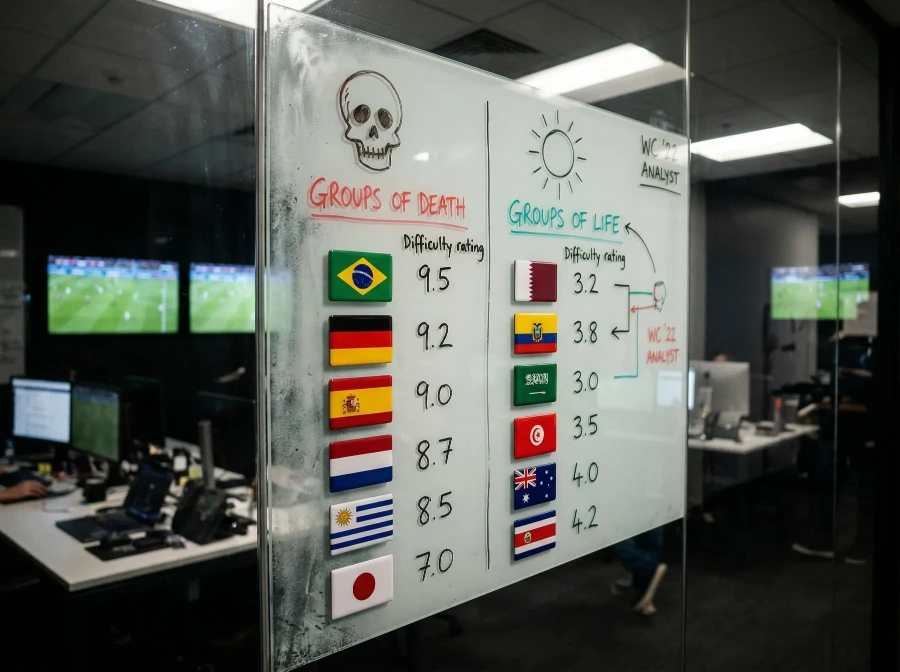
Groups of Death and Groups of Life
Every World Cup draw produces the same debate: which group is the “group of death”? The answer depends on your definition. If you mean the group where the most quality goes home, Group L (England, Croatia, Ghana, Panama) is the clear pick — two of those four teams would top most other groups, and Ghana are dangerous enough to beat either of them on the right day.
Group F (Netherlands, Japan, Sweden, Tunisia) is the other candidate. All four teams have World Cup knockout-round pedigree within the last two cycles. The quality gap between first and fourth is the narrowest of any group in the draw, which makes every match a coin flip and the final standings impossible to predict with confidence.
Group K (Portugal, DR Congo, Uzbekistan, Colombia) deserves a mention as a “hidden death group” — Portugal and Colombia are both Tier 1/Tier 2 calibre teams, and one of them will almost certainly finish second. If DR Congo’s athletic quality translates to results, this group could produce the most surprising elimination of the entire group stage.
On the other end, Group E (Germany, Ivory Coast, Ecuador, Curaçao) and Group J (Argentina, Algeria, Austria, Jordan) are the clearest “groups of life” for their top seeds. Germany and Argentina face paths of least resistance to the knockout rounds, which should be factored into their post-group-stage odds — both teams will arrive in the Round of 32 with energy reserves that teams emerging from Groups L and F will not have. The full team profiles and tier rankings factor group difficulty into each nation’s tournament ceiling assessment.
Best Group-Stage Bets Across All 12 Pools
After mapping every group, five angles stand out as the strongest pre-tournament positions for Canadian bettors.
Canada to win Group B is the emotional pick backed by genuine analytical support. The home advantage at BMO Field and BC Place, combined with a favourable draw and a squad peaking at the right moment, makes the market price fair to slightly undervalued. I would combine this with a single match bet on the Canada-Bosnia opener at attractive moneyline odds on June 12.
Japan to qualify from Group F is the value pick of the tournament’s group stage. The market has consistently underpriced Japan since 2022, and the squad has only improved. Their speed in transition, tactical flexibility, and big-game experience make them live contenders to beat any of Netherlands, Sweden, or Tunisia. The “to qualify” price should be shorter than it is.
Uruguay to qualify from Group H is as close to a certainty as group-stage betting offers. Their squad quality, CONMEBOL hardening, and defensive solidity make group elimination a near-impossibility against Cape Verde and Saudi Arabia, even if they lose to Spain.
Colombia to qualify from Group K — a CONMEBOL team with deep squad depth, a strong away record in qualifying, and the individual quality to compete with Portugal. The market may overprice DR Congo and Uzbekistan’s disruptive potential while underpricing Colombia’s floor.
The draw in Group L matches is a market worth watching. Croatia versus England and Ghana versus Croatia are both fixtures where the draw carries value in a tight group where teams play cautiously to avoid early elimination. At a World Cup with expanded qualification routes, drawing a match is less costly than losing one — and the playing styles in Group L favour low-scoring, cagey contests. Build your World Cup betting strategy around these angles, and you start the tournament with positions that have genuine analytical backing behind them.
