
 Available in US
Loading...
England at the 2026 World Cup — Group L Draw, Odds and Squad Analysis
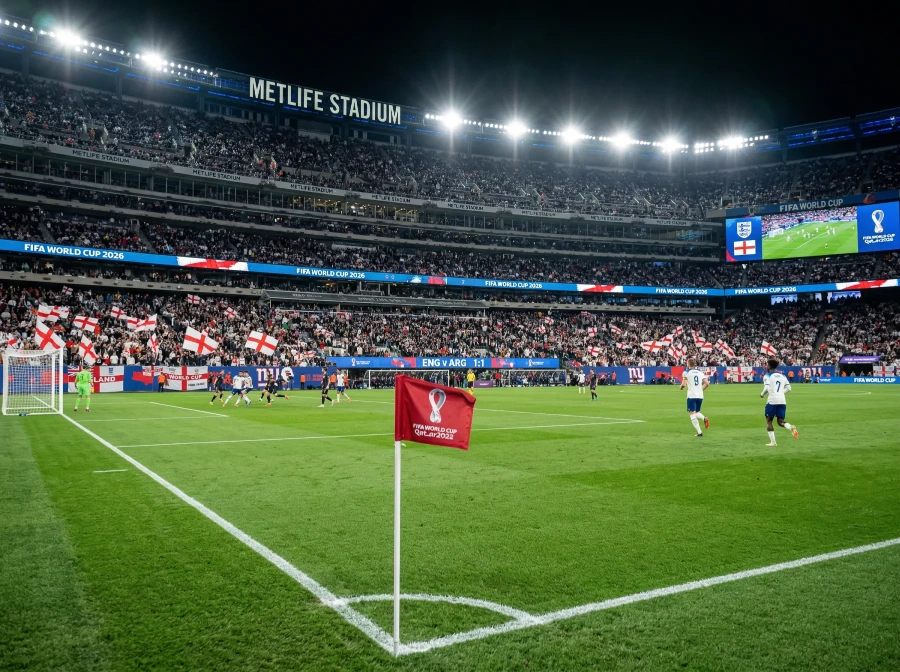
England have reached two European Championship finals and a World Cup semi-final in the last eight years. They have won precisely none of them. If you offered any other nation that record, they would take it in a heartbeat — but for England, a country that invented the game and has won exactly one major trophy in 60 years, “nearly” is a wound that never quite heals. The Three Lions arrive at the 2026 World Cup drawn into one of the toughest groups in the tournament, carrying the familiar burden of talent that has not yet translated into silverware.
England’s Qualifying Run
I tracked England’s qualifying campaign with the same mixture of admiration and frustration that every neutral feels watching them. The squad is too good to lose meaningful matches in European qualifying, and the results reflected that — topping their group with a record that included comprehensive victories over weaker opponents and tight, controlled performances against the competitive sides. What the results masked, as usual, was a lingering question about identity.
Under the current coaching setup, England oscillated between periods of sparkling attacking football and stretches of cautious, risk-averse play that left the squad’s creative players visibly underused. The qualifying window provided opportunities to resolve that tension, but the answers remained ambiguous. Some matches showcased the kind of fluid, high-tempo attack that the squad’s talent demands. Others reverted to the safety-first approach that critics have lamented for years. That inconsistency is what makes England both an attractive and a dangerous betting proposition — you never quite know which version will appear on the day.
The positive takeaway from qualifying was the continued integration of younger players alongside the established core. The squad is undergoing a generational shift, with several players who were fringe options in 2022 now established starters at elite club level. The blend of experience from the Qatar campaign and fresh energy from the new wave gives England a squad profile that is well suited to a long tournament — but only if the coaching staff can extract the maximum from both groups simultaneously. The defensive record in qualifying was strong, with clean sheets in the majority of fixtures and a goals-against tally that ranked among the best in the European confederation. The attacking output was more erratic — bursts of four and five goals against weaker sides interspersed with frustrating blanks against organized defences that sat deep and denied England the space behind the backline that their forwards thrive on.
The Squad — New Generation or Same Old Frustration
When I look at England’s squad on paper, my first reaction is always the same: how does this team not win trophies? The talent pool is as deep as any nation in the tournament. Jude Bellingham — a Ballon d’Or contender in his mid-twenties, operating at the peak of his powers at Real Madrid — is the centrepiece of a midfield that combines physicality, creativity, and tactical intelligence. His ability to arrive in the box from deep positions, score decisive goals in high-pressure moments, and dictate the tempo of matches from a number eight role makes him England’s most important player and one of the most influential in the entire tournament.
Bellingham is flanked by options that most coaches would envy. Phil Foden offers technical brilliance and the kind of close-quarters dribbling that unlocks compact defences. Declan Rice provides the defensive screen that allows the creative players to roam freely. Bukayo Saka — direct, brave, and capable of producing match-winning moments from the right wing — has become one of the Premier League’s most decisive attackers. The front line features proven goalscorers capable of finishing at the highest level, with depth options who would start for most other nations in the competition.
The defensive unit has evolved significantly since the 2022 tournament. The centre-back partnership combines Premier League experience with Champions League pedigree, and the emergence of younger defenders at top clubs has solved a depth problem that plagued previous cycles. The fullback positions offer both defensive solidity and attacking thrust — right-back, in particular, has become a position of genuine strength with multiple options who can influence matches in the final third. The goalkeeping situation is settled, with a number one who has developed into one of the best shot-stoppers in European football and a deputy who would start for most other nations.
On paper, every position has a starter of genuine quality and a backup who is not far behind. The total squad depth — 26 players from the top flight of European football, most of them with significant Champions League experience — is comparable to France’s and arguably surpasses Argentina’s in certain positions. Yet paper strength and tournament performance are different currencies, and England’s historical exchange rate between the two has been unfavourable.
So why does the talent not translate? The answer, in my experience, lies in the space between individual quality and collective cohesion. England’s players operate in different tactical systems at their clubs, and the international window provides limited time to build the understanding that separates good squads from great teams. The best international sides — Argentina under Scaloni, France under Deschamps — have found a way to create a distinct identity that transcends club habits. England are still searching for that identity, and the 2026 World Cup will determine whether this generation finds it or joins the long list of talented English squads that fell short.
Group L — Croatia, Ghana, Panama
If any group in this tournament deserves the “group of death” label, it is Group L. England, Croatia, Ghana, and Panama — a draw that contains two quarter-final-calibre teams, a dangerous African side with a history of World Cup upsets, and a Central American qualifier with nothing to lose. I have seen enough tournaments to know that groups like this produce drama, and bettors should approach Group L with more caution than the headline odds suggest.
Croatia are the opponent that keeps every England supporter awake at night. The two nations have recent World Cup history that tilts in Croatia’s favour — the 2018 semi-final in Moscow, where Croatia’s midfield mastery exposed England’s limitations in a way that still stings. Luka Modrić is older now, perhaps approaching his final major tournament, but the man has defied aging curves for the better part of a decade, and writing him off would be foolish. Croatia’s midfield — even in transition between generations — remains one of the most technically gifted in international football. They press well, they control possession in tight spaces, and they thrive in big-game environments. England vs Croatia in the group stage will be one of the most anticipated matches of the opening phase, and the betting market will price it as a near-coin-flip with a slight England lean based on squad depth.
Ghana present a different but equally uncomfortable challenge. The Black Stars combine West African pace and power with tactical organization that has improved significantly under recent coaching regimes. Ghana’s squad draws from the Premier League, Bundesliga, and Ligue 1, meaning they will not be intimidated by England’s star power. The 2010 World Cup quarter-final against Uruguay — decided by Luis Suárez’s deliberate handball and Asamoah Gyan’s missed penalty — remains one of the most emotionally charged moments in tournament history, and that competitive spirit endures. Ghana are capable of taking points off either England or Croatia, and a surprise result in this group would reshape the qualification picture entirely.
Panama are the group’s outsiders, but dismissing them entirely is a mistake. Their 2018 World Cup debut showed a team prepared to compete physically and defend in numbers, and the Central American qualifying route produced a squad hardened by difficult away matches across the continent. Panama will not beat England, but they can make the match uncomfortable, waste time effectively, frustrate opponents into mistakes, and turn set pieces into genuine threats. The danger is that England drop points against Panama through complacency — a scenario that sounds unlikely until you remember that England drew with the USA in the 2022 group stage in a match they dominated statistically but failed to win. For bettors, the Panama match is the scheduling trap: if it falls after the Croatia fixture, England may approach it with either the relief of having won or the tension of needing a result, and both emotional states produce unpredictable performances.
Tactical Setup and Manager Approach
England’s tactical identity in 2026 depends heavily on the coaching approach. The philosophical battle between pragmatism and expressiveness has defined English football management for decades, and the current setup has not fully resolved it. The talent pool demands an attacking approach — Bellingham, Foden, and Saka in the same team should produce goals and chances in abundance. But the knockout mentality that tournament football requires often pulls in the other direction, toward defensive caution and control.
The most likely shape is a 4-3-3 or 4-2-3-1 that gives Bellingham a free role behind the striker while Rice anchors the midfield. The width comes from Saka on the right and a rotating left-wing option, with fullbacks providing overlapping support. In possession, England will look to dominate through the middle third, using Bellingham’s runs from deep and Foden’s ability to turn in tight spaces to create opportunities. Out of possession, the press triggers from the front — Saka and the striker lead, with the midfield squeezing the space behind them.
For bettors, the tactical implication is clear: England will create chances. The question is whether they convert them efficiently enough to avoid the kind of frustrating, low-scoring draws that have plagued them at recent tournaments. The over/under market in England’s group matches is worth close attention — the talent suggests overs, but the tournament context and coaching caution may push toward unders. My instinct says the Croatia match goes under 2.5 goals (both teams will be cautious) while the Ghana and Panama matches go over, but the margin between those predictions and a coin flip is slim.
England’s Betting Odds for 2026
The outright market prices England at approximately 7.00-9.00 in decimal odds, making them a consistent top-five favourite. That implies a 11-14% probability of winning the tournament — shorter than the historical base rate for England at World Cups (they have won one of 22 tournaments entered) but justified by the generational talent in the squad. The market is pricing potential over track record, which is simultaneously reasonable and risky.
| Market | Decimal Odds | Implied Probability |
|---|---|---|
| Win Group L | 1.70 | 58.8% |
| Reach semi-finals | 3.25 | 30.8% |
| Outright winner | 8.00 | 12.5% |
The group winner price at 1.70 reflects the difficulty of Group L — Croatia’s presence makes topping the group a genuine contest rather than a formality. Compare that to France at 1.40 or Argentina at 1.50 and you see the market’s assessment: England face a harder road from day one. The “to qualify from the group” price around 1.20-1.25 is extremely short and reflects near-certainty that England advance, but the manner of qualification — first or second place — significantly affects the knockout draw and therefore the team’s long-term prospects.
Betting Angles on England
England are one of those teams where the gap between their best and worst is so wide that the betting markets can never quite pin them down. On their day, this squad can beat anyone in the tournament. On their worst day, they can draw 0-0 with a side they should beat by three goals. That volatility creates opportunities for bettors willing to take positions on specific matches rather than outright futures.
Jude Bellingham in the tournament top scorer market is my primary player bet. He scored decisive goals throughout Real Madrid’s Champions League campaign, and his tendency to arrive in the box at the right moment gives him a goal-scoring profile that resembles a striker more than a midfielder. If England go deep — and I expect them to reach at least the quarter-finals — Bellingham will accumulate enough minutes and chances to contend for the golden boot at attractive decimal odds.
The both-teams-to-score market in England vs Croatia is almost a certainty in my model. These teams play open, attacking football against each other (the 2018 semi-final produced four goals, the Euro 2020 group match produced two with Croatia pushing for more), and the stakes of a group-stage match in the “group of death” will force both sides to push for results rather than settling for a draw. BTTS at around 1.75-1.85 captures the dynamic of two attacking teams who cannot afford to lose.
I would also explore England to concede a goal in every group match. The defensive record at recent tournaments shows a pattern of solidity in the knockout rounds but occasional vulnerability in the group stage, and this group’s quality makes clean sheets harder to achieve. Croatia will create chances, Ghana will create chances, and even Panama will generate set-piece opportunities that could yield a goal.
The Weight of Expectation — England at World Cups
1966. One trophy. Sixty years of waiting. That single data point defines everything about England’s relationship with the World Cup — the expectation that the game’s inventors should dominate it, the recurring disappointment when they do not, and the national psyche that oscillates between wild optimism and resigned cynicism every four years. I have watched England at five World Cups as an analyst, and the pattern is remarkably consistent: dominant group-stage performances that generate excitement, followed by a knockout-round match where tactical rigidity, penalty-shootout nerves, or simple bad luck ends the journey prematurely.
The 2018 run to the semi-finals was supposed to break the cycle. The 2024 European Championship final was supposed to be the moment. Neither delivered the trophy. What they did deliver was evidence that this generation can compete at the highest level — reaching finals and semi-finals is not failure, it is proximity to success. The question for 2026 is whether proximity converts to silverware, and the answer depends on whether the coaching staff can find the tactical formula that maximizes this squad’s considerable strengths while protecting against the lapses in concentration that have cost them at decisive moments.
Can England Finally Get Over the Line
My honest assessment: England will reach the quarter-finals. The squad is too talented and the expanded format too forgiving for them to exit before the last eight. Beyond that, the picture becomes hazier. A quarter-final against a strong opponent from the other side of the bracket — potentially a South American contender or a resurgent European side — is the likely test, and England’s record in high-stakes knockout matches against elite opponents is mixed at best.
The ceiling is the final. If the bracket opens favourably and England navigate the quarter-final, a semi-final against a beatable opponent is possible, and from there anything can happen over 90 minutes. The floor is a round-of-16 exit, which would require finishing second in Group L behind Croatia and drawing a difficult opponent from the other side — unlikely but not impossible given the group’s competitiveness.
For Canadian bettors, England represent a familiar dynamic: enormous talent, uncertain execution. The outright price at 8.00 offers decent value if you believe this is the year the pieces finally align, but the safer approach is to target stage-based markets — reaching the quarter-finals at 1.55-1.65 is near-certain, and reaching the semi-finals at 3.25 offers meaningful upside without requiring the outright win. Build your England position around progression, not the trophy, and compare across the full 48-team field to decide where your strongest conviction lies.
