
 Available in US
Loading...
France at the 2026 World Cup — Squad Depth, Odds and Group I Preview
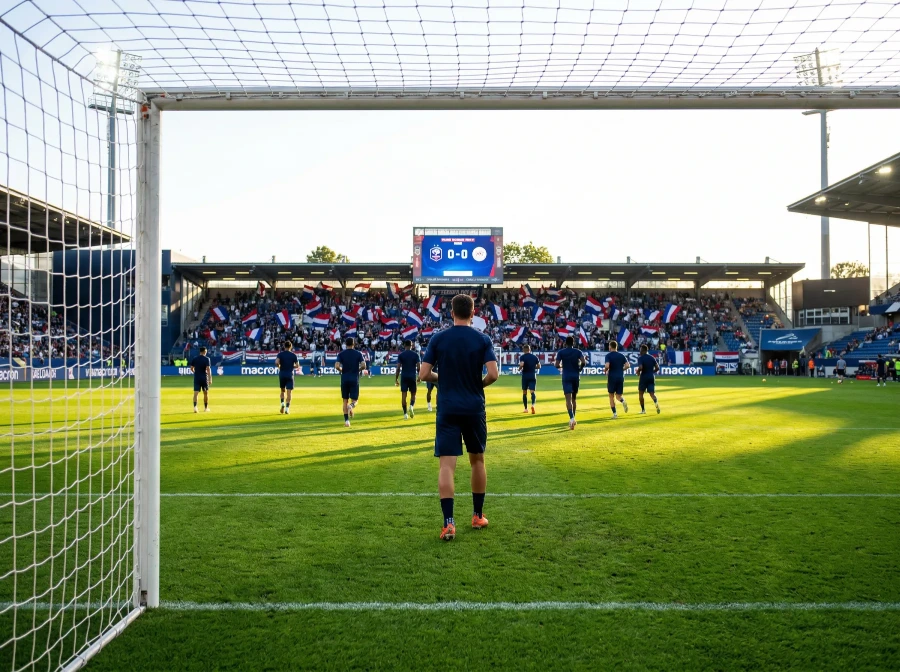
Two finals in a row. One title won, one lost in the most dramatic fashion imaginable. France enter the 2026 World Cup as the team that has come closest to sustained dominance in modern international football without quite achieving it — and the depth of their squad suggests that the peak has not passed. The question I keep returning to in my analysis is not whether France have the talent to win. They obviously do. The question is whether the internal dynamics — the coaching transition, the generational handover, the pressure of a squad so deep that managing egos becomes a tactical exercise — can hold together across seven matches in 39 days.
France’s Path Through European Qualifying
European qualifying for France is never about the destination — it is about the journey. The talent differential between Les Bleus and most of their qualifying group opponents is so vast that results are rarely in doubt, and the real story lies in how the coaching staff uses these matches to test combinations, blood new players, and manage the workload of stars who play 50-plus club matches per season.
France navigated their qualifying group with the expected efficiency — topping the table with a record that included comfortable home victories and professional away results. The most interesting data point from the campaign was the emergence of several younger players who forced their way into the squad through sustained club form rather than reputation. The coaching staff used the qualifying window to experiment with a slightly different midfield configuration, moving away from the double pivot that characterized the 2022 cycle and toward a more fluid three-man setup that gives the attacking players greater freedom.
The results were clinical rather than spectacular. France conceded fewer goals per match than any other European qualifier in their group, and the defensive record reflects a structural solidity that persists regardless of which personnel are selected. That consistency is the hallmark of a well-coached side — when the system is strong enough to absorb personnel changes without losing effectiveness, you are looking at genuine tournament contenders. The qualifying campaign also confirmed that France’s second-choice attackers would start for most other nations in the tournament, which gives the coaching staff options that few rivals can match when managing fatigue across a condensed knockout schedule.
Les Bleus’ Squad — Mbappé, Depth and New Faces
Kylian Mbappé remains the focal point of everything France do in attack. At 27, he is in the absolute prime of his career — faster, stronger, and more tactically mature than the prodigy who terrorized Argentina in the 2022 final. His move to Real Madrid has added a new dimension to his game: the understanding of positional play in a structured system, the discipline to hold his run for the right moment, and the composure to deliver on the biggest stages in club football. At a World Cup, Mbappé is the one player in the tournament who can single-handedly decide a knockout match, and the market prices him accordingly in the top scorer market at odds around 8.00-10.00.
But France’s true weapon is not Mbappé alone — it is the absurdity of their depth chart. Consider the attacking options: alongside Mbappé, the squad can call on players competing at the peak of the Premier League, La Liga, and Bundesliga. Antoine Griezmann — if he is still involved — brings intelligence and work rate that makes the pressing system function. Ousmane Dembélé offers unpredictable one-on-one ability from the wing. Randal Kolo Muani provides a physical presence through the centre. Marcus Thuram adds directness and finishing instinct. Any two of these attackers would form a world-class partnership; France can rotate between them across group matches without dropping quality.
The midfield is equally stacked. Aurélien Tchouaméni has established himself as one of Europe’s premier defensive midfielders, combining athleticism with reading of the game that belies his age. Eduardo Camavinga offers dynamism and ball-carrying from deep positions. The option to deploy a three-man midfield of Tchouaméni, Camavinga, and a more creative option gives Deschamps flexibility that most national teams cannot replicate. The defensive core features centre-backs from Europe’s top clubs and fullbacks who combine defensive discipline with attacking output. Theo Hernández at left-back provides an attacking outlet that stretches opponents and creates overloads on the flank. In goal, the position is settled with a keeper who has proven himself in high-pressure international tournaments and provides a reliable last line of defence.
The new faces are what excite me most. Every four years, France produces a fresh wave of talent that supplements the established core, and 2026 is no different. Several players who were teenagers during the 2022 cycle are now established starters at top European clubs, bringing energy, pace, and fearlessness that the older heads lack. This generational layering — experienced champions mixed with hungry young talent — is precisely the cocktail that produces deep tournament runs. The 1998 squad had it. The 2018 squad had it. The 2026 squad has it in abundance.
Group I — Senegal, Norway, Iraq
France drew what I would classify as a comfortable but not effortless group. Senegal are dangerous, Norway are physical, and Iraq represent the wildcard that could cause problems if underestimated. None of these opponents will roll over, but none possess the quality to prevent France from advancing — the only question is whether France top the group or occasionally stumble.
Senegal are the opponents I take most seriously. They have been the dominant force in African football for the past six years, winning the Africa Cup of Nations and producing a generation of players who feature at top European clubs. The Senegalese midfield is athletic and technically proficient, the defensive structure is organized, and the attack carries a genuine goal threat from multiple positions. In a single match, Senegal can match France’s intensity — the issue is consistency across three group fixtures, where France’s deeper squad rotation gives them a structural advantage. The France vs Senegal match is the standout group fixture, and I expect the betting market to price it closer than the outright odds would suggest.
Norway offer a different challenge — size, directness, and the presence of Erling Haaland, who is as close to an unstoppable force as exists in modern football. Haaland’s ability to convert half-chances into goals means that Norway always carry a threat regardless of how the overall match is flowing. France’s centre-backs will need to be at their best physically and positionally to contain him, and any lapse in concentration could be punished instantly. The total goals market in France vs Norway is intriguing — both teams score, and the over/under line at 2.5 could go either way depending on how aggressively both sides approach the match.
Iraq are making their first World Cup appearance since 1986 and will treat every match as a celebration. Their squad lacks the top-flight European experience that the other Group I teams possess, and the three-match grind of a World Cup group stage will test their physical and mental reserves. France should win this fixture comfortably, and the Asian handicap or goals-scored market offers better value than the straight moneyline, which will be priced so heavily in France’s favour that the return barely justifies the risk.
Deschamps’ Evolution or a New Coach?
Didier Deschamps has been in charge of France since 2012 — an extraordinary tenure by international football standards. He won the 2018 World Cup, reached the 2022 final, and has maintained France as consistent contenders across three tournament cycles. But longevity in international management eventually reaches a point of diminishing returns, and the question of whether Deschamps continues through 2026 has been a recurring theme in French football media.
If Deschamps remains — which is the most likely scenario — expect tactical continuity. His France plays pragmatic football: defensively solid, devastating on the counter, and willing to sacrifice possession for control of dangerous spaces. The system is built around Mbappé’s pace in transition, a midfield that protects the backline, and fullbacks who provide width when the team chooses to build rather than break. It is not the most aesthetically pleasing approach, but it is remarkably effective in knockout tournaments where a single defensive error can end your campaign. Deschamps’ record in elimination matches speaks for itself — France have lost only twice in knockout rounds across three tournaments under his leadership, and both defeats came against the eventual champions.
If a new coach takes the helm, the adjustment period could either energize the squad or introduce friction at the worst possible moment. Zinedine Zidane’s name surfaces in every conversation about the future of the French bench — his appointment would generate enormous excitement but also enormous expectation. France’s talent means they can play multiple styles convincingly — a more possession-oriented coach could unlock different dimensions of the squad, particularly the creative passing ability that sits underused in Deschamps’ counter-attacking framework. But tournament football rewards familiarity and trust between players and staff, and a coaching change within twelve months of a World Cup carries real risk. For bettors, the coaching situation is worth monitoring closely — any change would likely move France’s outright odds, creating an opportunity to bet at value before the market fully adjusts.
France and the World Cup — A Love Story
Two stars on the shirt and a burning desire for a third. France’s World Cup history is a narrative of peaks and valleys — the 1998 home triumph that united a nation behind Zidane, Desailly, and Thuram, the disastrous 2002 group-stage exit as defending champions that proved complacency kills even the most talented squads, the 2006 final that ended with Zidane’s headbutt in Berlin, and the long rebuild that followed. The 2010 and 2014 cycles brought mediocrity and scandal before Deschamps restored order and ambition simultaneously.
The 2018 triumph in Russia — where a young, fearless squad powered through Argentina, Uruguay, Belgium, and Croatia — announced France’s return to the summit. That team played with a ruthless efficiency that combined individual brilliance with collective discipline, and the template has endured across two tournament cycles. The 2022 final in Qatar, where France trailed 2-0 to Argentina deep into the second half, equalized through two Mbappé goals in 97 seconds, and then lost on penalties, is the emotional backdrop for everything France do in 2026. The squad carries the scar of how close they came and the fuel of knowing they were one shootout away from consecutive titles.
Tournaments are decided by fine margins, and France have the recent experience of operating at those margins under maximum pressure. That experience, combined with the talent, makes them one of only three or four teams who can realistically win this tournament. The psychological resilience to recover from 2-0 down in a World Cup final — even in a losing cause — tells you everything about the mentality within this group.
France’s Odds Across All Markets
The outright market prices France at approximately 6.00-7.50 in decimal odds — consistently among the top three favourites alongside Argentina and England. That implies a 13-17% probability of winning the tournament, which feels about right given the squad quality and tournament pedigree. The market is essentially saying France have a one-in-six to one-in-seven chance, and I struggle to argue with that assessment. What is notable is how stable France’s odds have remained over the past year — unlike some rivals whose prices fluctuate with qualifying results, France’s line barely moves because the market already factors in their consistency.
| Market | Decimal Odds | Implied Probability |
|---|---|---|
| Win Group I | 1.40 | 71.4% |
| Reach semi-finals | 2.75 | 36.4% |
| Outright winner | 6.50 | 15.4% |
| Top scorer (Mbappé) | 9.00 | 11.1% |
The group winner market at 1.40 is short but safe — France losing Group I would require multiple upsets, and the squad depth makes that unlikely even with rotation. The “to reach the semi-finals” price around 2.75 is the market I find most interesting. France’s probable knockout path is manageable through the quarter-finals, and their tournament DNA suggests they will find a way to reach the final four. History supports this view — France have reached at least the quarter-finals in four of the last five World Cups, and the one exception (the 2010 squad meltdown) involved extraordinary off-field circumstances that do not apply to the current group. For Canadian bettors working with decimal odds, the semi-final qualification market offers a cleaner risk-reward profile than the outright.
Where to Find Value on France
The outright market on France is efficiently priced — there is no obvious mismatch between the odds and the team’s actual probability of winning. Value seekers need to look at the peripheral markets where France’s depth and tactical flexibility create edges the bookmakers may underweight. The tournament’s expanded format, with 48 teams and more matches before the final, actually favours deep squads like France — more games means more rotation, and France’s ability to field competitive lineups with five or six changes is unmatched.
Mbappé in the top scorer market at 9.00 is aggressive but defensible. He will play every knockout match if healthy, he takes penalties, and his shot volume in competitive internationals is among the highest in the tournament. The golden boot at a World Cup typically requires five to six goals, and Mbappé has the minutes, the quality, and the service to reach that threshold. The risk is injury — Mbappé’s playing style invites physical attention, and a tournament played in North American summer heat adds a fatigue variable. But at the price, the upside compensates.
France to win the group and reach the final is a combined market that some bookmakers offer at enhanced odds. The logic: the group is straightforward, and the knockout path from Group I’s side of the bracket could be favourable depending on how other groups resolve. France to reach the final is priced around 3.50-4.00 as a standalone market, and if you can find it combined with the group winner at a boosted price, the value compounds.
One angle I consistently underweight for France: both-teams-to-score in group matches. Deschamps’ defensive organization means France concede very few goals in group-stage matches — their record across the last three tournaments shows consistently low goals-against numbers in the opening phase. Backing France clean sheets in at least one group match at 2.20-2.40 is a wager that history supports.
France’s Tournament Trajectory
France will top Group I. They will beat whoever they face in the Round of 32 and the Round of 16, because the quality gap between France and the teams occupying those bracket positions is significant. The tournament begins for France in the quarter-finals, where they will likely face a genuine contender — possibly from the same tier as Spain, Germany, or the Netherlands. That is the fork in the road.
If France navigate the quarter-final, a semi-final against Argentina or England is the probable scenario, and at that point, individual brilliance and coaching decisions determine outcomes more than squad depth or tactical preparation. This is where Mbappé earns his status — a semi-final or final performance that defines a career, the way his hat-trick against Argentina in 2022 redefined what one player can do on the biggest stage.
My assessment: France reach the semi-finals with high confidence, the final with moderate confidence, and win the tournament with lower-but-real probability. They are not the best value in the outright market, but they are arguably the most likely team to reach the last four — and the complete tournament field does not contain many squads that can match their combination of depth, experience, and peak individual talent. If you are building a World Cup portfolio, France should feature in your stage-progression bets even if you skip the outright.
