
 Available in US
Loading...
Netherlands at the 2026 World Cup — Group F Draw and Betting Odds
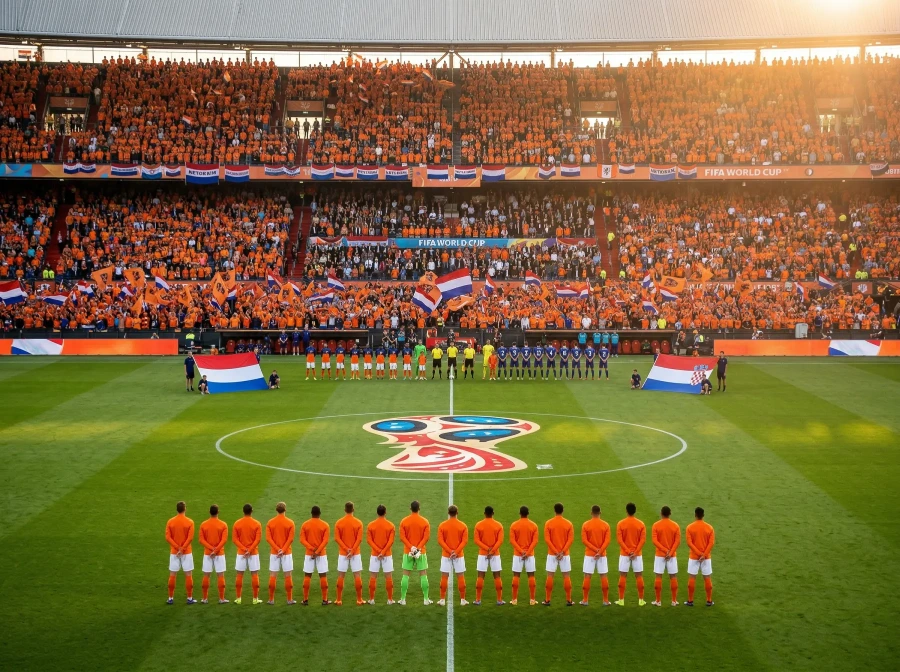
The Netherlands have reached three World Cup finals without winning any of them. That statistic — simultaneously impressive and heartbreaking — captures the Oranje’s eternal position in international football: talented enough to reach the summit, cursed enough to stumble at the last step. The 2026 squad carries echoes of that tradition. Premier League and Bundesliga regulars populate the roster, the tactical identity under the current coaching setup has sharpened, and Group F provides a genuinely competitive test that will reveal whether this generation of Dutch footballers can handle the pressure that their predecessors could not quite conquer.
Netherlands’ Route to 2026
Dutch qualifying campaigns tend to oscillate between routine dominance and inexplicable stumbles — the same nation that missed Euro 2016 and the 2018 World Cup entirely has also qualified for most other major tournaments with relative ease. The 2026 cycle fell into the smoother category: the Oranje topped their European qualifying group with a match to spare, secured their place without needing the last matchday drama that has haunted previous Dutch generations, and used the campaign to settle on a preferred starting eleven while integrating younger players around the edges. The coaching staff treated qualifying as preparation rather than mere obligation, experimenting with shape and personnel in a way that suggests a clear plan for the tournament itself.
The qualifying record showed a team comfortable in possession, dangerous on the counter, and defensively solid when the structure holds. The goals-for column was healthy, driven by a versatile attack that can score from open play, set pieces, and individual brilliance in equal measure. The goals-against column was respectable if not exceptional — a few too many conceded from transitions and set pieces for a team with aspirations of a deep World Cup run, and a pattern of late goals conceded in matches already won that hints at concentration issues when the pressure drops. The Netherlands are a side that wins comfortably when playing well and loses focus when the intensity drops, and qualifying matches against weaker opponents occasionally produced that second pattern. Tournament football will not offer such luxuries — Japan, Sweden, and Tunisia will punish every lapse.
Key Players and Squad Depth
Virgil van Dijk is the colossus around whom the Dutch defence is constructed. His aerial dominance, his reading of the game, and his ability to organize the defensive line from the centre-back position make him one of the most important players at the tournament for any nation. Van Dijk’s presence transforms the Netherlands’ defensive profile — with him, they are organized and difficult to break down; without him, the structure becomes fragile. His fitness heading into the World Cup is the single most important variable in the Oranje’s campaign, and any negative news should prompt a reassessment of their odds.
In midfield, Frenkie de Jong — when healthy — provides the progressive passing and ball-carrying that drives the Dutch attacking play. His ability to receive under pressure, evade the press with a trademark body feint, and deliver the ball into dangerous areas makes him the link between defence and attack that the system depends on. De Jong’s fitness has been a recurring concern at club level, and his availability for the tournament is something bettors should track as closely as any odds movement. The midfield options around him include industry, energy, and tactical discipline, giving the coaching staff choices that can be tailored to specific opponents. Against Japan’s pressing game, a more combative midfield might be selected; against Tunisia’s defensive block, a more creative setup could unlock opportunities. The Eredivisie continues to produce technically excellent young midfielders, and several have pushed into the squad picture through consistent domestic and European performances.
The attacking talent is headlined by Cody Gakpo, whose versatility across the front line and eye for goal in major tournaments — he scored three times at the 2022 World Cup — make him the primary attacking threat. Gakpo’s ability to play centrally or from the left provides tactical flexibility, and his direct running at defenders is a weapon that creates chances for himself and others. His club form in the Premier League has matured — the raw speed and willingness to shoot from distance have been supplemented by a more refined understanding of when to pass and when to drive. The support cast includes proven Eredivisie and Premier League attackers capable of contributing in different roles, and the option to deploy a front three that combines pace, power, and technical quality gives the Netherlands adequate rotation options for a compressed group-stage schedule where fatigue management matters as much as selection.
The defensive depth beyond Van Dijk is where I have concerns. The centre-back alternatives lack his organisational quality, and the fullback positions feature players who are competent but not elite by World Cup standards. The goalkeeping situation is settled with a capable number one, but the overall defensive ceiling is lower than what the top four or five contenders can offer. In a knockout match against France or Argentina, that defensive gap could be the decisive factor.
Group F — Japan, Sweden, Tunisia
Group F is the kind of draw that looks balanced on paper and produces chaos on the pitch. The Netherlands are the top seed, but Japan’s 2022 exploits — beating Germany and Spain in the group stage — prove they can trouble anyone. Sweden bring Scandinavian organization and set-piece threat, and Tunisia’s defensive discipline and North African intensity make them uncomfortable opponents in the group-stage format.
Japan are the team I expect to push the Netherlands hardest. The Samurai Blue play a high-pressing, possession-based game that mirrors the European football their players experience at top clubs across the continent. Japan’s squad features players from the Bundesliga, Premier League, La Liga, and Serie A — they are not an underdog in the traditional sense but a sophisticated tactical side that can outplay opponents as well as outwork them. The Netherlands vs Japan match is a potential classic — two teams committed to attacking football, neither willing to sit back and absorb pressure. The over/under market for this match should offer value on the over, as both sides will create chances and neither has the defensive profile to keep a clean sheet against the other’s attacking quality.
Sweden present a more traditional challenge: physical, organized, and dangerous from set pieces. Their squad includes experienced Bundesliga and Serie A players, and the Scandinavian approach — defend compactly, press at the right moments, and deliver quality into the box from dead-ball situations — has historically caused the Netherlands problems. The Dutch struggle against teams who deny them space and force them to create chances from crossing positions, and Sweden’s aerial presence makes them dangerous from corners and free kicks in a way that the Netherlands’ sometimes casual defending at set pieces might not handle.
Tunisia are the group’s fourth seed but should not be underestimated. They held Denmark and drew with France at the 2022 World Cup, demonstrating that they can compete with European opposition when the defensive plan is executed properly. Tunisia will be the most defensively disciplined opponent the Netherlands face, and breaking them down will require patience and creativity that the Dutch attacking play does not always provide consistently.
Oranje’s Odds in the Betting Markets
The Netherlands sit at approximately 15.00-20.00 in the outright market — a legitimate dark horse rather than a primary contender. That implies a 5-7% probability, which feels appropriate for a team with the talent to reach the semi-finals but the defensive and psychological limitations to fall short in a tight knockout match.
| Market | Decimal Odds | Implied Probability |
|---|---|---|
| Win Group F | 1.70 | 58.8% |
| Reach quarter-finals | 3.00 | 33.3% |
| Outright winner | 17.00 | 5.9% |
The group winner price at 1.70 reflects Japan’s threat — this is not a formality, and the Netherlands could realistically finish second if Japan replicate their 2022 group-stage form. The quarter-final market at 3.00 is the most interesting for bettors who believe in the squad’s upside — reaching the last eight requires navigating the group and two knockout matches against likely inferior opposition, which is achievable for a team of this quality.
Betting Angles on the Netherlands
The Oranje are a match-level betting team rather than an outright proposition. Their inconsistency makes the outright price unreliable, but individual group matches offer clear angles where the dynamics favour specific outcomes. Netherlands vs Japan over 2.5 goals at around 1.80-1.90 is my strongest selection — two attacking sides who will push for victory rather than settling for a draw, both featuring forwards capable of scoring in transition and from set pieces. Cody Gakpo to score in the tournament at any point — a “to score at least one goal” prop at very short odds — is a parlay anchor that the historical data supports strongly, given his record of three goals across three matches at the 2022 World Cup and his improved club form since.
Van Dijk to be booked in the tournament is a disciplinary market worth exploring. His aggressive defensive style — stepping out to challenge, physical duels, and the occasional professional foul to prevent counter-attacks — generates bookings at a rate that makes this a favourable wager, particularly across three group matches and at least one knockout fixture. The disciplinary markets are often overlooked by casual bettors but consistently offer value for players with well-established patterns of referee interaction.
One angle to avoid: Netherlands to keep a clean sheet in any group match. Van Dijk’s presence helps, but the overall defensive record against quality opposition suggests that at least one goal conceded per match is the realistic baseline. Japan will score. Sweden’s set-piece threat will produce chances. Tunisia’s counter-attacking quality is underrated. Build your Dutch selections around the attack, not the defence, and you will find the value that the market is slightly mispricing.
How Far Can the Oranje Go
The Netherlands will qualify from Group F. Whether they do so as group winners or runners-up determines the knockout path, and that distinction matters enormously — topping the group likely produces a manageable Round of 32 opponent, while finishing second could set up a tougher early draw. My projection places the Netherlands in the quarter-finals, where they meet one of the tournament’s genuine contenders and face the kind of high-pressure, fine-margin match that has historically been their undoing.
The semi-finals are possible but require a favourable bracket and Van Dijk’s continued fitness. The final is a stretch — not because the talent is insufficient, but because the defensive profile and the historical tendency to wilt in decisive moments both work against them. For Canadian bettors, the Netherlands offer entertaining football and attractive match-level betting opportunities, and the full tournament picture rewards viewing the Oranje as a profitable supporting character rather than the headline act.
