
 Available in US
Loading...
MetLife Stadium — World Cup 2026 Final Venue
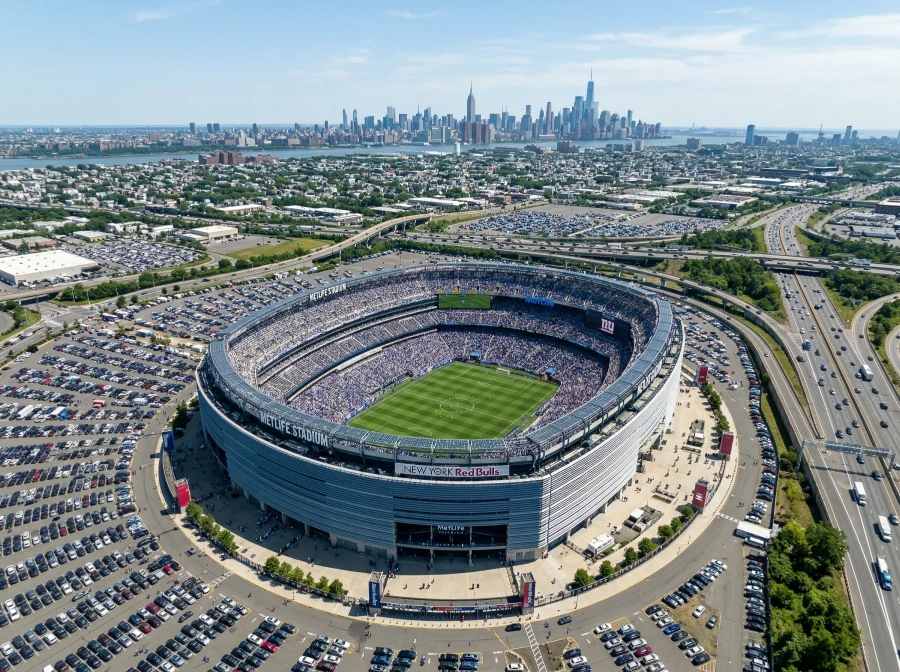
July 19, 2026. MetLife Stadium. East Rutherford, New Jersey. The biggest single sporting event on the planet — the FIFA World Cup final — in the shadow of the New York City skyline. I have priced outright tournament markets for five consecutive World Cups, and every cycle ends with the same question: who walks out of the final venue as champions? For 2026, that venue is MetLife, and the 82,500-seat stadium’s characteristics will influence how the final plays out in ways that matter for anyone with a futures position riding on the outcome.
About MetLife Stadium
MetLife Stadium opened in 2010 as the shared home of the NFL’s New York Giants and New York Jets. Located in the Meadowlands Sports Complex in East Rutherford, New Jersey — approximately 13 kilometres west of Manhattan — it is the most expensive stadium ever built at a cost exceeding US$1.6 billion. The open-air design means the final will be played without roof protection, exposing the match to mid-July weather in the New York metropolitan area — typically hot, humid and occasionally punctuated by afternoon thunderstorms.
Capacity for the World Cup final configuration sits at approximately 82,500, making MetLife one of the larger venues in the tournament. The seating bowl is a standard American double-deck configuration with good sightlines from most sections, though the upper deck’s distance from the pitch creates an atmosphere gap compared to European-style steep, single-tier stands. For the final, FIFA’s premium seating allocations — corporate hospitality, sponsor guests, FIFA officials — will fill a significant portion of the lower bowl, meaning the most passionate fans may find themselves in the upper tiers. That seating distribution matters for atmosphere, which in turn affects the psychological dynamics of the match — a factor that live bettors should consider when pricing momentum shifts during the fixture.
The playing surface is natural grass installed specifically for the World Cup, replacing MetLife’s usual multi-sport field. The pitch will have been used for multiple earlier-round matches, meaning surface quality by final day is a legitimate concern. Surface degradation at previous World Cups — particularly at venues hosting semi-finals and finals after three weeks of intensive use — has produced patchy turf that affects ball speed and first-touch control. Bettors pricing the final should factor in a surface that favours physical, direct play over intricate short-passing combinations. The ground staff will have approximately four days between the semi-final and the final to repair and prepare the surface — a tight window that limits how much restoration is possible.
World Cup Matches at MetLife — Including the Final
MetLife Stadium is scheduled to host matches across every stage of the tournament — group stage, Round of 32, Round of 16, quarter-finals, a semi-final and the final itself. That concentration of fixtures makes MetLife the tournament’s premier venue, with more knockout-round matches than any other stadium. Each match adds wear to the pitch and context to the venue’s atmosphere, building toward the July 19 climax.
The semi-final and final scheduling means that the two teams contesting the final will have likely played at MetLife earlier in the tournament. That familiarity matters — understanding the pitch dimensions, the crowd acoustics, the sightlines from the bench and the specific atmospheric conditions of an open-air New Jersey evening removes one layer of uncertainty that a neutral venue would normally introduce. For bettors, that familiarity slightly favours the team that has played more matches at MetLife during the knockout rounds, as the environmental adjustment is already complete.
Group-stage matches at MetLife will feature high-profile fixtures assigned to the New York area to maximize television audiences and ticket demand. USA group matches at nearby venues create a New York-area football festival atmosphere throughout June, building commercial and emotional momentum toward the knockout rounds. The betting handle on MetLife fixtures will be the highest of any venue at the tournament, driven by the New York market’s enormous population base and the premium associated with matches at the final venue.
July 19 — Final Day Preview
The World Cup final is the single most-bet sporting event in the world. Global wagering volumes exceed any Super Bowl, any Champions League final, any heavyweight title fight. For Canadian bettors, the July 19 final falls on a Sunday evening — a 4:00 PM or 5:00 PM ET kickoff is the expected slot, placing it in prime viewing and betting time across all Canadian time zones. Ontario’s regulated sportsbooks will see their highest single-match handle of the year, and the volume of recreational betting — casual fans placing one-off wagers on the final — will inflate the market beyond what sharp money alone would produce.
That recreational money creates opportunity. Final-day odds are influenced by public sentiment more than any other match in the tournament. If a popular team — Argentina, England, Brazil — reaches the final, their odds will be shorter than analytical models suggest because casual bettors back teams they recognize and support. The opposing finalist, particularly if they are perceived as less glamorous, receives inflated odds that represent genuine value. This pattern has repeated at every World Cup I have covered, and the 2026 final will be no different.
Weather on July 19 is a variable worth tracking. Mid-July in the New York area averages 30 degrees Celsius with humidity often exceeding 60%. An afternoon kickoff in those conditions tests physical endurance — a factor that favours squads with superior conditioning programmes and deeper benches. Extra time at the World Cup final in 30-degree heat and high humidity would be a physical ordeal that changes the tactical calculus entirely, favouring teams that rotate aggressively in the group stage to preserve energy for the deep knockout rounds.
New York/New Jersey as a World Cup Hub
The New York metropolitan area is the most densely populated urban corridor in North America — over 20 million people within commuting distance of MetLife Stadium. That population base, combined with the area’s extraordinary cultural diversity, means every World Cup nation has a passionate fan community within a 50-kilometre radius. Little Italy, Jackson Heights’ South American enclave, Astoria’s Greek and Egyptian neighbourhoods, Bay Ridge’s Arab community, Koreatown — New York’s boroughs function as a miniature World Cup map, with each nation’s diaspora turning local bars and restaurants into unofficial embassies during the tournament. The sheer density of football passion in the New York area means that even lower-profile group-stage fixtures at MetLife will draw large, engaged crowds, a rarity at North American sporting events where unfamiliar matchups typically produce empty upper decks.
For Canadian bettors travelling to the final, the cross-border logistics are straightforward. Toronto to MetLife is a 90-minute flight to Newark Liberty International, which sits less than 10 kilometres from the stadium. The NJ Transit train from Newark Penn Station to the Meadowlands Sports Complex operates special event services on match days, though the connection requires a transfer at Secaucus Junction. Alternatively, the drive from Toronto to East Rutherford covers approximately 800 kilometres — an eight-hour road trip that many Canadian fans will make for the final. The Niagara Falls border crossing into western New York State is the most direct route, connecting to Interstate 80 through Pennsylvania and into New Jersey. Budget for toll charges across the New York State Thruway and George Washington Bridge approaches.
The Stage for Football’s Biggest Night
MetLife Stadium lacks the architectural romance of the Maracana or the Estadio Azteca. It is a functional, modern American stadium designed for NFL football and repurposed for soccer’s greatest occasion. That utilitarian character does not diminish the moment — the 2026 World Cup final will be defined by what happens on the pitch, not by the venue’s aesthetic qualities. For bettors, MetLife’s characteristics — open-air exposure to heat and humidity, a surface that will show wear after five weeks of intensive use, and an atmosphere shaped by corporate seating allocations and diaspora fan distributions — are all factors that sharpen your group-stage analysis into knockout-round and final positioning. The teams that navigate those conditions best are the ones worth backing in the outright market from the tournament’s opening week.
