
 Available in US
Loading...
2026 World Cup Predictions — Group Winners, Dark Horses and the Final
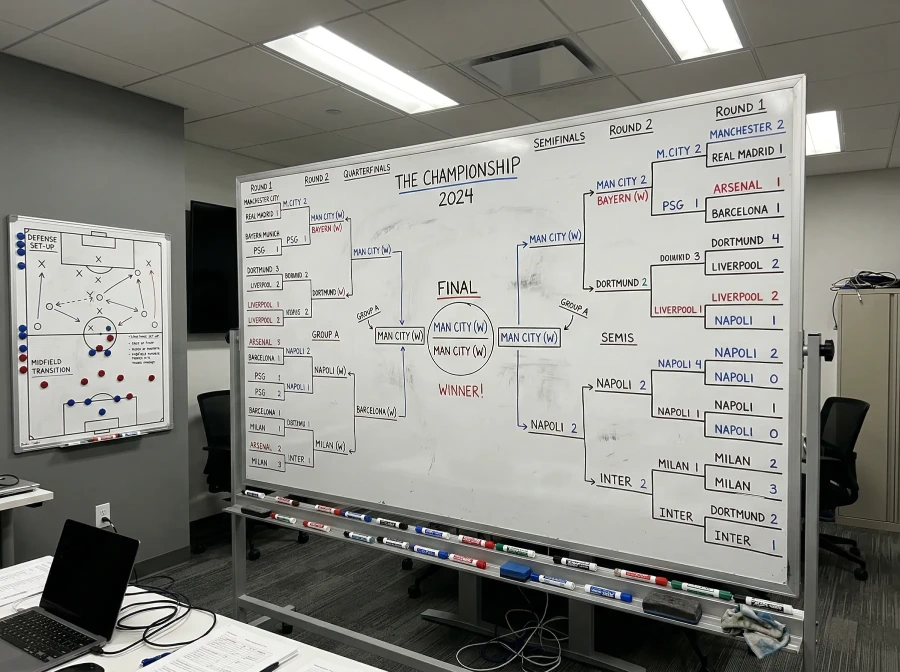
Predicting a 48-team World Cup is an exercise in structured humility. I have built pre-tournament brackets for every World Cup since 2010, and my best result was 2018 — I correctly called France as champions, Belgium as semi-finalists and Croatia reaching the final. My worst was 2022, when I had Germany advancing from their group and Brazil in the final. Neither happened. The record sits at roughly 55% accuracy on group-stage outcomes and 35% on knockout-round matchups, which is better than a coin flip but nowhere near certainty.
What follows is my complete prediction set for the 2026 World Cup: all 12 group winners, the knockout bracket projection, semi-finalists, finalists and the tournament winner. Every prediction is backed by reasoning you can challenge, disagree with and use to build your own bracket. The goal is not to be right about everything — it is to be right about the bets that matter most.
How These Predictions Are Built
Three inputs drive my model, and none of them involve dartboards. First, Elo ratings adjusted for tournament context — I use a modified version that weights competitive matches (World Cup qualifiers, continental championships) more heavily than friendlies and weights recent results more heavily than performances from two or three years ago. Second, group-stage simulations: I run 10,000 iterations of each group, varying match outcomes based on head-to-head Elo gaps, home advantage adjustments and historical upset rates at World Cups. Third — and this is the part no model captures well — qualitative judgments about squad momentum, managerial stability and tactical fit for tournament football.
The qualitative layer matters more than most analysts admit. Numbers told you Germany were a top-four squad entering 2022. Anyone who watched their pre-tournament form and internal dysfunction knew they were fragile. My model missed that in 2022 because I trusted the numbers over the eye test. This time, I am weighting the qualitative signals more heavily — particularly for squads in transition (Brazil, Belgium) and squads riding peak momentum (Spain, Japan).
One structural note about the 2026 format: the Round of 32 is new. Previous World Cups went directly from the group stage to the Round of 16. Adding an extra knockout round means even a third-place group finish can lead to a deep run — and it also means that the path to the final requires winning four knockout matches instead of three. That extra match increases the probability that the eventual champion will face at least one genuine scare along the way, which historically favours teams with the deepest squads and the most tournament experience.
Predicted Group Winners Across All 12 Pools
Twelve groups, twelve winners, and at least three of these will be wrong. That is the base rate for World Cup group predictions — roughly 75% of predicted group winners actually finish first. The remaining 25% get upended by a draw in the final matchday, a surprise tactical adjustment or a refereeing decision that shifts the dynamic. With that caveat firmly in place, here is where I land:
| Group | Predicted 1st | Predicted 2nd | Best 3rd? |
|---|---|---|---|
| A | Mexico | South Korea | No |
| B | Canada | Switzerland | No |
| C | Brazil | Morocco | Scotland |
| D | USA | Turkey | Australia |
| E | Germany | Ivory Coast | No |
| F | Japan | Netherlands | Sweden |
| G | Belgium | Egypt | No |
| H | Spain | Uruguay | Saudi Arabia |
| I | France | Senegal | Norway |
| J | Argentina | Austria | Algeria |
| K | Portugal | Colombia | No |
| L | England | Croatia | Ghana |
The headline pick that will raise eyebrows: Japan to win Group F over the Netherlands. My model has them at 38% to top the group versus the Oranje at 35%, with Sweden at 18% and Tunisia at 9%. Japan’s European-based core — Takefusa Kubo, Wataru Endo, Kaoru Mitoma, Takumi Minamino — gives them the individual quality to match the Netherlands, and their high-pressing system is purpose-built for tournament football where intensity matters more than sustained consistency. The 2022 results (wins over Germany and Spain) were not anomalies — they were the product of a tactical system that punishes European sides accustomed to controlling possession.
Canada topping Group B is a conviction pick. Playing at BMO Field against Bosnia and Herzegovina in the opener, with a home crowd that has waited 40 years for this moment, gives Jesse Marsch’s side a structural advantage the model cannot fully quantify. Switzerland are the most dangerous opponent, but their away record at major tournaments is pedestrian — five wins in their last 14 non-home tournament matches. At home, Canada are the better team with the bigger squad and the louder stadium.
The best-third-place predictions matter because eight of twelve third-placed teams advance. I have flagged Scotland, Australia, Sweden, Saudi Arabia, Norway, Algeria and Ghana as potential qualifiers through this route. The common thread: these are all teams with enough defensive organization to avoid the heavy defeats that tank goal difference, which is the tiebreaker that determines which third-placed sides advance.
Knockout Bracket Projection — Road to MetLife
The knockout bracket at a 48-team World Cup is a labyrinth. Thirty-two teams enter the Round of 32, and the draw structure — which pairs group winners against third-placed qualifiers and runners-up against each other — means the bracket splits into two halves that do not meet until the final. Projecting the full bracket requires assumptions on top of assumptions, but the exercise reveals which half is loaded with elite talent and which half offers a clearer path.
Based on my group predictions, the bracket shakes out as follows. The left half of the draw contains Argentina, France, Spain and potentially England — four of the six favourites squeezed into one side. The right half contains Brazil, Germany and Canada, with the Netherlands or Japan as the highest-seeded outsider. This imbalance is a structural feature of the draw, not a coincidence, and it has massive implications for futures betting: any team on the right side of the bracket has a significantly easier path to the final than a team on the left.
My projected Round of 32 results, taking the eight most consequential matchups: Argentina over Algeria (comfortable), France over Norway (controlled), Spain over Saudi Arabia (dominant), England over Ghana (tight), Brazil over Sweden (professional), Germany over Australia (clinical), Canada over a best-third qualifier (nervous but successful), and Portugal over a best-third qualifier (routine). The first knockout round at an expanded World Cup will produce mismatches — group winners facing overmatched third-place qualifiers — which compresses the real drama into the Round of 16 and beyond.
The Round of 16 is where the tournament begins in earnest. My projected headline matches: Argentina vs England (left side), France vs Spain (left side), Brazil vs Portugal (right side), and Canada vs a Group A or C runner-up (right side). The Argentina-England quarter-final is the match the draw seems to be engineering — two nations with deep World Cup history, separated by decades of rivalry and drama. France vs Spain as a potential quarter-final on the left side would pit the two most talented squads in the tournament against each other before the semi-finals, which is a structural gift to whoever wins: they eliminate a direct rival with two matches still to play.
Four Teams in the Semi-Finals
Left side semi-final: France vs Argentina. This is the 2022 World Cup final rematch, and the market will price it accordingly. Argentina’s experience in that final — the emotional intensity, the tactical adjustments, the penalty shootout — gives them a psychological edge that is difficult to model but impossible to ignore. Scaloni’s squad knows what it takes to beat France in a World Cup knockout match. Deschamps’ squad knows what it feels like to lose one. My pick: Argentina advance, narrowly, in a match that goes to extra time.
Right side semi-final: Brazil vs Spain. This is the pick I feel least confident about, because it depends on both teams navigating tricky quarter-finals on the right side of the bracket. Brazil’s path is cleaner — Germany or a Group F winner is a beatable quarter-final opponent — while Spain might face Portugal or Colombia in the quarters. If Spain arrive in the semi-final, they will have already beaten a quality opponent and gained tournament momentum. If Brazil arrive, they may have cruised through a softer draw but lack the battle-hardening that knockout football demands. My pick: Spain advance, on the strength of their midfield control and the experience gained from Euro 2024.
The semi-final omissions are notable. England, despite being priced as the third favourite, are projected to fall in the quarter-finals against Argentina — a fixture that has historically been unkind to the Three Lions. Germany’s rebuilt squad lacks the tournament durability to survive the right side of the bracket against Brazil. And the Netherlands, even if they advance from Group F, face a path that could include France or Argentina by the quarter-final stage.
The Final and Tournament Winner Prediction
MetLife Stadium, East Rutherford, New Jersey, July 19, 2026. Argentina vs Spain.
The defending champions against the reigning European champions. Scaloni’s experienced tournament fighters against De la Fuente’s young, fearless squad. Messi’s ghost (whether he is on the bench or watching from the stands) against Yamal’s ascendancy. This is the final the 2026 draw seems designed to produce, and it is the final my bracket projection delivers.
Argentina have the tournament pedigree — Copa America 2021, Finalissima 2022, World Cup 2022, Copa America 2024. Four major trophies in five years. But pedigree fades. The squad’s core is ageing. Angel Di María has retired from international duty. Messi’s role, if he is involved at all, will be ceremonial rather than decisive. The midfield still functions through Enzo Fernández and Alexis Mac Allister, but the defensive depth has not been adequately replaced since the 2022 cycle.
Spain have the trajectory. Euro 2024 winners with a squad averaging 25 years old, a tactical system that dominates possession and transitions and a manager who trusts his young players in high-pressure moments — Yamal started the Euro 2024 final as a 16-year-old and delivered. The 2026 World Cup is the next step in a cycle that began with the 2023 Nations League title and continued through the European Championship. Spain’s squad will be more experienced, more settled and more dangerous than the one that won in Berlin.
My prediction: Spain 2-1 Argentina, with Lamine Yamal scoring in a World Cup final at 18 years old, on American soil, in front of a crowd split between South American passion and European precision. Spain’s midfield control suffocates Argentina’s transition game, and the depth of the Spanish bench proves decisive in the final 20 minutes when fresh legs replace tired ones.
The outright odds: Spain at 8.00. My assessed probability: 16%. The value is there.
Three Dark Horse Picks That Could Disrupt Everything
Dark horses are the bets that make a World Cup bracket interesting and occasionally profitable. The definition I use: a team priced outside the top ten in the outright market that has a realistic path to the quarter-finals or beyond. Three names stand out for 2026.
Japan at 41.00 have already disrupted two consecutive World Cups. In 2018, they led Belgium 2-0 in the Round of 16 before losing 3-2 in the final seconds. In 2022, they beat Germany and Spain in the group stage before losing to Croatia on penalties. The trajectory is clear — each cycle, Japan get closer to a deep knockout run. The 2026 squad is the strongest in Japanese football history, with regular starters at top European clubs across every position. If they top Group F (which I have predicted), their Round of 32 opponent will be a third-placed qualifier, and the Round of 16 could produce a winnable matchup against a Group E runner-up. A quarter-final is not just possible — it is the most likely outcome if Japan get out of the group.
Turkey at 67.00 are the dark horse nobody is talking about, which is exactly why I am flagging them. Their Euro 2024 quarter-final run was dismissed as a home-continent fluke, but the squad that delivered it has only improved. Arda Güler’s development at Real Madrid has been rapid, Çalhanoğlu’s midfield control is world-class and the collective defensive discipline under Vincenzo Montella has transformed Turkey from entertainers into competitors. Group D (USA, Paraguay, Australia) is tough but not prohibitive, and if Turkey finish second, their knockout path avoids the loaded left side of the bracket. At 67.00, a small stake on Turkey to reach the quarter-finals (priced around 8.00) is a value play on a team the market has not caught up with.
Morocco at 45.00 carry the 2022 semi-final pedigree into a group (Group C: Brazil, Scotland, Haiti) where a second-place finish is achievable. The Atlas Lions’ defensive system — organized, aggressive, tactically flexible — is designed for knockout football, and their fan support across North America will create pseudo-home conditions at several US venues. Morocco reaching the quarter-finals again would not surprise anyone who watched them in Qatar. The 45.00 outright price is too long for a team that has proven they belong at the elite level of tournament football.
How Far Will Canada Go?
This is the question every Canadian bettor is asking, and I owe a direct answer rather than a hedge. My projection: Canada finish first in Group B, beat a third-placed qualifier in the Round of 32 and lose in the Round of 16 to a stronger opponent from the left side of the bracket — likely a Group A runner-up (South Korea) or a Group C runner-up (Morocco).
That is not a pessimistic prediction. A Round of 16 appearance would be the greatest achievement in Canadian men’s football history, surpassing the 1986 World Cup where Canada lost all three group matches without scoring. Jesse Marsch’s squad has the talent and the tactical structure to navigate Group B and win one knockout match. The ceiling is higher — a quarter-final is plausible if the draw breaks favourably — but the floor is a group-stage exit if the Switzerland match goes badly and Qatar steal a result in the third fixture.
The betting angle I like best on Canada’s tournament arc is “to advance from Group B” at 1.40 combined with “to be eliminated in the Round of 16” at roughly 3.50 (available as a stage-of-elimination prop at some operators). The combined implied probability of that exact scenario — advance from the group, then exit in the Round of 16 — sits around 20% in my model, and if you can find the right prop, the payout exceeds what the probability warrants.
For the 27 million Canadians who will be watching on June 12 when the team walks out at BMO Field in Toronto: the bracket says the journey ends in early July. The heart says anything is possible on home soil. As a bettor, I trust the bracket. As a Canadian, I will be cheering for the heart to prove the bracket wrong.
Where to Put Your Money Based on These Predictions
Predictions without actionable betting angles are just opinions. Here is how I translate this bracket into actual positions for the 2026 World Cup, ranked by confidence level.
Highest confidence: Spain outright at 8.00. The prediction, the value analysis and the tournament structure all point in the same direction. Spain are the team best equipped to win seven matches across 39 days — they have the squad depth, the tactical flexibility and the youth to sustain intensity through a gruelling schedule. At 8.00, the market has not fully priced in their Euro 2024 momentum and the systemic advantage of being the youngest elite squad in the tournament.
High confidence: Japan to win Group F at 3.00. This is the group-stage pick I feel strongest about. The full group-by-group breakdown covers the reasoning in depth, but the short version is: Japan’s pressing system neutralizes the Netherlands’ build-up play, and the matchup is more even than the 2.00 vs 3.00 pricing suggests.
Medium confidence: Canada to reach the quarter-finals at 5.00. Home advantage, a favourable group and a potential draw against a beatable opponent in the Round of 32 make this achievable. The 5.00 price implies 20%, and I have it closer to 28%. The gap is wide enough to bet, but the uncertainty is real — one bad result against Switzerland could derail the entire projection.
Speculative: Argentina to reach the final at 2.80. My bracket has them there, and the price is reasonable for a team with their tournament pedigree. But the left side of the bracket is loaded, and a quarter-final against England or a semi-final against France (or Spain, if my bracket is wrong) could end their run before MetLife. This is a bet I would place at 2.80 but not at 2.50 — the margin is thin.
The 2026 World Cup is 104 matches over 39 days in three countries across six time zones. No bracket survives first contact with the actual tournament. But the process of building one — forcing yourself to evaluate every group, project every knockout path, assess every squad — is the foundation of informed betting. The bracket will break. The process will hold.
