
 Available in US
Loading...
Colombia at the 2026 World Cup — Group K Outsider With Bite
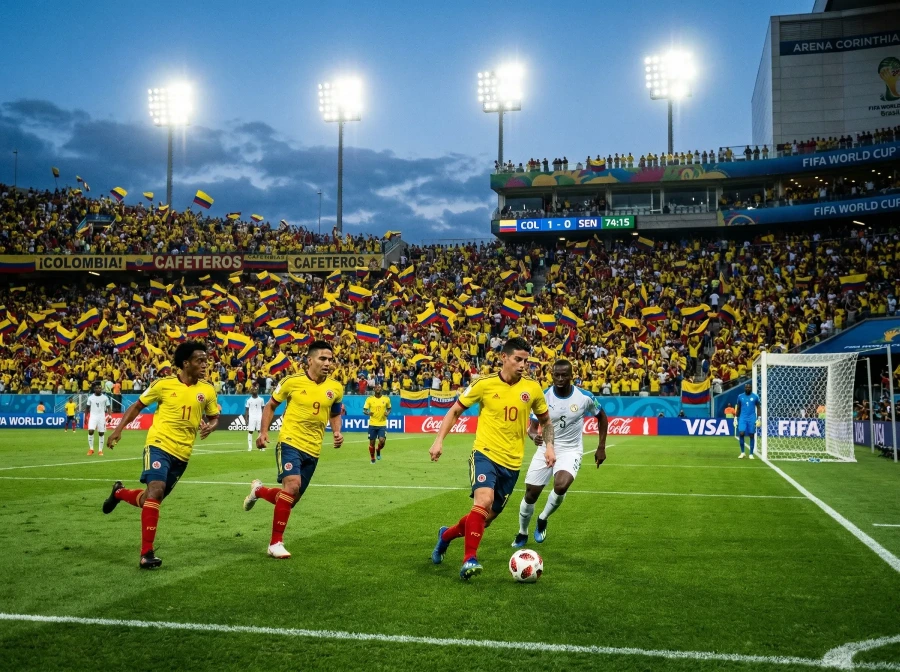
Colombia missed the 2022 World Cup entirely — eliminated in the final round of CONMEBOL qualifying in a campaign that exposed the squad’s fragility without James Rodríguez pulling the strings. That absence stung. It stung the players, it stung the federation, and it stung the Colombian communities across the Americas who had grown accustomed to seeing their team on the world’s biggest stage. The 2026 qualification was a redemption arc played out across two years of South American qualifying warfare, and the squad that emerged is harder, more resilient, and more tactically versatile than the one that fell short four years ago. Group K with Portugal, DR Congo, and Uzbekistan offers a path that is challenging but navigable — and Los Cafeteros arrive with something to prove.
Colombia’s CONMEBOL Journey
Qualifying through CONMEBOL is the hardest route to a World Cup, and the 2026 cycle was no exception. Eighteen matchdays against the best South American nations, played in stadiums from the Andean altitude of La Paz to the coastal heat of Barranquilla, across pitches that range from immaculate to barely functional. Colombia’s campaign was defined by the resilience that the 2022 failure demanded — wins in matches they previously would have drawn, draws in fixtures they previously would have lost, and a collective determination that translated results into points when performances were not always at their peak.
The home record in Barranquilla was the foundation. The tropical heat, the hostile atmosphere, and the altitude — Barranquilla sits at sea level but the humidity creates its own physical burden — combine to make the Estadio Metropolitano one of the most difficult away trips in South American football. Colombia’s home record during qualifying was strong enough to offset the inevitable dropped points on the road, and the squad’s ability to win tight matches at home demonstrates the kind of match-management quality that translates to tournament football. The CONMEBOL table tells the story of a team that found consistency where it had previously found inconsistency, and that evolution is the primary reason I take Colombia seriously as a Group K contender.
Key Players and Form Check
Luis Díaz is the headliner. The Liverpool winger’s combination of pace, dribbling ability, and direct running at defenders makes him one of the most exciting attackers in the tournament. Díaz plays on the left wing with a freedom that allows him to cut inside onto his right foot or drive to the byline and cross, and the unpredictability of his movement creates problems for any fullback in the competition. His Premier League experience has added a defensive contribution that previous versions of Diaz lacked — he presses from the front, tracks back to support the left-back, and competes in aerial duels with a physicality that his slight frame belies.
The midfield has undergone significant renewal since the James Rodríguez era. The current options include box-to-box midfielders from European leagues who combine South American technical quality with the tactical discipline that modern football demands. The creative spark comes from players who operate in the half-spaces between midfield and attack rather than from a traditional number ten, and the system is more balanced — less dependent on a single creative genius and more distributed across the squad. That distribution is both a strength (harder to neutralize) and a weakness (less capable of producing the individual magic that wins tight knockout matches).
Defensively, Colombia have improved. The centre-back pairing is more settled than in recent cycles, and the fullbacks — particularly the right-back position, which has been a weakness in previous squads — offer genuine quality going forward without sacrificing defensive responsibility. The goalkeeper brings experience and shot-stopping ability. The overall defensive profile is solid without being elite — good enough to shut down Group K opponents, potentially exposed against a side like Portugal that can attack through multiple channels simultaneously.
Group K — Portugal, DR Congo, Uzbekistan
Portugal are the clear group favourites, but Colombia’s CONMEBOL pedigree means the head-to-head is more competitive than the seedings suggest. Colombia have beaten European sides of Portugal’s calibre before — the 2014 World Cup quarter-final run included victories that demonstrated South American tactical maturity can match European technical quality. The Portugal vs Colombia fixture will likely be the group’s decisive match, and a draw would serve both teams well heading into their respective fixtures against DR Congo and Uzbekistan.
DR Congo bring Central African physicality and a squad that includes European-based players capable of producing individual moments of quality. They are beatable but not dismissable — any South American team that has survived CONMEBOL qualifying knows better than to underestimate an African opponent at a World Cup. Colombia should win this match, but the physical battle in midfield will be intense and the result may not be settled until the second half when squad depth tells.
Uzbekistan are making their World Cup debut — a reward for consistent improvement in Asian football that has culminated in a generation of players capable of competing at the global level. Against Colombia, the quality gap favours Los Cafeteros significantly, and this fixture should produce a comfortable victory that sets up the decisive Portugal match with maximum points already banked. The key for bettors is the margin: Colombia winning by two or more goals against Uzbekistan is a high-probability outcome, and the Asian handicap at -1.5 offers efficient pricing.
Colombia’s Odds and Market Position
The outright market has Colombia at approximately 60.00-80.00 — a price that positions them as a group-stage team with an outside chance of reaching the Round of 16. The implied probability of 1.2-1.7% is harsh but reflects the market’s assessment that Colombia lack the depth to compete with the top fifteen nations in a knockout format.
| Market | Decimal Odds | Implied Probability |
|---|---|---|
| Qualify from Group K | 1.70 | 58.8% |
| Win Group K | 4.50 | 22.2% |
| Outright winner | 70.00 | 1.4% |
Qualification at 1.70 is where I find value. Colombia finishing second in Group K — behind Portugal but ahead of DR Congo and Uzbekistan — is the most likely outcome, and the expanded format means even a third-place finish with four points would likely be sufficient. The pricing implies approximately 59% probability of qualifying, which understates Colombia’s chances in a group where two of the four teams are clearly weaker.
Knockout Round Material or Group Stage Exit?
Colombia’s ceiling is the Round of 16 — qualifying from the group, beating a weaker opponent in the Round of 32, and then facing one of the tournament’s heavyweights in a match where the quality gap becomes decisive. That run would represent a successful tournament for a squad that missed the last World Cup entirely, and the emotional significance of competing at North American venues — where Colombian communities in cities like Toronto, Miami, and New York will create passionate support — adds a dimension that pure statistical analysis cannot capture.
The floor is a group-stage exit if the Portugal match goes badly and the DR Congo fixture produces a shock result. That scenario requires two things to go wrong, which makes it less likely than the market implies. My projection: Colombia qualify second in Group K, win the Round of 32, and exit in the Round of 16 against a stronger opponent. For bettors, the qualification market at 1.70 is the cleanest entry point, and Luis Díaz in the anytime scorer market across group matches provides a player-level angle that the Premier League form supports. Assess Colombia within the full tournament context and you will find a team whose price exceeds their probability of advancing.
