
 Available in US
Loading...
Croatia at the 2026 World Cup — Golden Generation’s Final Chapter
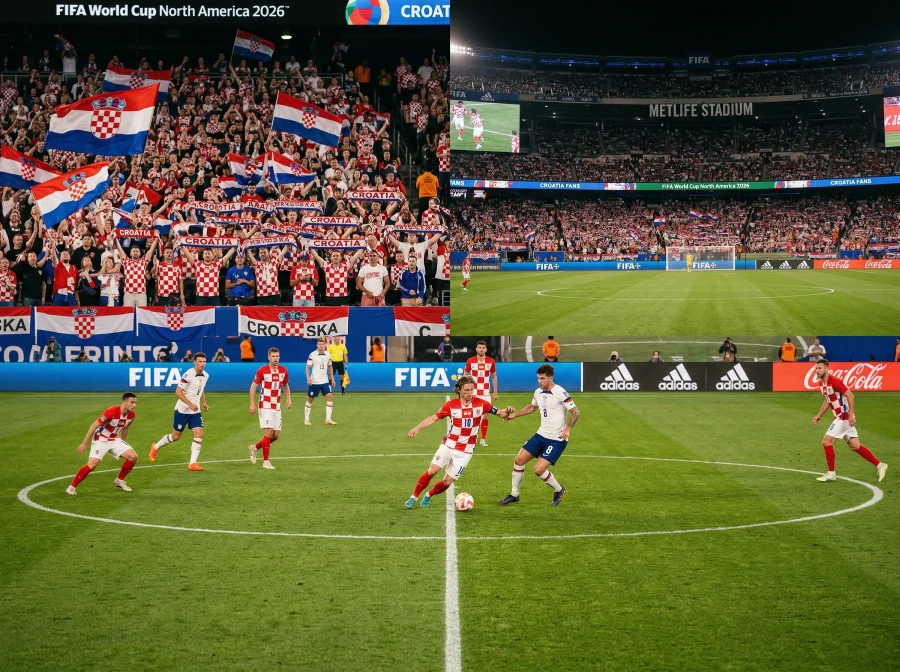
A World Cup final in 2018. A third-place finish in 2022. For a nation of four million people, Croatia’s sustained excellence at football’s biggest tournament borders on the miraculous — and the 2026 World Cup represents the closing chapter for the golden generation that made it all possible. Luka Modrić, at 40, may pull on the chequered shirt for a final major tournament. Whether he starts, plays off the bench, or simply exists as the spiritual conductor of a dressing room he has led for over a decade, his presence defines Croatia’s 2026 narrative. Behind him, a new generation is ready. Whether they are ready enough to survive Group L — which includes England, Ghana, and Panama — is the question that will determine if Croatia’s World Cup story ends with a whimper or one last roar.
How Croatia Qualified
Croatian qualifying campaigns reveal a team that treats competitive matches with the kind of seriousness that some larger nations reserve for the knockout rounds. Every qualifier matters in a country where the margin between automatic qualification and the playoffs is razor-thin, and the intensity with which Croatia approach these fixtures produces a battle-hardened squad that arrives at tournaments ready for the pressure.
The 2026 qualifying cycle showed Croatia’s characteristic resilience — tight away victories, professional home performances, and the ability to grind out results when the performance is not at its peak. The defensive record was solid, the midfield controlled most matches, and the attack produced enough goals to win without being prolific. What stood out was the gradual integration of younger players into the system — the coaching staff managed the generational transition with intelligence, giving the next wave competitive minutes alongside the veterans rather than throwing them in cold. The result is a squad that blends Modrić’s passing mastery with the energy of midfielders half his age, creating a midfield profile that adapts to different opponents.
Modrić and the Veterans — One More Dance
Modrić at 40 is still Modrić. The passing range has not diminished — his ability to find the diagonal ball that splits a defence, the short one-touch combination that bypasses the press, and the long switch of play that stretches opponents horizontally remain world-class by any standard. What has changed is the engine. The lungs that once allowed him to cover every blade of grass for 120 minutes in a World Cup semi-final now require more careful management. Minutes will be rationed. Substitutions will be earlier. The key matches — England in the group, any knockout fixture — will get peak Modrić for 60-70 minutes, and the coaching staff will build the game plan around maximizing those windows.
Marcelo Brozović and Mateo Kovačić form the midfield partnership that has supported Modrić through two World Cup campaigns. Both have accumulated over 100 caps, both play at top European clubs, and both understand the Croatian system so intimately that the movements and passing patterns are automated rather than conscious. That muscle memory — knowing where each teammate will be without needing to look — is what separates experienced international midfields from talented ones, and it is Croatia’s primary competitive advantage against opponents with greater physical attributes.
The younger generation includes midfielders and forwards who have broken through at European clubs and are hungry for their own tournament moments. The transition is neither complete nor seamless — there are matches where the veterans tire and the replacements lack their reading of the game, creating gaps that better opponents exploit. But the blend is workable for a group stage, and if Croatia can advance, the knockout rounds become a stage where experience and composure count for more than raw athleticism.
For the Croatian-Canadian community — concentrated in Toronto, Mississauga, and the Hamilton area — this World Cup carries deep emotional significance. Croatian supporters in Canada are among the most passionate diasporic football communities in the country, and the prospect of Modrić’s farewell tournament being played across North American venues, many of them reachable from the Greater Toronto Area, adds a personal dimension that goes beyond the betting markets.
Group L — England, Ghana, Panama
Group L is brutal. England are a top-five favourite for the entire tournament. Ghana bring the kind of pace, power, and unpredictability that has troubled European sides at every recent World Cup. Panama defend in numbers and compete physically in ways that wear opponents down. This is not a group where Croatia can coast — every match demands peak performance, and the margin for error is essentially zero.
England are the match that defines Croatia’s group-stage campaign. The two nations share recent World Cup history that favours Croatia — the 2018 semi-final, where Modrić and Perišić orchestrated one of the most memorable matches of the tournament, ended with Croatia in the final and England heading home. That memory lingers in the English psyche, and the motivation for revenge will sharpen England’s focus. For Croatia, the approach will be familiar: control the midfield, deny England space in the channels, and create chances through patient build-up play that probes for weaknesses in the English defensive structure. The draw is the most likely outcome in my model — both teams will respect the other’s quality and play conservatively in a match where a loss effectively ends group-stage ambitions.
Ghana and Panama represent different challenges that demand different tactical approaches. Ghana’s pace on the counter requires Croatia’s defensive line to sit deeper than usual, while Panama’s physical approach tests Croatia’s ability to play through pressure and maintain possession when the tackles are flying. Both matches are winnable, but neither is comfortable — a Croatia squad built around a 40-year-old playmaker and a midfield that prioritizes technique over athleticism could struggle against the sheer physical output that African and Central American teams bring.
Croatia’s Odds and Value Spots
The market prices Croatia at approximately 35.00-50.00 in the outright — a reflection of the squad’s quality weighed against Group L’s difficulty and the aging profile of the core players. The implied probability of 2-3% positions Croatia as a respected outsider rather than a genuine contender.
| Market | Decimal Odds | Implied Probability |
|---|---|---|
| Qualify from Group L | 1.80 | 55.6% |
| Reach Round of 16 | 3.00 | 33.3% |
| Outright winner | 40.00 | 2.5% |
Qualification at 1.80 is the most interesting line. Croatia advancing from Group L as group winners is unlikely given England’s presence, but finishing second or as one of the best third-placed sides is achievable. The draw against England and victories over Ghana and Panama would produce seven points — enough for second place in most scenarios. The pricing implies a near-coin-flip on qualification, which feels slightly generous given Croatia’s tournament pedigree and midfield quality.
In the player markets, Modrić to provide an assist in the tournament is priced attractively — his set-piece delivery and through-ball quality mean at least one assist across three or more matches is a favourable proposition. England vs Croatia draw at 3.20-3.40 is my specific match-level selection, backed by the tactical dynamics that should produce a cautious, controlled encounter.
Swansong or Surprise Package?
The most probable outcome is a group-stage exit — not through lack of quality, but through the sheer difficulty of Group L. Croatia need to beat both Ghana and Panama while avoiding defeat against England, and any stumble in either of the “easier” fixtures would make qualification dependent on other results. That is a narrow margin for a squad whose physical capacity is limited by the age profile of its key players.
The upside scenario — qualifying second, drawing a favourable Round of 32 opponent, and riding the emotional wave of Modrić’s farewell tournament into a competitive knockout match — is possible and would represent a remarkable achievement for a nation that continues to punch above its weight class. For bettors, Croatia’s value sits in the group-stage markets and match-level props rather than the outright, and the emotional narrative of the golden generation’s final chapter makes them one of the most compelling stories to follow across the tournament regardless of where the odds settle.
