
 Available in US
Loading...
Germany at the 2026 World Cup — Redemption Arc, Group E and Odds
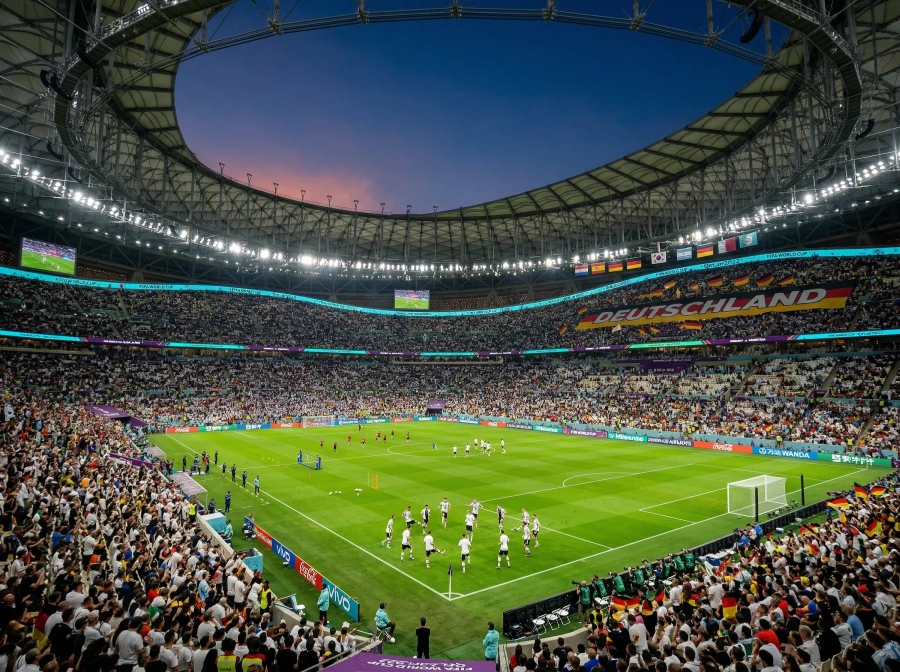
Four World Cup titles and two consecutive group-stage eliminations. That sentence captures everything you need to know about Germany’s current relationship with tournament football — a nation built on World Cup success that has spent the better part of a decade trying to remember how to compete when it matters. The 2018 humiliation in Russia and the 2022 exit in Qatar left scars that the 2024 home European Championship only partially healed. Now, Germany head to North America with a squad caught between generations and a point to prove that Die Mannschaft can still function at the sport’s highest level.
After Hosting Euro 2024 — Germany’s Rebuild
Hosting Euro 2024 was supposed to be the reset button. Germany invested heavily in tournament preparation, the public rallied behind the team, and the opening matches generated a wave of optimism that felt genuine rather than manufactured. But the quarter-final exit — a loss to Spain that was competitive but ultimately decisive — tempered expectations. Germany played well enough to suggest the rebuild was on the right track, but not well enough to claim the rebuild was complete.
The post-Euro period brought the inevitable reckoning. Some veterans stepped away from international duty, younger players moved into starting roles, and the coaching staff faced the challenge of maintaining the positive momentum from the home tournament while integrating new blood for a World Cup cycle that demanded different qualities. The transition was not always smooth — Germany lost friendly matches that a settled side would have won, and the integration of new partnerships in defence and midfield required patience that the German public, hungry for immediate results after a decade of disappointment, was not always willing to offer.
European qualifying proceeded smoothly — Germany’s talent advantage over most group opponents ensured qualification without drama — but the performances lacked the consistency that would signal true contender status. Good matches alternated with frustrating ones, and the defensive vulnerabilities that have plagued Germany since 2018 persisted despite personnel changes. A home qualifier against a mid-ranked European side exposed the same issues: high defensive line pushed too aggressively, slow recovery when beaten on the break, and lapses in concentration during set pieces. The goals conceded column in qualifying was higher than it should have been for a team of this quality, and the pattern was consistent enough to constitute a genuine concern rather than a statistical blip.
What gives me cautious optimism is the willingness to evolve. The German Football Association has moved away from the rigid tactical orthodoxy that characterized the post-2014 decline, embracing a more pragmatic approach that prioritizes results over philosophical purity. The current setup blends elements of the pressing game that Germany does well with a more direct, vertical attacking style that suits the available personnel. Whether that blend is refined enough for a World Cup remains the central question.
Squad Depth and Key Players
I have watched Germany cycle through more tactical experiments and lineup combinations in the last three years than most nations attempt in a decade. The result is a squad where roles are still being defined — which is both a weakness (lack of settled partnerships) and a strength (tactical flexibility that can adapt to different opponents). The Bundesliga remains the primary talent pipeline, supplemented by Germans playing at top clubs in England, Spain, and Italy.
Florian Wirtz is the player who excites me most. The Bayer Leverkusen midfielder — or wherever he has moved by 2026 — plays with a creativity and decisiveness that Germany’s midfield has lacked since the prime Mesut Özil years. His ability to receive between the lines, turn, and produce a decisive pass or shot gives Germany an attacking outlet that transforms their entire structure. When Wirtz is on the pitch, Germany play with purpose and speed; when he is absent, the build-up becomes ponderous and predictable. His fitness and form will determine Germany’s ceiling at this tournament more than any other single variable.
Jamal Musiala provides the second creative spark — technically brilliant, capable of dribbling through congested areas, and increasingly productive in terms of goals and assists. The Wirtz-Musiala axis gives Germany a creative midfield pairing that can unlock any defence in the tournament, and the tactical challenge for opponents is that both players are comfortable drifting across the attacking line, making them difficult to mark with a single assignment. Behind them, the midfield anchor position has been a point of competition between several Bundesliga regulars, each offering a different profile — some more defensive, others more progressive with their passing.
The forward line depends on the system and the opponent. Kai Havertz has grown into a reliable central striker at Arsenal, combining hold-up play with intelligent movement into the channels that creates space for the runners behind him. His goals-per-match record in the Premier League has improved each season, and he brings the kind of tactical versatility that allows Germany to shift between a traditional number nine role and a false-nine setup mid-match. Leroy Sané offers pace and directness from the wing, though his consistency at international level has been questioned — brilliance in one match followed by invisibility in the next is a pattern that makes him difficult to trust in a tournament context. Serge Gnabry, if healthy and in form, provides an experienced alternative on the flanks. The attacking depth is adequate — Germany can rotate without catastrophic drop-off — but the gap between the first-choice forwards and the alternatives is wider than it is for France or Spain, and a key injury to Wirtz or Musiala would fundamentally alter the team’s creative output.
Defensively, the picture is mixed — and that mixture is what keeps Germany’s outright odds longer than their talent warrants. Antonio Rüdiger provides physicality and experience at centre-back, and his Champions League pedigree with Real Madrid ensures he can handle pressure moments. Jonathan Tah has emerged as a reliable partner, commanding in the air and composed in possession. The fullback positions have seen significant turnover, with younger players competing for spots that were previously occupied by long-serving veterans. The right-back role, in particular, has been a revolving door, and the lack of a settled first choice introduces uncertainty at a position where consistency matters enormously. In goal, Marc-Andre ter Stegen — if fit — remains one of the best keepers in the world, his distribution and shot-stopping both operating at elite levels, though his injury history introduces an element of uncertainty that bettors should factor into their assessments. The defensive unit as a whole is the area where Germany are most vulnerable — the last two World Cup group-stage exits were caused as much by defensive errors and structural lapses as by any other single factor, and the question of whether those issues have been resolved will be answered definitively in June.
Group E — Ivory Coast, Ecuador, Curaçao
Group E is comfortable without being effortless. Germany face Ivory Coast — the reigning African champions — Ecuador, and debutants Curaçao. The draw avoids the top-tier European rivals that Germany would prefer not to face in the group stage, but Ivory Coast and Ecuador are both capable of producing results that could complicate qualification if Germany start slowly.
Ivory Coast won the Africa Cup of Nations in 2024 on home soil, coming from behind in the tournament after a disastrous group stage — including a coaching change mid-tournament — to lift the trophy with a sequence of gutsy knockout victories that defied logic and form charts. That experience — performing under pressure after adversity, winning matches they had no right to win, and carrying a nation’s emotional weight — is precisely the kind of tournament hardening that translates to World Cup football. The Ivorian squad features forwards with European club experience who can finish at the highest level, a physical midfield that wins aerial and ground duels at rates that trouble even the most technically gifted opponents, and a defensive unit that has improved significantly under recent coaching. Germany vs Ivory Coast is the group’s marquee fixture, and the African champions will not approach it with any inferiority complex. The both-teams-to-score market in this match is worth close attention — Ivory Coast’s directness and set-piece threat create chances against even well-organized defences, and Germany’s tendency to concede in transition makes a clean sheet unlikely.
Ecuador bring South American qualification battle-hardening and a squad of players who compete primarily in MLS and mid-tier European leagues. Their style is physical, direct, and built around a high-altitude advantage in qualifying that they cannot replicate in North America. Away from Quito’s 2,800-metre elevation, Ecuador are a different proposition — still competitive but less dominant. Germany should beat Ecuador, but the match could be closer than the pre-tournament odds suggest if Germany’s defensive vulnerabilities are exposed by Ecuadorian pressing and counter-attacking speed.
Curaçao are the tournament’s smallest nation by population and making their World Cup debut. The island’s football program has produced several players with European professional experience, and the team carries the Caribbean flair and fearlessness of a side with nothing to lose. Against Germany, the occasion itself will be the story — a David-vs-Goliath narrative that makes great television but should not threaten the result. Germany will be expected to win this match by a significant margin, and the goals-scored and Asian handicap markets offer more efficient bets than the straight moneyline.
Germany’s Betting Lines
The market prices Germany at approximately 12.00-16.00 in the outright — outside the top tier of favourites, reflecting both the remaining talent and the recent track record of underperformance. That implies a 6-8% probability of winning the tournament, which positions Germany as a second-tier contender capable of a deep run but not expected to reach the final.
| Market | Decimal Odds | Implied Probability |
|---|---|---|
| Win Group E | 1.50 | 66.7% |
| Reach quarter-finals | 2.75 | 36.4% |
| Outright winner | 14.00 | 7.1% |
The group winner price at 1.50 is fair — Ivory Coast’s quality prevents this from being a certainty, but Germany’s overall squad advantage across three matches should tell. The quarter-final market at 2.75 is where the interesting value sits. Germany’s knockout path from Group E projects to be manageable in the Round of 32 and Round of 16, and their talent is sufficient to handle most opponents at those stages. The question is what happens in the quarter-finals against a genuine contender — that is where Germany’s recent tournament history becomes a liability, and the market’s scepticism about a deep run is justified.
Tactical Shift Under the New Era
Germany’s tactical evolution has been a long, sometimes painful process of moving beyond the 2014 template that produced a World Cup title but became increasingly predictable as opponents decoded it. The current approach is more versatile — Germany can play a back three or back four, can press high or sit in a mid-block, and can switch between possession-based and direct football depending on the opponent and the game state. That adaptability is encouraging, because rigid tactical systems have been Germany’s downfall at the last two World Cups.
The key tactical question is how Germany set up against organized defensive sides. Ivory Coast and Ecuador will both defend deep and hit Germany on the counter, and the ability to break down low blocks has been a persistent weakness dating back to the 2018 campaign where South Korea’s compact defence held firm until the final minutes. Wirtz and Musiala provide the creative tools — their ability to find pockets of space between the lines is exceptional — but the wide areas and the fullbacks need to offer more consistent attacking contributions. The crossing statistics from qualifying showed improvement over previous cycles but remain below the level of elite tournament teams, and the final-ball quality in general has not matched the build-up quality that Germany’s midfield generates. If the tactical setup can produce consistent chances against parked defences, Germany are a quarter-final team at minimum. If the old problems recur — possession without penetration, sideways passing that invites counter-attacks, and defensive lapses in transition — the group stage becomes less comfortable than the odds suggest and Ivory Coast, in particular, will smell blood.
Value Bets on Germany
Germany at 14.00 outright is not a bet I would recommend — the defensive concerns and the recent tournament record do not justify the risk at that price when Spain, Argentina, and France offer better profiles at shorter odds. Where Germany do offer value is in the group winner and quarter-final markets.
Florian Wirtz for tournament assists is a player market worth exploring. His creative output in the Bundesliga translates naturally to international football, and if Germany go deep, his passing in the final third will generate enough chances to contend for the assists leaderboard. The price on Wirtz in these peripheral markets has not caught up with his club-level output, creating a window of value that may close as the tournament approaches.
Germany to score in every group match is a total goals angle that the historical data supports — even in their worst tournaments, Germany have scored consistently in the group stage. The price on this proposition is usually around 1.60-1.75, reflecting the near-certainty that the attack will function against Group E opponents regardless of the overall team’s form. Combined with a question mark over clean sheets, the both-teams-to-score market in Germany vs Ivory Coast at approximately 1.85 is my specific match-level selection.
Resurgence or Another Early Exit
Germany’s 2026 World Cup will be defined by which version of the team shows up. The version that played the first three matches of Euro 2024 — vibrant, aggressive, confident — is a genuine quarter-final threat. The version that collapsed against Japan in 2022 and faded against Spain in 2024 is a group-stage risk. The talent sits between these extremes, and the coaching staff’s ability to create the right environment, manage the pressure of the German public’s expectations, and produce a consistent level of performance across three group matches and at least one knockout round will determine the outcome.
My assessment: Germany reach the quarter-finals. The group is manageable, the Round of 32 and Round of 16 opponents should be beatable, and the collective experience of the squad — several players have over 50 caps — provides a foundation that younger squads lack. Beyond the quarters, the ceiling depends on matchups and momentum. A favourable draw could see Germany reach the semi-finals; a difficult one — France or Argentina in the quarters, for instance — would likely end the journey. For bettors, Germany are a team to approach with specific market selections rather than broad outright positions, and the value sits in comparing them precisely against the rest of the field to identify the edges that the headline odds obscure.
