
 Available in US
Loading...
Mexico at the 2026 World Cup — Group A Hosts and Betting Odds
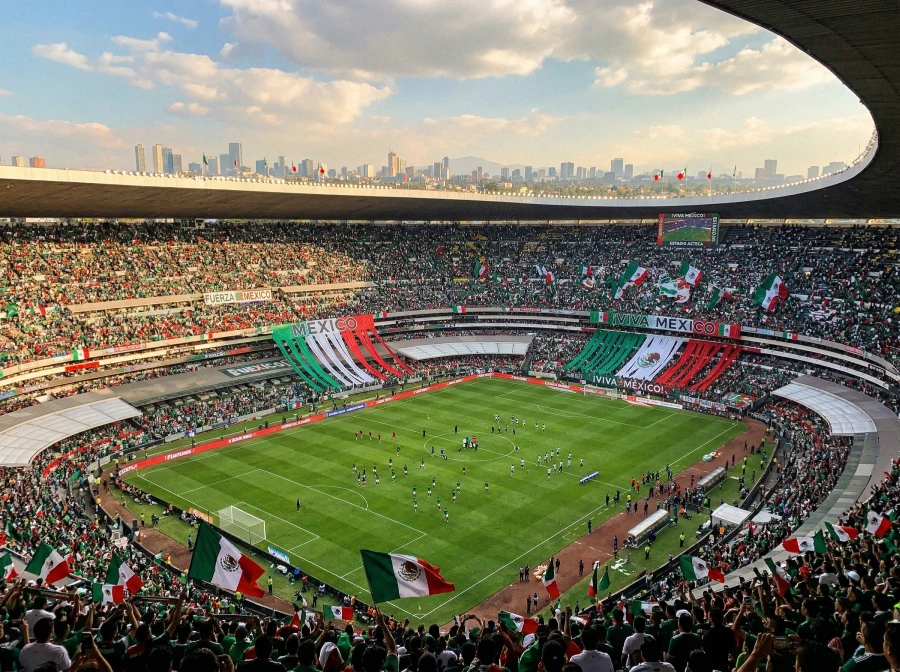
June 11, 2026. The Estadio Azteca. Mexico vs South Africa. The first kick of the largest World Cup ever staged will belong to El Tri — and in that single moment, Mexican football gets the stage it has craved for three decades. The Azteca hosted the 1970 and 1986 finals. Now it opens a tournament that will define a new era. Mexico’s role as co-hosts guarantees group-stage matches at iconic venues, a passionate home crowd, and a nation’s attention — but it does not guarantee results. The squad’s quality, the coaching direction, and the infamous “fifth match curse” will determine whether Mexico finally breaks through the round-of-16 barrier that has frustrated generations of fans.
Mexico as Co-Hosts — Opening Match Honour
Hosting the opening match is both a privilege and a burden. Mexico will walk onto the Azteca pitch with 87,000 supporters expecting a statement performance, and the weight of that expectation can either elevate or suffocate. History offers mixed precedents: host nations winning their opening matches generates momentum that carries through the group stage, while a stumble can create a crisis of confidence that infects subsequent performances. South Africa in 2010 drew their opener and never recovered the initiative. Russia in 2018 won theirs 5-0 and rode the wave to the quarter-finals.
Mexico’s opening opponent — South Africa — presents a manageable test. Bafana Bafana have improved significantly in recent years, qualifying through a competitive African pathway, but the quality gap against Mexico at the Azteca is substantial. The altitude factor adds another layer — Mexico City sits at 2,240 metres, and visiting teams from sea-level nations consistently underperform in the thin air during the opening 30 minutes before adaptation kicks in. For bettors, the Mexico moneyline in the opener will be heavily short, and the value sits in the first-half goals or time-of-first-goal markets where the altitude and crowd combine to produce early pressure.
El Tri’s Key Players
Mexico’s squad composition has shifted meaningfully over the past cycle. The reliance on Liga MX-based players has decreased as more Mexicans establish themselves at European clubs, and the current roster features a blend of domestic and international experience that gives El Tri more tactical versatility than previous generations possessed. The attack includes forwards who have proven themselves in competitive European leagues — La Liga, Serie A, and the Eredivisie all feature Mexican internationals who bring the kind of finishing quality and movement that domestic-only squads sometimes lack. The European-based contingent provides exposure to pressing systems, tactical rigidity, and physical intensity that Liga MX does not consistently replicate, and that experience translates directly to the World Cup environment where every group-stage match carries the intensity of a knockout fixture.
The midfield remains Mexico’s traditional strength — technically proficient, positionally intelligent, and capable of controlling matches through possession and tempo management. Mexican midfielders have historically been comfortable receiving under pressure and playing quick combinations in tight spaces, a skill set that works well in tournament football where opponents often defend compactly and deny space. The creative options in the number ten and eight roles provide the service that the forwards need, and the defensive midfield position features players who can shield the backline and recycle possession without slowing the build-up. Mexico’s midfield, at its best, can compete with any group-stage opponent in this tournament and most knockout-round opponents short of the genuine elite.
Defensively, the picture is concerning. Mexico’s defensive record in recent competitive fixtures has been inconsistent — clean sheets are rare, and the goals-conceded column shows a vulnerability to counter-attacks and set pieces that top opposition will exploit ruthlessly. The centre-back options lack the Champions League pedigree that the top contenders possess, and the fullback positions have been a revolving door of competing options without a settled first choice. The goalkeeper is experienced and capable but operates behind a backline that does not always provide the structure he needs. For bettors, Mexico’s defensive uncertainty is the primary reason their outright odds remain longer than the hosting premium might suggest — the market sees a team that can score but struggles to keep clean sheets, and that profile produces volatile match-level outcomes.
Group A — South Korea, South Africa, Czechia
Group A is designed for Mexico to advance, and the draw provides a comfortable path to the knockout rounds for a co-host nation that needs to build momentum early. South Korea are the strongest opponent — a consistent Asian powerhouse with European-based players and a tactical sophistication that produces competitive performances against anyone. The Koreans have been a mainstay of Asian football’s top tier for two decades, and their 2002 semi-final run as co-hosts provides a template that Mexico will be hoping to emulate. The Czechia squad brings Central European organization, defensive discipline, and set-piece quality that can upset more talented sides on any given day. South Africa complete the group with a return to the World Cup stage that echoes their 2010 hosting experience — a team that will be emotionally charged but likely lacks the squad depth to compete for qualification across three demanding fixtures.
South Korea are the team I respect most in this group. The Korean squad features players from the Premier League, Bundesliga, and Serie A, and their collective pressing and tactical discipline have produced results against top European sides at recent tournaments. Son Heung-min — if still involved at the highest level — remains one of the most dangerous attackers in Asian football history, and the squad around him has matured significantly. South Korea vs Mexico will likely decide Group A, and the match has the potential to be tighter than the seedings suggest. Mexico’s home advantage is significant, but South Korea’s mental toughness in tournament football — forged by decades of competitive Asian qualifying and that unforgettable 2002 semi-final run — means they will not be intimidated by the occasion or the altitude.
Czechia offer an organized, physical challenge. The Czech squad relies on collective effort rather than individual brilliance, and their defensive structure is compact enough to frustrate more talented sides for long stretches. Against Mexico, Czechia will sit deep, defend set pieces aggressively, and look to exploit the counter-attack — a strategy that can yield results if Mexico become impatient. South Africa will approach the tournament as a celebration but possess enough quality to compete in individual matches. The opening fixture against Mexico at the Azteca is the most high-profile moment in South African football since 2010, and the emotional intensity could produce a closer match than the odds imply.
Mexico’s Odds and Market Position
Mexico’s outright odds sit at approximately 40.00-60.00 — reflecting a team expected to advance from the group stage but unlikely to reach the quarter-finals. The implied probability of 1.5-2.5% is harsh for a co-host nation, but the market is pricing Mexico’s historical inability to break through the elimination round ceiling.
| Market | Decimal Odds | Implied Probability |
|---|---|---|
| Win Group A | 1.75 | 57.1% |
| Reach Round of 16 | 1.55 | 64.5% |
| Outright winner | 50.00 | 2.0% |
The group winner price at 1.75 captures South Korea’s threat nicely. Mexico should top this group, but the South Korea fixture is a genuine contest. The Round of 16 qualification price at 1.55 reflects near-certainty of advancing — the expanded format means even a second or third-place finish likely carries Mexico through.
The Azteca Factor — History and Altitude
The Estadio Azteca is the only stadium in the world that has hosted two World Cup finals — 1970 and 1986, tournaments that produced Pele’s crowning moment and Maradona’s solo run against England. Playing at the Azteca is not just a home advantage — it is a spiritual experience for Mexican football. The altitude creates a measurable physiological advantage: visiting teams tire faster, passing accuracy drops in the thinner air, and the ball travels differently off the boot, favouring players accustomed to the conditions.
Mexico will also play at the Estadio BBVA in Monterrey and the Estadio Akron in Guadalajara — venues where the crowd will be overwhelmingly supportive and the atmosphere charged with the kind of intensity that Latin American football generates at its best. For bettors, the home advantage at these three stadiums is worth quantifying: Mexico’s recent competitive record at home shows a significant performance uplift compared to neutral or away venues, and the group-stage matches should amplify that effect.
Can Mexico Break the Fifth-Match Curse?
Since 1994, Mexico have reached the Round of 16 at every World Cup they have entered — and lost every single time. Seven consecutive Round of 16 exits is a record of consistency and frustration in equal measure. The “fifth match curse” — the inability to win a fifth consecutive World Cup match — has become a national obsession, and the 2026 tournament on home soil is seen as the best opportunity in a generation to break it.
The expanded format changes the calculus. With 48 teams and a Round of 32 preceding the Round of 16, Mexico will need to win their “fifth match” just to reach the stage where they have historically fallen. That additional knockout round could be the key — if Mexico face a beatable third-place qualifier in the Round of 32, they can build the momentum and confidence needed to approach the Round of 16 with a different mentality than in previous cycles.
My projection: Mexico top Group A and beat a weaker opponent in the Round of 32. The Round of 16 remains the ceiling — a match against a second-placed team from a strong group will likely be too much for a squad that, despite the hosting premium, lacks the depth and defensive quality to compete with the tournament’s genuine contenders. For Canadian bettors, Mexico’s group-stage markets and the opening match props offer the best value, while the outright and deep-run markets should be approached with the wider competitive context firmly in mind.
