
 Available in US
Loading...
USA at the 2026 World Cup — Group D, Odds and the Host Nation Factor
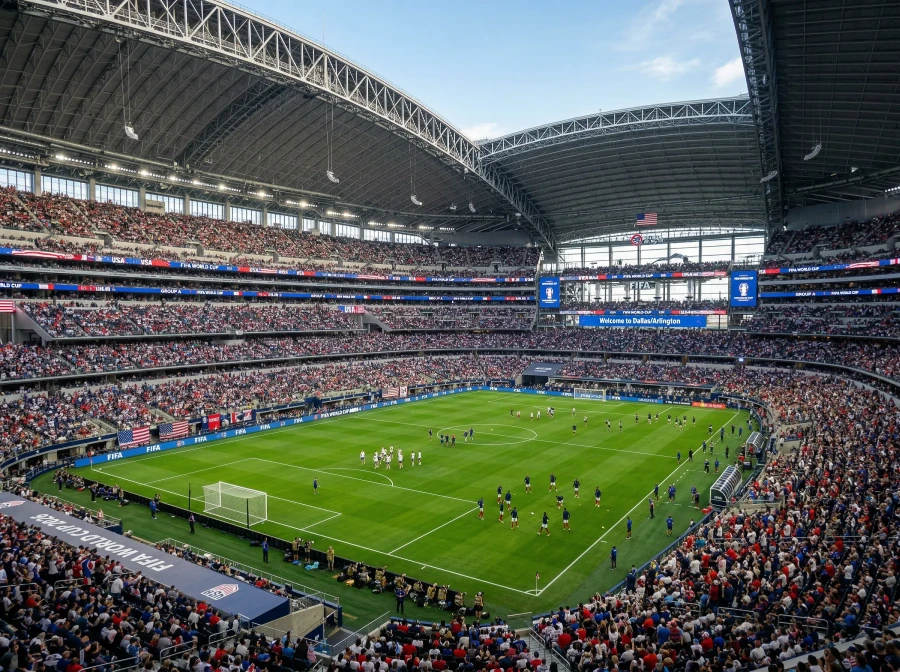
When Americans do something, they do it at scale. The United States will host 78 of the 104 World Cup matches across 11 stadiums, making them the primary stage for the biggest sporting event in history. Whether the USMNT can match the scale of the hosting operation with their on-pitch performance is the question that will define this tournament from a North American perspective — and for Canadian bettors watching from across the border, the answer has direct implications for the group dynamics, crowd atmospheres, and betting markets that shape the entire competition.
Automatic Hosts — But How Ready Are They?
The USA qualified automatically as the lead host nation, which means the squad arrives at the tournament without the competitive sharpening that a qualifying campaign provides. That might sound like a minor distinction, but the difference matters. Nations that fight through qualifying — especially in CONCACAF, where away matches are physically punishing and atmospherically hostile — develop a collective resilience that is difficult to replicate in friendlies and invitational tournaments. The USA’s preparation cycle has relied on high-profile friendlies and the CONCACAF Nations League, which provides competitive matches but against a limited range of opponents.
The 2022 World Cup in Qatar provides the most relevant reference point. The USMNT performed creditably — a draw against England, a victory over Iran, and elimination by the Netherlands in the Round of 16 were broadly in line with expectations. The core of that squad was young, and the promise was that four years of development at top European clubs would transform potential into genuine contender status. That development has mostly materialized. Christian Pulisic has become a consistent goal threat in Serie A, Weston McKennie has accumulated Champions League experience, and several younger players have broken through at elite European clubs. The raw material is better than it was in 2022 — the question is whether it is good enough to match the enormous expectations of a home World Cup.
The USMNT’s challenge is that “good enough” is a moving target when you are hosting. South Korea in 2002 and Russia in 2018 both exceeded expectations as hosts, reaching the semi-finals and quarter-finals respectively. The American public — and the American sports media machine — will expect something similar, and the pressure of those expectations on a relatively young squad is a variable that no friendly match can simulate.
USMNT Key Players and Depth
Christian Pulisic is the face of American soccer, and the weight he carries — commercial, emotional, sporting — is comparable to what Alphonso Davies represents for Canada, only amplified by the scale of the American market. Pulisic’s development at AC Milan has added consistency to the explosive talent that was always there. He scores regularly, he creates for others, and he performs in high-pressure matches with a composure that suggests genuine big-game temperament. At the World Cup, Pulisic will be the primary creative threat, the penalty-box presence, and the emotional leader. His fitness across a demanding tournament schedule is the single most important variable for the USMNT’s campaign.
Weston McKennie provides the midfield engine — box-to-box running, aerial presence, and a willingness to compete physically that sets the tone for the entire team. His experience at Juventus has sharpened his tactical awareness, and his ability to contribute both defensively and in attack makes him indispensable to the system. Giovanni Reyna offers a different midfield profile — more creative, more comfortable on the ball in tight spaces, and capable of producing the kind of individual moment that decides tight matches. The availability and fitness of both McKennie and Reyna will shape the midfield’s character: with both, the USA can control matches; without either, the balance shifts toward a more pragmatic approach.
The defensive core has developed significantly over the past four years. Centre-back partnerships have been tested across multiple competitive windows, and the options include players from top European leagues who have proven they can handle the physical and tactical demands of high-level football. The partnership stability that was lacking in 2022 — when injuries disrupted the preferred pairing — has improved, though the centre-back depth behind the first-choice pair remains thinner than ideal for a seven-match tournament run. The goalkeeping position features a reliable number one with MLS and international experience who commands the area and communicates well with the backline. The fullbacks — always a position of relative weakness compared to the top European nations — have improved through the development of young players at European clubs, though the gap between the USA’s fullback options and those of France, England, or Spain remains visible and is the area most likely to be exposed in a knockout match against a technically superior opponent.
Overall squad depth is the USA’s biggest concern relative to the top contenders. The starting eleven can compete with most nations in the tournament, but the drop-off to the second eleven is steeper than it is for France, Spain, or Argentina. In a compressed tournament schedule where rotation is essential, that depth issue could become a factor — particularly if the USA face a physically demanding group stage followed by an immediate knockout round with limited recovery time.
Group D — Paraguay, Australia, Turkey
Group D is favourable without being simple. Paraguay, Australia, and Turkey are all competitive sides capable of producing results, but none carry the individual or collective quality that would make them favourites against the USA on home soil. The host-nation advantage — crowd support, travel logistics, familiarity with venues — adds a layer of comfort that should translate into group-stage dominance.
Turkey are the most dangerous opponent. Turkish football combines technical ability with an emotional intensity that can overwhelm opponents in short bursts, and the current squad features several players from top European leagues who are experienced in high-pressure matches. Turkey’s pressing game is aggressive, their attacking transitions are quick, and the atmosphere surrounding their fixtures — driven by a passionate diaspora across North America — could neutralize some of the host-nation advantage. The USA vs Turkey match will be competitive and tight, with the total goals market likely sitting at 2.0-2.5.
Australia bring the kind of organized, physical football that CONCACAF teams play — the Socceroos defend deep, compete in every duel, and look to exploit set pieces and quick counter-attacks. For the USA, this will feel like a familiar opponent profile, which works in their favour. The rivalry with Australia in recent World Cups (they have been drawn together before) adds a competitive edge, and the match should see the USA as clear favourites with the home crowd behind them.
Paraguay’s CONMEBOL qualifying toughness ensures they will not be overmatched, but the gap in squad quality is significant. Paraguay will defend resolutely and look to frustrate the USA before hitting on the break, a strategy that can work for 60-70 minutes but tends to fail when the opponent has superior depth and fresh substitutes. The USA should win this match, but the margin could be narrow if they fail to score early.
USA’s Betting Odds and Market View
The outright market has the USA at approximately 15.00-20.00 — a host-nation premium that shortens their odds beyond what the squad quality alone would justify. That implies a 5-7% probability, and the market’s assessment reflects both the home advantage and the genuine improvement in the player pool over the past four years.
| Market | Decimal Odds | Implied Probability |
|---|---|---|
| Win Group D | 1.65 | 60.6% |
| Reach quarter-finals | 2.75 | 36.4% |
| Outright winner | 17.00 | 5.9% |
The group winner price at 1.65 is fair — the USA should top Group D, and the home advantage makes this closer to a probability of 65-70% in my model. The quarter-final market at 2.75 is the interesting line: reaching the last eight requires winning the group and navigating two knockout matches at home venues, which the historical precedent of host-nation performance strongly supports. The outright at 17.00 is where I become sceptical — the USA’s squad quality does not match France, Argentina, Spain, or England, and the knockout rounds will eventually pit them against one of those teams.
The CONCACAF Rivalry — USA Through Canadian Eyes
For Canadian bettors, the USA presents a unique dynamic. They are neighbours, CONCACAF rivals, and co-hosts of the same tournament. The sporting rivalry has intensified dramatically since Canada’s emergence as a competitive international side — the 2022 qualifying cycle saw Canada finish above the USA in the CONCACAF table, a result that shifted the power dynamic and added genuine needle to the relationship.
From a betting perspective, the USA’s odds offer a useful comparison point for Canada’s own markets. Both host nations receive a market premium, both have squads built primarily from European-based players, and both face manageable group draws. The key difference is that the USA host the vast majority of matches (78 of 104), meaning their home advantage is deeper and more pervasive — not just in their own group games, but potentially throughout the knockout rounds. If you are building a Canadian-focused World Cup portfolio, including a position on the USA’s progression through the early rounds makes strategic sense — the two host nations’ fortunes are correlated through the tournament structure.
Can the USA Match the Hype?
The USMNT will reach the Round of 16 at minimum — the group draw and home advantage make a group-stage exit extremely unlikely. The quarter-finals represent the realistic ceiling for a squad that is talented but not elite by European or South American standards. The semi-finals would require a favourable bracket draw and the kind of home-crowd-fuelled performance that South Korea achieved in 2002 — possible but dependent on circumstances that cannot be predicted or controlled.
My assessment: USA top Group D, beat a beatable opponent in the Round of 32, and face a genuine test in the Round of 16 where the tournament likely ends. That is still a positive outcome — a quarter-final appearance at a home World Cup would represent the best American result since 2002 and validate the investment in player development that has transformed the program. For bettors, the value sits in the group winner and Round of 16 qualification markets rather than the outright, and the broader team-by-team analysis provides the context needed to assess whether the home-field premium in the USA’s odds is justified or inflated.
