
 Available in US
Loading...
World Cup Bet Types Explained — Every Market for 2026
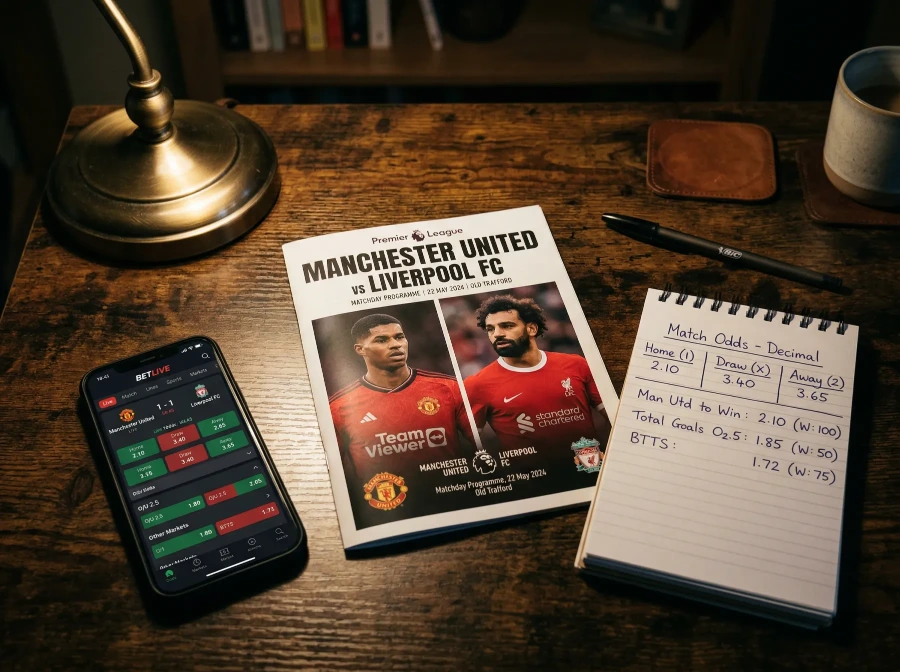
More markets are available for the 2026 World Cup than for any football tournament in history. That is not hyperbole — 48 teams playing 104 matches across 16 stadiums in three countries means sportsbooks are offering everything from standard match results to hyper-specific player props on corners won in the 73rd minute. The question is not whether you can bet on something. The question is which markets actually give you an edge.
I have spent nine years dissecting World Cup betting markets, and the lesson I come back to every cycle is this: complexity is the bookmaker’s friend. The more markets they offer, the wider the margins they can hide in exotic lines. Your job as a bettor is to understand what each market type actually prices, how the math works and where the inefficiencies tend to cluster during a tournament. That is what this page delivers — every major World Cup market type, explained with examples pulled directly from the 2026 draw.
Match Result (Moneyline and Draw)
I once watched a bettor put C$200 on Brazil to beat Switzerland in the 2022 group stage at 1.65. Brazil won 1-0, the bettor collected C$330, and he called it a good day. It was not a good day. At 1.65, he needed Brazil to win that match roughly 61% of the time for the bet to break even. Historical World Cup data shows that favourites priced between 1.50 and 1.80 win group-stage matches about 52% of the time. He was paying a premium for a false sense of certainty.
Match result — also called moneyline in North American parlance — is the simplest bet on the board. You pick one of three outcomes: Team A wins, Team B wins, or the match ends in a draw after 90 minutes plus stoppage time. In World Cup group-stage matches, all three outcomes are possible, and the draw is the most undervalued result in the market. Roughly 25% of World Cup group matches end level, yet draws are typically priced between 3.20 and 3.80, implying a probability of 26% to 31%. The overround inflates the draw price just enough to make it unappealing, which is exactly why sharp bettors target it.
For the 2026 tournament, match result betting works differently in the group stage versus the knockout rounds. In the group stage, a draw is a final result — the match ends, both teams take a point. In the knockout rounds from the Round of 32 onward, match result still refers to the score after 90 minutes, but the match continues to extra time and penalties if level. This means you can bet on a draw in a knockout match and win even though one team eventually advances. Many casual bettors miss this distinction, and it creates value on draw prices in knockout fixtures between evenly matched sides.
A concrete example: Canada vs Switzerland in Group B on June 18. If the market prices Canada at 2.60, the draw at 3.20 and Switzerland at 2.80, those numbers imply Canada win 38.5% of the time, the draw happens 31.3% and Switzerland win 35.7%. Added up, that is 105.5% — the 5.5% overround is the bookmaker’s margin. My assessment of that specific match, based on home advantage and squad quality, would put the draw closer to 28%, making 3.20 a marginal fade. But if the draw drifts to 3.40 or above, that shifts the calculus entirely.
Spread and Over/Under Totals
Spread betting in soccer is a different animal than in North American football or basketball. The margins are tiny — a one-goal spread is enormous in a sport where the average World Cup match produces 2.5 to 2.7 goals. Asian handicap lines, which are the standard spread format at Canadian sportsbooks, eliminate the draw by splitting your stake across half-goal and quarter-goal lines.
Take a hypothetical Group E match: Germany vs Curaçao. Germany might be priced at -1.5 goals at 1.90, meaning they need to win by two or more for the bet to pay. Curaçao at +1.5 at 1.90 means the debutants can lose by a single goal and your bet still wins. The -1.5 line looks tempting against a nation making their World Cup debut, but here is the counterpoint: in every World Cup since 2006, at least one heavy favourite has failed to cover a -1.5 spread against a tournament debutant. Saudi Arabia’s 2-1 win over Argentina in 2022 is the most recent and dramatic example.
Over/Under totals ask you to bet on the combined goals in a match. The standard line for World Cup group matches sits at 2.5 goals — meaning you bet on whether the match produces three or more goals (over) or two or fewer (under). The 2022 World Cup averaged 2.55 goals per group-stage match, which means the 2.5 line was almost perfectly calibrated. For 2026, the expanded format with more mismatches (elite sides vs debutants like Curaçao, Haiti, Cape Verde) could push the average higher, but the presence of more defensive-minded underdogs who park the bus could pull it back down.
The totals market I find most valuable at a World Cup is the team totals line — betting on how many goals a specific team scores rather than the combined match total. If France are playing Iraq in Group I, the match total might be set at 2.5 with heavy juice on the over. But France’s team total might sit at 1.5 at even odds, asking you only whether France score two or more. That is a simpler, cleaner question to answer, and it removes the variable of whether Iraq can nick a consolation goal.
Parlays — Canada’s Old Favourite
Before August 2021, parlays were the only legal way to bet on sports in most of Canada. Single-game wagers were prohibited under the Criminal Code, so provincial lottery corporations offered only multi-leg combination bets — Proline in Ontario, Sport Select in the western provinces, Mise-o-jeu in Quebec. An entire generation of Canadian bettors learned to think in parlays first, and that habit has not disappeared even after Bill C-218 legalized single-event wagering.
A parlay combines two or more individual bets into a single wager where every leg must win for the bet to pay out. The appeal is mathematical: a two-leg parlay on two matches priced at 2.00 each pays 4.00, quadrupling your stake. A three-leg parlay at the same individual odds pays 8.00. The multiplier effect is seductive, and it is also the primary reason bookmakers love parlays — each additional leg compounds the overround, meaning the house edge grows exponentially with every selection you add.
That said, parlays have a legitimate place in World Cup betting when used with discipline. The key is keeping the legs correlated or thematically linked rather than throwing random favourites together. A two-leg parlay on Canada to beat Bosnia and Herzegovina in their opener and Under 2.5 goals in that same match is a correlated bet — if Canada win a tight home fixture, the under is more likely to hit. The combined odds might land around 3.80, and the correlation between the two outcomes gives you a structural edge over two random unlinked legs at the same price.
I limit myself to two-leg and three-leg parlays during World Cups. Anything beyond three legs at a tournament this unpredictable is recreational gambling, not strategic betting. A five-leg parlay on group-stage favourites might look safe on paper — Argentina, France, Spain, England, Brazil all to win their opening matches — but the historical base rate for all five top-tier favourites winning their tournament opener is lower than you think. At least one stumbles almost every cycle. The 2022 World Cup delivered Argentina losing to Saudi Arabia on matchday one. The 2014 edition saw Spain lose to the Netherlands 5-1. The parlay that looked like free money evaporated in 90 minutes.
For Canadian bettors nostalgic for the Proline era, modern parlays at Ontario-licensed sportsbooks offer dramatically better odds than the old provincial products. Proline’s margins were notoriously wide — sometimes exceeding 30% overround on a three-leg bet. Current licensed operators run closer to 12-15% on comparable parlays. The product has improved. The underlying math has not changed: parlays are high-variance bets that should represent a small fraction of your total World Cup bankroll.
Player and Match Props
The prop market for a World Cup match is where bookmakers get creative and bettors get reckless. I say that from experience — I once bet on the exact minute of the first goal in a knockout match and spent 87 minutes staring at a screen willing someone to score in a specific 5-minute window. Props are fun. They are also, by design, the highest-margin bets on the board.
Player props at the 2026 World Cup will cover anytime goalscorer (the player scores at any point in the match), first goalscorer, last goalscorer, shots on target, assists, cards received and even corners won by a specific player. The anytime goalscorer market is the most popular and the most tradeable. Pricing follows a straightforward logic: a striker expected to play 90 minutes for a team that creates a lot of chances gets a shorter price than a centre-back for a defensive side.
The edge in player props comes from information asymmetry. Bookmakers set lines days before a match and adjust based on betting volume. If you know — from training reports, press conferences or lineup leaks — that a key striker is carrying a minor knock and might start on the bench, the anytime goalscorer price will not adjust until the official teamsheet drops 60 minutes before kickoff. Bettors who monitor squad news in real time and have accounts funded and ready to bet can exploit that window. During a World Cup, where 48 coaching staffs are managing fatigue and tactics across a compressed schedule, lineup surprises happen almost daily.
Match props cover first-half result, both teams to score, clean sheet, number of corners, number of cards, exact score and more. Both teams to score (BTTS) is the match prop I track most closely during World Cups. The historical rate for BTTS in World Cup group matches sits at around 48%, meaning “No” is slightly more likely than “Yes.” Yet the market typically prices BTTS Yes at 1.70-1.85 and BTTS No at 1.90-2.10, creating a slight edge on the “No” side in matches involving at least one defensively disciplined team. A match like Switzerland vs Canada, where both sides are tactically organized, is a textbook BTTS No candidate.
Futures and Outright Markets
Futures are bets placed well before the event they reference. In the context of the 2026 World Cup, the outright winner market is the largest futures pool, but it is far from the only one. Golden Ball (best player), Golden Glove (best goalkeeper), Young Player Award, highest-scoring group, group of death — these are all futures markets that open months before the tournament and close when the relevant phase begins.
The advantage of futures is price. The earlier you bet, the more uncertainty the market carries, and uncertainty means wider prices. Argentina’s outright odds will almost certainly shorten between now and June 11 if they perform well in warm-up matches and avoid injuries. Locking in 5.50 today versus 4.50 in late May is real value — an extra C$10 in profit per C$100 staked, simply for being early.
The disadvantage is liquidity risk. A C$50 futures bet on Germany to win the World Cup at 10.00 ties up that capital for over two months. If Germany lose their opening match and your assessment changes, you cannot cash out at most Canadian sportsbooks — the money is locked. Some operators offer early cashout on outright futures, but the cashout price always favours the house. You will get less than the true live value of your position.
My approach to futures is selective and front-loaded. I place my outright and top scorer bets in April and May when the prices are longest, allocate no more than 10% of my total World Cup bankroll to pre-tournament futures and then shift entirely to match-by-match betting once the group stage begins. The tournament itself generates enough daily opportunities that locking up capital in long-dated positions becomes an opportunity cost.
Live Betting During World Cup Matches
The first 15 minutes of a World Cup match are a goldmine for live bettors who have done their homework. Pre-match odds assume a theoretical starting state, but the actual flow of the match — who controls possession, which side looks sharper, where the pressing is focused — becomes visible within minutes. By the 10th minute, you often have enough information to challenge the pre-match line, and the in-play market has not fully adjusted because recreational bettors are still settling into their seats.
Live betting at the 2026 World Cup will be available on every match through Ontario-licensed operators and provincial platforms. The markets refresh every few seconds during play and suspend during goals, penalties, red cards and VAR reviews. The speed creates opportunity but also risk — prices move fast and the spread between available odds can widen dramatically during chaotic passages of play.
The live market I exploit most at major tournaments is the next goal scorer after a goal has been scored. When a team concedes, the emotional and tactical response is predictable: they push forward, commit more players to attack and leave space at the back. The team that just scored often sits deeper to protect the lead, which means their counter-attacking players — fast wingers, target strikers — become more likely to score the next goal. The market does not always price this shift correctly, especially in the first few minutes after a goal when the algorithms are recalibrating.
A word of caution: live betting on World Cup matches with significant time-zone challenges can be dangerous for Canadian bettors on the west coast. A match kicking off at noon ET starts at 9:00 AM in Vancouver. Betting with a foggy head before your morning coffee is a recipe for impulsive decisions. Know your schedule, know your limits and treat live betting as a supplement to pre-match analysis, not a replacement for it.
Which Markets Offer the Best Edge at a World Cup
After tracking my own results across four World Cup cycles, the clearest edge I have found sits in two areas: group-stage draws on the match result market and team totals on the over/under market. Draws are chronically underbet by the public, which means the price stays generous. Team totals strip away the noise of the opponent’s scoring and let you focus on one team’s attacking output — a simpler question with more predictable answers.
The worst-edge markets, in my experience, are exact score (margins above 25% are common), first goalscorer (one substitution can kill your bet) and long-leg parlays on favourites (compounding overround destroys value). These markets exist because they are profitable for the house, not because they are beatable for the bettor.
The 2026 World Cup is the largest betting event in history — 104 matches over 39 days with decimal odds available at dozens of Canadian operators. That volume creates opportunity. But opportunity without discipline is just entertainment. Pick the markets where you have an information edge, size your bets relative to your confidence level and resist the temptation to bet every match just because it is on your screen. The tournament will still be there tomorrow.
