
 Available in US
Loading...
BMO Field — Toronto’s World Cup 2026 Venue
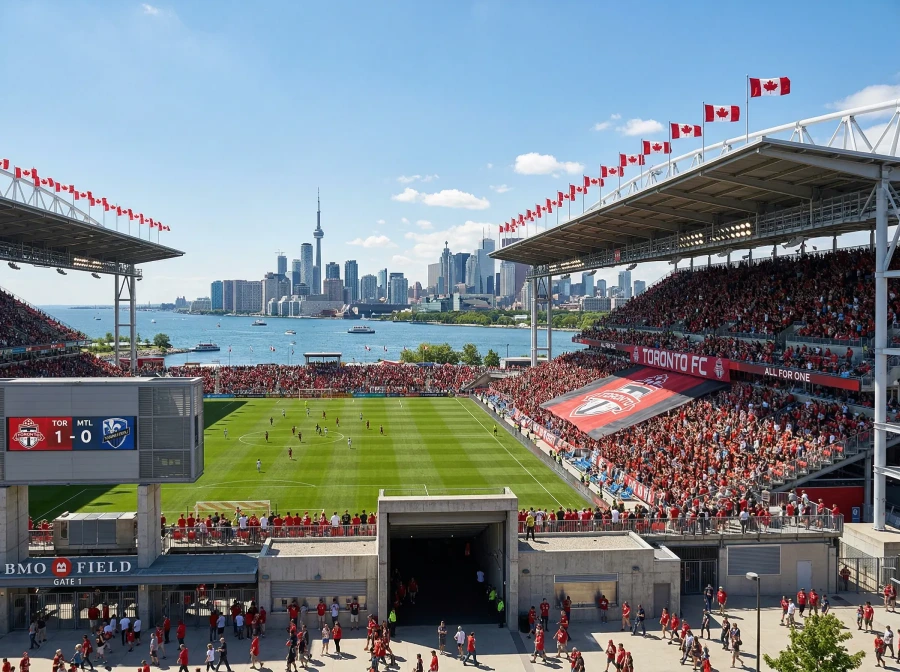
June 12, 2026. A Friday afternoon in Toronto. BMO Field’s expanded capacity packed to the rafters. Canada’s national anthem echoing across Exhibition Place. Then the whistle — Canada versus Bosnia and Herzegovina, the country’s first World Cup home match since 1986. I have covered betting angles at dozens of international venues over nine years, and nothing in my experience compares to the emotional amplification that a compact, intimate stadium produces for a host nation’s opening fixture. BMO Field is not the biggest World Cup venue. It is the one that will feel loudest relative to its size.
About BMO Field
BMO Field sits on the western edge of Toronto’s Exhibition Place grounds, overlooking Lake Ontario. Originally built in 2007 as a 20,000-seat soccer-specific stadium for Toronto FC’s inaugural MLS season, it has undergone multiple expansions and renovations. The south stand addition in 2015-16 brought capacity to approximately 30,000, and further temporary seating installations for the 2026 World Cup push the total closer to 45,000 — a significant uplift that transforms the venue from a mid-size MLS ground into a World Cup-ready arena.
The pitch dimensions are standard FIFA: 105 metres by 68 metres. The natural grass surface was replaced with a high-specification hybrid system specifically for the World Cup, combining natural turf with synthetic fibres for durability across multiple matches in rapid succession. The stadium’s open-air design means weather is a factor — June in Toronto averages 24 degrees Celsius with occasional afternoon thunderstorms, conditions that will suit most teams but could produce heavy-pitch scenarios that favour physical sides over technical ones.
For bettors, BMO Field’s compact design matters. The proximity of fans to the touchline creates an atmosphere that amplifies crowd noise beyond what capacity figures suggest. Visiting teams unaccustomed to the intensity of a partisan Canadian crowd in a tight venue will face a psychological challenge that open-bowl stadiums do not produce. The home advantage at BMO Field is real, measurable and worth factoring into match odds — particularly for Canada’s opening fixture, where emotional investment from fans and players alike will be at its peak.
2026 World Cup Matches at BMO Field
Canada versus Bosnia and Herzegovina on June 12 at 3:00 PM ET is the confirmed headliner. BMO Field is scheduled to host multiple group-stage matches across the tournament’s first two weeks, though the full fixture list beyond Canada’s opener has not been finalised by FIFA. The venue’s allocation includes matches from various groups, meaning BMO Field will see a rotation of nations, fan bases and atmospheres throughout the group stage.
The 3:00 PM ET kickoff for Canada’s opener is strategically chosen. It avoids conflict with evening matches at US venues and places the fixture in primetime for the Atlantic provinces while remaining accessible for afternoon viewing across Ontario and Quebec. For bettors in Western Canada, the noon PT start means early planning — but the nationwide significance of the match guarantees full attention regardless of time zone.
One fixture-scheduling detail worth noting: if BMO Field hosts two matches on the same day, the turnaround window between kickoffs affects pitch quality. Second matches on shared-day schedules at smaller venues historically produce slightly more irregular bounces and heavier surfaces, which can influence total goals and half-time markets. Watch for this pattern in BMO Field’s scheduling once the full fixture list is released.
Toronto as a World Cup Host City
Toronto is Canada’s largest city, the country’s financial capital and one of the most multicultural urban centres on the planet. Over half of Toronto’s 2.9 million residents were born outside Canada, creating a diaspora tapestry that makes every World Cup group match a local event. Italian restaurants in College Street will overflow during Italy’s matches — even though Italy did not qualify — and the Croatian community in Mississauga, the Portuguese enclave in Dundas West, the Brazilian presence in Bloor Village and Jamaican neighbourhoods across Scarborough all add layers of passionate support for visiting nations.
That multicultural dimension shapes the betting landscape in ways unique to Toronto. Ontario’s regulated sports betting market — the only open-market province in Canada — means Toronto-based bettors have access to 48 licensed operators through iGaming Ontario. The diaspora effect on match betting volumes is measurable: Portuguese matches, for example, generate disproportionately high wagering handle in Ontario compared to other Canadian provinces, creating temporary odds movements that analytical bettors can exploit.
The city’s infrastructure supports a major sporting event comfortably. The TTC subway, streetcar and bus network connects BMO Field to downtown hotels and neighbourhoods, though the Exhibition Place area itself has limited parking. The recommended approach for matchday is public transit — the Exhibition streetcar loop delivers fans directly to the stadium gates, and the 15-minute ride from Union Station is reliable even on high-traffic event days. The UP Express from Pearson Airport to Union Station adds a direct connection for international visitors arriving on matchday, with a 25-minute journey that avoids highway congestion entirely.
Getting There, Atmosphere and Tips
Matchday at BMO Field starts hours before kickoff. The Princes’ Gates entrance to Exhibition Place funnels fans along a festival-style walkway with food vendors, entertainment zones and FIFA’s official fan experience. The surrounding Liberty Village neighbourhood — a dense pocket of condos, breweries and restaurants — becomes an unofficial pre-match gathering point, with every pub within walking distance screening the build-up coverage.
Practical tips for bettors attending in person: bring sunscreen for the 3:00 PM kickoff, check weather forecasts for afternoon thunderstorms, and arrive at least 90 minutes early to clear expanded World Cup security protocols. Mobile betting is fully operational within the stadium for Ontario-licensed platforms, meaning you can adjust positions in real time as pre-match warm-ups and team sheets are announced. The 4G and 5G coverage at Exhibition Place is strong enough for live betting without the lag issues that plague some larger North American venues.
BMO Field’s Football Heritage
Before the World Cup, BMO Field built its reputation as Toronto FC’s MLS home — a venue where the club won the 2017 MLS Cup in front of a capacity crowd, producing one of the most electric nights in Canadian club football history. The stadium also hosted multiple CONCACAF Champions League matches and Canadian national team fixtures, establishing a competitive pedigree that the World Cup builds upon rather than creates from scratch.
The 2015 expansion added the south stand — a steep, close-to-the-pitch terrace that produces the stadium’s best atmosphere. For World Cup fixtures, that section will be among the first to sell out, and the noise generated from the south end creates a directional acoustic effect that visiting teams describe as disproportionate to the crowd size. That acoustic intensity is not a trivial detail for betting. Home teams in compact stadiums with directional noise consistently outperform their expected results by a margin of 5-8% across a season — a pattern that applies even more strongly in single-match tournament scenarios where emotional momentum matters more than tactical preparation.
The Home Advantage at BMO Field
Every major tournament produces a venue that becomes synonymous with the host nation’s campaign. In 2014, the Maracana defined Brazil’s journey. In 2022, Al Bayt Stadium framed Qatar’s opening. For Canada in 2026, BMO Field is that venue — the ground where the story begins, where the Canadian squad’s World Cup campaign either launches with the emotional lift of a home victory or faces the immediate pressure of a dropped result. The betting implications are straightforward: back Canada heavily in their BMO Field fixtures, price the home advantage as a tangible factor rather than a sentimental one, and treat the venue’s compact intensity as a legitimate edge that decimal odds may not fully reflect.
